X-Files mythology, TenThirteen Interviews Database, and more

Archive for the ‘Case File’ Category

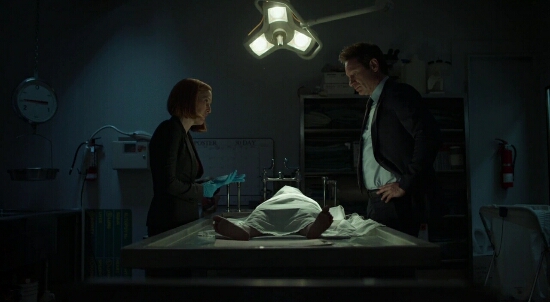
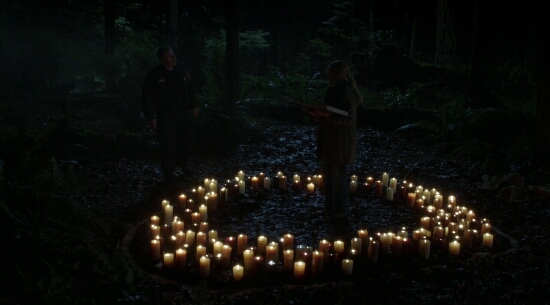
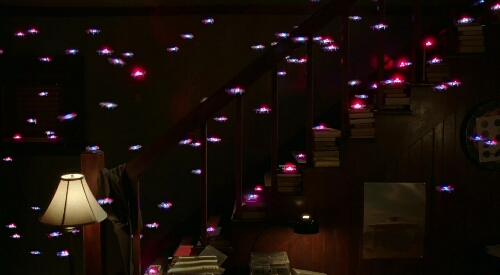
I Want To Believe: Vrach Frankenshteyn

Eighteen years ago (!), in the middle of the summer, a little winter-set thriller was released against the latest Christopher Nolan pompous blockbuster. Incredibly, the story repeated again this year — instead of waiting for a more fitting time like winter, the new cut of IWTB was released in the middle of the summer. When in 2008 the release date was dictated by a writers’ strike that left little else for Fox to release that summer, what can be the motivation for this release?

A few (belated) words on the Director’s Cut of “The X-Files: I Want To Believe”, “Vrach Frankenshteyn” (what a mouthful!).

Carter has tried to promote it extensively — I covered here no less than 30 interviews with him — but all in all there is little to say. The changes are, paradoxically, few and many at the same time. Overall, they do little to change my rather lukewarm appreciation of the film.

Eighteen years of fan analysis and time passing have been kind to the movie. There are a number of things that can be said in the movie’s favour that might not have been obvious at first viewing. The movie’s script is dense with interconnections between its various storylines: the “don’t give up” motto echoes through Scully and the boy she wants to save, through Mulder and pursuing the case, through the “evil” lovers wanting to save one another just as Scully holds on to Mulder even as darkness have a way of finding them. The viewer is challenged upon to think of the concept of Christian forgiveness when faced with a pedophile priest, who is used as a conduit to stop further crimes. There are plenty of narrative coincidences — like Scully finding out about the two-headed dog experiments by searching for an unrelated procedure, or Scully finding the compound via the numbers of the scripture Father Joe quoted — become examples of meaningful synchronicity when viewed from a mystic or religious angle. The first half of the movie is a remake of “1X12: Beyond the Sea” with religious elements while the second half is the Frankenstein part with more horror. It is first a questioning of whether morals mean something taking place in a frigid climate, before a figurative descent to Hell full of dirt and blood, and an optimistic ending that takes place in a sunlit spring day with snow melting. The story is about alien abductions performing experiments on women, but of a different sort than the show’s mythology. Some who are more attuned to this movie than me have been quite perceptive about all this.

It must be said, the quality of the photography in undeniable: this was shot on film and you can tell. The cold blue colours in the snow scenes, the warm oranges of the domestic scenes, the grain in the horror scenes. Revisiting this after being saturated with the badly lit badly focused all-digital scenes of most of current productions is refreshing.

And then there are all the issues — a slow and unengaging beginning and an anti-climactic ending, unmemorable villains, forced character behaviour, non-deconstructed clichés, some odd choices a bit all over. Despite the above, my feelings haven’t changed much.

So what does the new Director’s Cut do to enhance the experience?

Overall, it is the same movie. There is no new dialogue whatsoever. We learn nothing new about the “bad guys” of the film, who remain unnamed (!) (apart from fleeting glimpses at some paperwork). There is no new scene and much of what is “new” was actually already there in the original Extended Cut/Director’s Cut from the DVD/BluRay release. How could it be any different? The script didn’t have any extra material, and the shooting was holden to the script; even the novelization, based on the script, had nothing extra. Any changes are due to editing — and to what was cut.

Some tighter editing, especially during the first third, helps the movie get along. This is welcome, although despite these efforts the first half is still a slog to this viewer! Some attempts at making the pacing faster make no narrative sense, like the cross-cutting between Scully talking with Christian’s parents and the police questioning the bad guy.

In filmmaking, the editing of image and soundtrack are conceived as parts of a whole: as a result of the changes in the editing, in several places Mark Snow’s music has been changed for a better fit. The orchestral/electronic mix has been substituted with music from the revival series, with its fast rhythmic percussions and tense moments. It does the job of creating an atmosphere typical of a thriller, although I quite liked Snow’s score.

Some superfluous and fancy bits are cut (the dated George W Bush joke, Agent Drummer flirting with Mulder; but I will miss that shot of Mulder digging in a pile of sunflower seeds). Some baggage from the series is cut out, making this more stand-alone and approachable for new fans (exposition to Father Joe about who Mulder is, references to William and Samantha), although in the process we lose the parallels to our agents’ past lives that inform their emotional state. In particular, the references to William are gone, but the line to Scully “If you were a mother you’d understand” is kept, which is like going half-way there in doing the removing, oddly. A mixed bag.

Some scenes are moved around in an effort to make some of the narrative connections I mentioned earlier. The scene of Scully performing the surgery on Christian is now bookended by scenes of the abducted woman witnessing the horrific surgery performed by the Frankenstein-like doctor. We understand the parallel of using science for good or of using science to inflict pain, with both stemming from wanting our loved ones to survive. Unfortunately, Carter has substituted one of Mark Snow’s best tracks, “The Surgery”, with Clannad’s theme for “Harry’s Game”, which is a beautiful song in of itself but I don’t see what it is doing there. The only way I can justify this decision is that Snow’s track was too ethereal, warm and hopeful; the new edit juxtaposes both surgeries and the horrific elements make Snow’s track out of place — but the new track is not a much better fit.

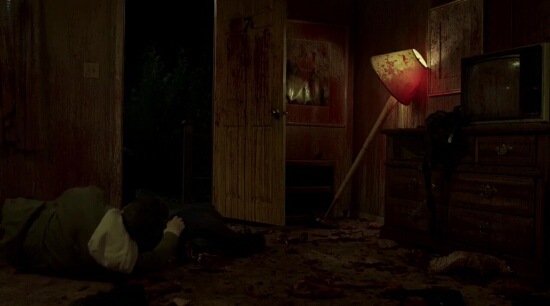
The main selling point for this new cut has been to make it the scary film that was always intended. Compared to the original theatrical cut, the whole climax of the film on the “Frankenstein” compound runs longer, allowing us to see more of what is being done. But as far as I can tell, it differs little or not at all from the original director’s cut. See this comparison.

The main difference in runtime is actually what has been cut from the scenes where Mulder and Scully are together. The new cut makes away with the romance entirely, even mentions to a “home” are removed, to the point where one might think they are not living together and indeed are not together whatsoever (things were rather unclear back then, even reviews of the original cut thought that Scully just visited Mulder’s home; imagine now!). As a person who is attracted to this show for its stories and how these characters relate to them, rather than the romance, I am a bit conflicted. I do welcome the removal of some cringey lines that are completely uncharacteristic of The X-Files (like the scratchy beard tease) and I can even live without the final kiss, although I don’t quite see why it should be removed, and in its absence there is an abrupt cut. However, several scenes no longer work because the Mulder-Scully bits have been trimmed. There are some hard cuts from one scene to the next that don’t feel natural, like when Scully is thinking in bed. The whole Mulder-Scully argument about getting involved in the case feels even more rushed and forced and at the same time not quite there because it is not the focus of the film. In my review of the original, I had conceded that I had so many issues with the “monster of the week” plot that the best part of the movie was how it explored the Mulder-Scully relationship, how the plot was more a background. The new cut wants to return to an early seasons dynamic where the focus is back on the investigation. But what is lost is the emotional connection to these characters. All the scenes in this movie were conceived and shot in a certain way: the original intent still half-remains in what is left and the attempt to remove the relationship is only half-achieved. They would have to have done extensive reshootings to make this fit. The movie is less strong because of it.

Most of the work that went into this new cut, in terms of time spent to do it, is actually nearly unnoticeable if you are not intimately familiar with the original. Carter and his editors have gone back to the original footage and re-examined it in-depth. Many scenes are the same but some shots are different: a different take of the same shot, the same shot but from a different point of view, a reaction shot instead of the shot of who is doing the talking… For Carter, who complained that post-production was done under a big time pressure, this was done to make the best edit out of the material available. It took a lot of dedication; but for these changes I can’t tell what is best. Some more dedicated fans have already done a detailed comparison.

All in all, one is left to wonder: who is this for? It’s far from deserving some of the vitriol it’s getting. With fewer connections to the show’s larger storylines, tighter editing, less romance and more violence (but no more than the original director’s cut!), Carter is marketing this is a film for old fans to revisit or, especially, for new fans to discover. However, even with these changes, I cannot imagine that anyone that would want their friends to discover The X-Files would recommend this over so many other options. What’s more, who would know about this if not the fans? In the USA, it is on Hulu under a separate entry; but in the rest of the world it is on Disney+ under the extras to the original cut, making it extremely unlikely for anyone but hardcore fans to see; and unless you are a fan of physical media the original director’s cut, which is arguably the superior of the three cuts, is nowhere to be seen. So why release it now? This cut feels more of a pet project of Carter’s, who seems to have plenty of spare time. He is asserting the intellectual ownership of the brand just as the huge corporation actually owning it is about to give it away to newer hands, with that other project possibly fast approaching a green light. If it could eventually lead to more X-Files being made by him, all the good for him!

Now I wonder if there is out there the possibility for an even heavier cut. I imagine a cut that tries to keep it as close as possible to the length of a double episode of the series, complete with opening titles and a cliffhanger in the middle. Or, why not go all the way with this surgery? Away with the sick boy and psychic priest storyline and those silly end credits: if you are going to put Frankenstein in the title, focus on that. Mulder and Scully come to investigate disappearances and the findings of body parts, even tighter pacing, some plot relevant dialogue repurposed as voice-overs over phone calls, most of it takes place in the still-unnamed-bad-guys’ compound, Mulder and Scully wonder about the darkness in the world, end. It would lack all the depth of the original, but it might be an entertaining 45 minutes.
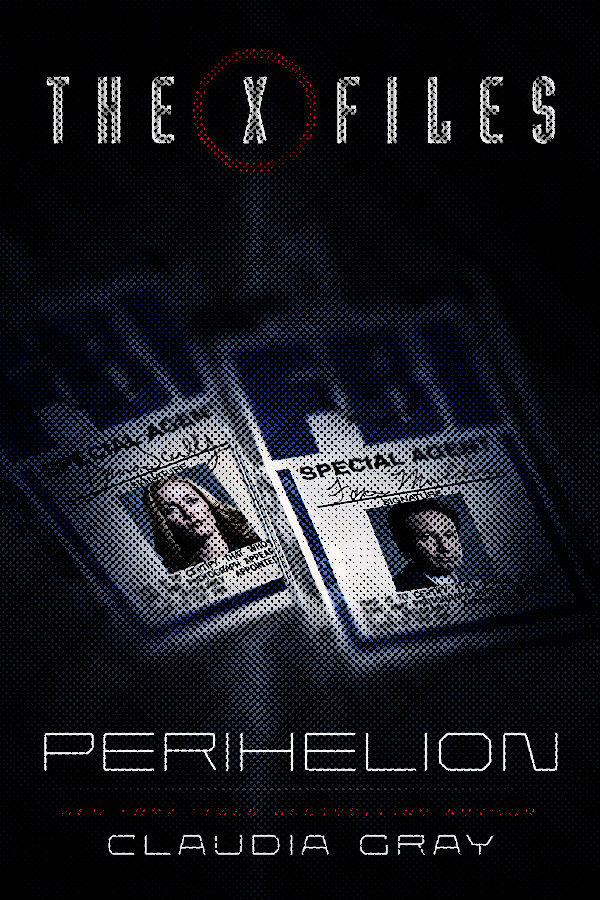
Perihelion: review/analysis

‘Perihelion‘, by Claudia Gray, Hyperion Avenue (an imprint of Disney Publishing), 2024

<rant>
Before I say anything about this novel, and this is completely independent of the novel’s qualities, I must add a disclaimer. I am much less emotionally involved with TXF than I was in the past and my level of excitement for anything new has dropped accordingly, however I will try to address what the novel attempts to achieve as objectively as I can. I’m considering anything past season 7 as bonus material anyway; and if s8 was like the “Extended Edition” and s9 was like cut scenes and IWTB was DVD extras, then s10-11 were like the making of of the making of in terms of importance. I enjoy new things and past passion still drives me, but it’s not what it used to be. Let’s just say that I’m more interested in things that have something to say and then end, and leave it at that. And now that I’ve done spilling my negativity, let’s move on to the novel.
</rant>

There will be spoilers.

“If the last thirty years of my work have taught me anything, it’s that evidence…evidence is irrelevant.”

This novel is different from all the preceding TXF novels in that it’s the first one that takes place specifically in-continuity and continues the storyline. All the previous novels (the 1990s novels, the short story anthologies) were stand-alone investigations taking place during the show’s run, or at least had no ambition to build their own mythology. Claudia Gray attempts what Joe Harris did with his Season 10 comics in 2013 — which were also blessed by Chris Carter with the holy status of being “canon” (literally canonized), until that was rescinded when the live revival happened.

For certain, the novel takes place in our times. There are discussions of plenty of start-ups, there’s a non-binary nurse, there are several jabs at the era of disinformation and of Trumpian post-truth. It’s been a record six years since Scully announced she was pregnant; with references here from 2018 (‘Where the Crawdads Sing’) to 2022 (‘Star Trek: Strange New Worlds’) it’s hard to tell when the story exactly takes place, which is a bit frustrating. The timing of the revival itself was very problematic as it seemed to be taking place when the episodes aired, internal timing be damned.

Claudia Gray, an ex-TXF-fanfic writer and better known for her Young Adult novels, knows her stuff! There are a *lot* of references to past episodes and cases. Reading her Acknowledgments, you can tell she is clearly a fan, and one can only be happy for her. Actually, there are so many references to the series and the plot is so closely tied to the revival that one couldn’t recommend this novel to a casual fan: this is for the hardcore audience who still want more (and I suppose that sales figures will reflect that).

There are a couple of nice jokes at the show’s expense (and at Carter?). Mulder muses that “we’re overdue for an update” on their FBI badge photos, it must refer to the opening titles remaining the same even in the revival. Scully’s thoughts that Doggett was OK but that the X-Files was really Mulder and Scully was something we heard from many producers for the show’s thirtieth anniversary. (Oddly enough, absolutely no mention of Reyes: is she kept for a future appearance, with a shock survival?)

“Just because I can endure trauma doesn’t mean I should.”

The novel has to deal with plenty of the baggage left over from the last finale (11X10: ‘My Struggle IV’) and that’s no trivial matter. It’s not the novel’s fault that much of the situation and focus was preposterous — an a priori baseless rejection of William as not their child, a second pregnancy shocker that repeats earlier situations but at a much more advanced age, a tabula rasa of the mythology with plenty of characters ending up dead (?). Instead of side-stepping things, the novel chooses to deal with all of it head-on, and hats off for even attempting that! In parts, this novel feels like proper closure from the frantic ‘My Struggles’ events, if Carter and the show had dedicated the proper time to the characters’ emotional lives instead of car chases. The novel stands as an epilogue to the revival series, leaving the lead characters to a much better emotional place than in the start (the titular perihelion, like day follows night). Things could even end there, as far as Mulder and Scully’s journey are concerned. But that’s not the only thing the novel is doing, and we’ll come back to that.

“I resent that so much of my life journey–even as an FBI agent–is tied to my maternity. It is not the whole of my self, not the sole governor of my fate.”

Much of ‘Perielion’ is Mulder and Scully’s internal thoughts, about themselves, their relationship, their complicated lives, their many traumas. As a plot-driven show, this was rare in the series, and we only got glimpses of this in monologues that became a staple of the show (‘Memento Mori’, ‘Redux’). The open discussion of their relationship is something that was atypical of the series until ‘I Want To Believe’. This being a gap to fill, it was also the typical focus of much fanfic, and this novel does feel like it at times — and this is meant in a good way. The prose is competent, the characters feel alive, the sections flow well from one to the other, the whole package is very professional and satisfying to read. Yes, the writer is a woman, and you can’t help but noting that given how much better everything around the issue of medical rape is treated here.

“William was an experiment. He was never Mulder’s. He was barely mine.”

The novel spends much of its page count showing Mulder and Scully dealing with the trauma and the consequences of the things that happened to them. ‘My Struggle IV’ was an extreme example of both emotional trauma and of absurdly little time dedicated to its aftermath. The novel’s role as the opportunity to debrief, open up, confront and move on is very, very much welcome (although a bit repetitive at times). The novel clarifies that Scully’s rejection of William as their son was a way for her to rationalize her shock at learning that he was the product of the Cigarette-Smoking Man’s experiments. The novel’s denouement nicely brings about Scully having to confront her anger at this situation, enabling her to start thinking about William again in a saner way.

The novel does comment on the absurdity of Mulder and Scully being flatmates intending to co-parent at age above 50. This is in continuity with IWTB and the revival, which had them becoming more distant because of Mulder’s depression from being away from his life’s goal, the X-Files. There’s something very sad about these two people at this stage of their life, with so much common past and common loss, still struggling to find a balance with each other so that they can be young parents as if they were twenty years younger. But this is where the story has brought these characters, and, again, ‘Perihelion’ has to deal with the status at the end of s11.

“William, her son, the one she had prayed for every night for so many years, the product of a vicious experiment by a vicious man, but still her son, the son she had lost for good, always and forever hers–“

‘Perihelion’ walks back on some big and controversial events of the ‘Struggle’ episodes. The CSM pretended William was his son, and this oral revelation was relayed from Skinner to Scully — all this was just hearsay, but the characters treated this as truth. Again through hearsay, Scully is told that the CSM was not William’s father but that he was “just” responsible for her being able to conceive. This mitigates somewhat how awful Scully feels about the whole affair. This medical operation on Scully looks like it happened during ‘En Ami’: she is found to have “new” DNA as young as a baby’s (long telomeres) and hence able to create new eggs (gametogenesis), which ties in with that episode’s tale of technology that cures all disease and makes an elderly woman live even longer. It also ties in with the joke turned fan theory turned near-canon of Scully being immortal.

That’s in-universe justification enough for how Scully could get pregnant at age 50something. It also sets up the same type of fears that the baby might have superpowers and be the subject of experiments as seasons 8 and 9, and I don’t know if I’m interested to go throught this again.

(For what it’s worth, William not being genetically the CSM’s son does contradict established canon, as William’s monologue and visions in ‘My Struggle IV’ clearly established that the CSM was his father, whatever Carter might say in interviews. And let’s not even mention how we should believe that Scully never did genetic tests on William during her pregnancy and after; while here Scully diligently does checks on her new embryo.)

To top it all off, we also get confirmation that the CSM is finally dead for good now (yet still able to influence things in this world even beyond the grave, in one of the novel’s most successful scenes, the channeling! I hope that was a one-off, though, let him rest) and Scully gets a hint that William is still alive (setting up a potential healing reunion later on).

“The truth is still out there, Scully, but now, so is everything else”

But showing us Mulder and Scully building a hopeful future for themselves, as if this were an epilogue, is not the only thing the novel does. It also restarts the concept of ‘The X-Files’ and essentially consists in the first of an open-ended series.

Any continuation of an established precedent has to play a balance game between reusing familiar elements and proposing something new. This novel is no exception: there’s plenty of TXF staples throughout. The thing is, over the past 10 years, between the IDW S10/11 comics continuation and then the revival, this is the third soft-reboot that we get and it’s unavoidable to feel the repetition.

Again, Mulder and Scully return to the FBI as agents after their suspension in ‘My Struggle IV’. That pause had lasted just a few weeks, but it feels as if they are returning after many years (which have actually passed in our world). They’ve been bought by Disney, and so the FBI can’t get rid of them! Again, they answer to an Assistant Director of ambiguous loyalties who is pressured by a mysterious figure — who thinks that whatever Fox Mulder (and *not* Dana Scully) does is very important. Again, like in IWTB, Scully is concerned that Mulder would be consumed by the work and only worries about him, again leaving a better job in medicine for the X-Files. Mulder gets a new informant and the Syndicate is replaced by another group, the Inheritors.

All of this is familiar ground. Maybe too much so. The novel both doesn’t shy away from the oddity of a 50+ year old pregnancy, but also doesn’t think twice of two 50+ year olds returning to FBI service as field agents, when normally at this age they wouldn’t be accepted. Independent private consultants would have been a much more realistic depiction; they could even be the ones training the actual FBI field agents. But it was more important not to change something as fundamental to the brand as ‘a couple of FBI investigators’. It’s 2024, but it will always be 1995.

“Chaos is coming, and the Inheritors have decided that if they can’t govern it, they can at least profit from it”

The neoSyndicate, the Inheritors, looks as if it’s operating out of the same office in that skyscraper in New York City. It is but one of the groups that fill the power gap left by the Syndicate (but those events were over 20 years ago!) and by the carnage of ‘My Struggle IV’. Previous incarnations gave the conspiracy a motivation that tried to feel more of its time: see for example in Harris’ comics the Glasses-Wearing Man’s obsession with news streams and manipulation of public agencies via subsidiaries of subsidiaries; or in the revival the digitalization of the X-Files archive and the prevalence of international private security firms). For the Inheritors, gone are the days of the grand Project and of great idealistic words like “Resist or Serve”: this new group just wants…money, more of it, and what creature comforts it can buy. There’s little allegory I can see in this novel, but if ‘Perihelion’ has anything to comment about our world, is that we really are in late-late capitalism.

“The entire world is about to be an X-File”

The novel slips into case file mode for a bit — there are some welcome chapters of actual investigation, profiling, paper trail, the bread and butter of early seasons that progressively disappeared in the later seasons. Sadly, it vanishes all too quickly when the case proves to be just a pretense for introducing Scully’s new superpowers.

‘Perihelion’ presents us with a fast-changing world. Like in the revival, the aliens are nowhere to be seen, but humans tamper with alien biology and technology. Alien DNA spread in the general population is resulting in people developing supernatural abilities, and forming a sort of community of X-Men. This comparison is inevitable — not only was this discussed during the revival, with the children in ‘Founder’s Mutation’ and William’s ghouli.net musings of joining a group of youngsters similar to him, but ‘Perihelion’ is actually explicit, comparing one of them to an X-Men mutant (Nightcrawler). This continues themes introduced way back in ‘The End’, with Gibson Praise developing paranormal abilities thanks to alien DNA, as this was possibly the explanation behind all the X-Files cases. It’s not clear at all when this new wave of mutations started, whether this was the Syndicate’s or the CSM’s initial goal, whether this is the result of ‘My Struggle II”s Spartan virus or of something else… At this point, the mytharc has become such a palimpsest that even canon works (and this reviewer) no longer try to join the dots.

There is zero mystery or subtlety here. Scully sees the mutants and their superpowers (teleportation, levitation). We are told exactly what the Inheritors want barely after they’re introduced. We hear ‘alien DNA’ sufficient times to stop wondering about specifics and believe it’s synonymous to magic. Everything is super-transparent and specific and *named*. The fact that Scully herself develops ‘D.P.O.’-like superpowers doesn’t help to swallow the pill (again, when did that happen to her? around ‘En Ami’? back when William was conceived? more recently? why does it only manifest now? is the embryo actually responsible?…). And who knows what superpowers will Skinner have once he recovers. All of this continues even more strongly the latter-seasons’ tendency to make the mythology about the protagonists themselves instead of being something the protagonists discover.

This is a natural evolution of the XF mythology endgame, sure, but this new level of pulpiness is jarring. It is also world-changing. Up to now the X-Files world was one just like our own but with plenty of unbelievable things going on right under the surface. With this wave of mutants and with scientists all over the globe identifying the mutations, the X-Files world becomes something different, other, a very clearly fictional place. The mythology progresses, but verisimilitude is lost.

At the risk of nit-picking, what also bothered me was how explicit, again, everything was regarding the Syndicate. The word ‘Syndicate’ was hardly ever mentioned in dialogue throughout the series’ 11 seasons (I counted: 4 times, and only starting in season 6, ‘Two Fathers’); it mostly went by unnamed, adding to its mysteriousness and pervasiveness. Here, Mulder and Scully are shown to know the names and professions and exact associations with the Syndicate of many operatives, which hints at knowledge they were never shown to have in the series. The CSM’s real name, revealed in ‘My Struggle III’, is repeated so many times that one can’t help but think that this old guy Carl must not have been so bad after all and we were just gaslighted into thinking he was powerful.

“The truth has its own value. Our work saved lives, and gave validation to many people who badly needed it. That’s what we have to remember.”

The couple learn that Scully is expecting a girl. Gray had included a child of Mulder and Scully in her fanfic from all the way back to 1995 when season 2 was airing (“Guardian“, Spooky Award winner!); if it’s any indication for a follow-up novel, the child then was a girl and her name was Rebecca!

Between the new pregnancy and the case file of a serial killer targeting pregnant women, that’s a lot of obsessing about procreation, which follows on the latter season’s mythology. Now that Gray has dealt with all of the mythology leftovers, she might develop her own storylines expressing her own interests. I’m not sure I like her direction for the mythology, but I like her Mulder and Scully.

Obviously, this sets up a sequel or series of follow-up novels — by now, this is standard practice for tie-in merchandising of a big brand owned by the largest entertainment company of the world. As Claudia Gray is also involved in writing tie-in novels for another big Disney property (Star Wars), I can see her writing several of these TXF novels in the future. Besides, it’s quite clear by now that no further Carter/Duchovny/Anderson TXF will be happening, and that any talk of a reboot (with potential Duchovny/Anderson cameos) has been premature: the path is clear for one of these novels popping up every year for the foreseeable future, building their own continuity, as long as they sell enough.

11X10: My Struggle IV

My Struggle IV marks the end of a journey.

It is of course the end of this season, and as a cliffhanger it is calling for more to come; it is also the end of the 4-episode My Struggles arc of the revival (plus Ghouli, given its importance); it is highly likely, given Gillian Anderson’s declarations, that it is the end of Scully’s part in The X-Files; with such an uncertain future it could prove to be the end of the series. It is an unsatisfactory end to all of these possibilities.

There’s not much to say here really…

The end of the Struggles

Chris Carter announced several times that My Struggle IV comes to close the saga started with My Struggle I:

Reddit AMA: “The four struggle episodes were all pieces of a whole and Episode 10 completes the whole.”
TV Insider: “They really are four quarters of a whole. And I think that maybe threw some people at the beginning of last season, and even at the end of last season. But I think that you see, as you have seen, that they were puzzle pieces—four puzzle pieces to form a circle.”
E!Online: “I think that it will be satisfying for everyone, once they finish the finale, to go back and watch the four parts, the four puzzle pieces together. I think it will be a very satisfying miniseries within the series.”

From this perspective of an end of a four-episode saga, MSIV is completely random!

All the times reactions and reviews closed with “answers might come later”, MSIV was the one to have them, or not at all. The story of MSIV is extremely simple compared to its predecessors, it is just a manhunt.

Mr. Y and Erika Price are the two most definitive deaths in this episode, and this is very surprising given that the casting of these characters by two very interesting actors made me expect they would become the new recurring villains in any future season 12. Instead, they were given no character development; their plans were not expanded upon (we do see in MSIV some spacecraft and Purlieu services, confirming the information of MSIII and This); they are offed in a very expeditive manner. (Interestingly, Carter said he had initially seen Strughold for the role of Mr. Y, but I suppose the 90-year-old German Armin-Mueller Stahl was unavailable!)

MSII and MSIII, within their dialogue, set up the activation of CSM’s plans of a viral apocalypse in a future seen in visions by both Scully and William, and one would expect the finale to do something about it; MSIV just mentions the threat but delivers nothing on the visions. MSIII and This, within their dialogue, set up a confrontation of CSM and Mulder, where CSM was afraid that Mulder would kill him (the same CSM that survived a missile strike…); while Mulder did shoot CSM, the confrontation itself was just a shootout. MSIII, within its dialogue, also set up a Sophie’s Choice type of situation where Scully would have to choose between Mulder’s life or William’s life and joining the CSM’s side; nothing came out of that set up.

Furthermore, absolutely no answers are given to the issues raised by the Struggle episodes themselves, not just questions pending from seasons 1-9. For instance: why didn’t Scully directly start working on a vaccine with the knowledge she got from her visions (only her DNA was necessary)? what is the virus within a virus in the Spartan virus? how is the Spartan virus an alien pathogen when My Struggle II explained in detail how it works with CRISPR-Cas9? how did the CSM survive? why did the CSM’s appearance change from episode to episode (including between My Struggle I, which happened outside of Scully’s visions, and My Struggle III)? why were William’s stem cells important for saving Mulder, if after all he is not the father? why did the CSM consider the secret around William’s paternity a weakness?

(There is another This Man appearance here, on a billboard next to the sugar factory, making him present in nearly all of season 11. This is nothing more than an Easter Egg it turns out.)

Long story short, MSIV is more of another independent episode that doesn’t need much information on what came before, than a continuation of an arc — in the same way that MSI was essentially unnecessary to MSII, that MSIII erased MSII.

The end of a 25-year mythology: the old mythology and William

It is obvious that the original mythology of seasons 1-9 has been done away with, and it is illusory to expect any continuation or closure or answers to a number of lingering questions — the Black Oil, the Rebels, the Supersoldiers — nor any clarification further than the MSIII flashbacks, which can be read in both ways, as to how well this revival articulates with what came before — was the colonization threat a sham? has CSM’s Spartan virus plan existed since before the colonization threat went away? why doesn’t the Black Oil behave as before? All of this is dead and buried.

At least, we are given more background to William/Jackson in the traditional Struggle teaser. He lived a normal first five years (so Scully was right to give him up for adoption?) but then his powers kept developing and he became a criminal, a masterful liar and somewhat of an emotionless manipulator (and so Scully was not right to give him up?), who can also blow people up with psi powers, Scanners-like. All this builds him into this troubled teenager with supernatural powers that could be the focus of a monster-of-the-week episode (and indeed his trick with the lights that cause a traffic accident is reminiscent of 3X03: DPO!). William/Jackson is his own man, no longer wants anything to do with Scully or Mulder or the CSM, and although it would be interesting to see him again, it is just as well possible that Carter is done with him.

But the single and most important, essential, basic item we could have expected to have an answer about, something that has been an open issue since the year 2000, something teased at with that teenage boy in the credits of season 9, something that must be spelled out in order to make this whole story engaging and understandable, is the why of the importance of William. Apart from stating the fact that he is “the key”, or Mr. Y’s last words “Your son has what everybody wants, what people would kill to have“, there is nothing here apart from the same tease since season 8: why is he important to, well, everyone? The posts at ghouli.net suggest that he could be a weapon, and that “the cure is in the blood” (see analysis here). Does that mean that he can prevent or be used to prevent CSM’s plans somehow and save the world (tagline change: “Salvator Mundi“)? (however MSII suggested that any abductee like Scully, and at least CSM, Scully and Reyes should have the materials necessary to build a vaccine/cure against the Spartan virus) Does that mean he could be used as a weapon to any resistance to CSM’s plans? We don’t know.

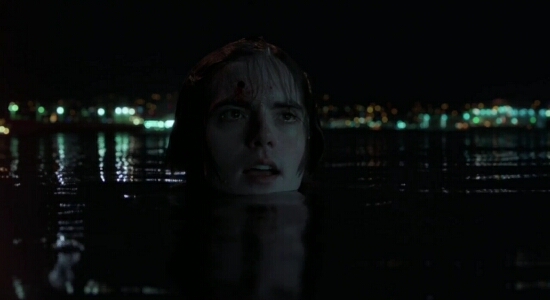
William did help out, unwillingly, in having the CSM’s back turned so that Mulder could shoot him, and that’s it, but that’s far from the miraculous alien-supernatural importance conferred to him with the weight of four seasons’ mythology. At the end of the episode, William emerges from the water (in a scene echoing all the way back to Dr. Secare, a hybrid that could breathe underwater, in 1X23: The Erlenmeyer Flask!). William has been “downgraded” from being the center of the universe to another monster of the week that Mulder and Scully encounter and forget in the next episode.

The end of a character: Scully, William’s father and the new pregnancy

The CSM declares himself William’s “creator“, and indeed William’s visions with the CSM confirm that he is the father: “the truth can only come from my father, a man I’ve only seen in my visions, but who I know I already hate“. (Why then didn’t he blow him up when he had the chance the way he did with Erika Price?) Presumably the CSM is also the biological father and not just the abstract father-creator then, along with some alien DNA thrown in the mix (no double DNA as hinted at in ghouli.net, which let open the possibility that the father was Mulder and that the additional DNA was alien). Scully was an incubator, and we spend the whole of one minute on that as Skinner tells numb Scully all about it, and when later Mulder accepts that information when Scully shares it with him.

There is no reversal of the reveal in My Struggle III: Scully was indeed, again and again and again, the victim of experiments involving medical rape and her reproductive system. And so because of that, all of a sudden, one year of miraculous pregnancy, one year of stressful upbringing, and seventeen years of remorse at having given up William for adoption, including in the revival (Founder’s Mutation, Ghouli), are all swept away: Scully no longer cares about William. Apart from this being an insult at anyone that has adopted a child and has been able to genuinely love it independently of biology, it is also shoehorned in the story in a way that messes enormously with the way Scully’s character is represented. Scully cared more about Emily, clearly the result of an experiment, than for William, whom she carried and thought about for so long. Carter gives Mulder a hug and chat with William but denies any real meeting between Scully and William — something unimaginable in the emotional context of anything up to this episode, particularly since this is most likely Anderson’s last episode (another indication that Carter is done with William as a character?).

All because Scully has a new child coming. The weird dialogue and never-seen-before sex in Plus One was indeed foreshadowing: Scully is pregnant again! She is pregnant at 54 (not that this is unheard of, but she has not been shown actively trying to get the necessary medical assistance to conceive at that age) and very fertile given that her being barren was such a big part of her character story; there are no explanations given other than the prayers in Nothing Lasts Forever and, well, her alien DNA. The future Benjamin (Rachel’s second son) or Wilhelmina or Samantha is supposed to be consolation for the loss of William, both figuratively (Scully learns from Skinner that he was an experiment, and thus no longer her true son) and literally (Scully & Mulder think William is dead), which given how much emotional and mythological capital this series has spent on making William important, is crazy.

What is the point of doing that? If the series ends now, Carter has given Scully and Mulder a happy end similar to the end of season 8, with a child together, complete with Mark Snow’s reprise of the lovely “Surgery” track from I Want To Believe — at the cost of scrapping 18 years of William’s storyline, just because too many years have passed in the real world, with the third film or the revival taking so long to materialize, and Carter can no longer write them rejoining with William and raising him as a family. If the series continues, the new baby’s conception will again be a mystery to focus on, repeating the tired tropes of seasons 8 and 9. (Or, continuing the parallel with Rachel, Scully could die at childbirth of her second child!) Some placed Scully’s pregnancy as a “jump the shark” moment; this is that to the power of eleven.

The end of a show

On top of all things, MSIV includes the age-old season-ending intrigue of “they are closing the X-Files”, this time coming from Kersh, for reasons of FBI image, as Mulder and Scully’s theories and Mulder himself appear on Tad O’Malley’s conspiratorial show. Incidentally, the show has still to give any subtelty and shades of grey to Tad, a shame really given how much unsubtle credence and echo the show gave to his far-right-pleasing extreme theories during season 10. It’s unclear why it is so important that the X-Files would close, given how few actual FBI cases Mulder & Scully have investigated in this revival.

MSIV also features the death of Skinner and Reyes. Skinner’s death is the only new variation of the dubious ally/enemy trope this character has been trapped in since his conception, but his sacrifice comes at not such a big surprise. We were expecting more background on Reyes’s apparent deep change of character as presented in Scully’s visions in MSII; instead of that, we got a short and at the nick of time phonecall from Reyes to Scully that gets the story rolling, and that is all the redemption Reyes could get for herself in the ten-plus years she has apparently been working for the CSM. Even so, that redemption is ambiguous, as that phonecall gets Mulder in a situation where he could easily have been killed, and does not lead to William, it’s Scully’s search “on the web” and William’s ex from Ghouli (and her sister Maddie aka Duchovny’s daughter West!) that lead Mulder on his trail!

Some nice things can be said about MSIV, such as its very XF-like cinematography (dark and wet), its XF-like settings (the motel, the sugar factory, the pier), and its through-and-through better management of tension than MSIII. However, with the Struggle episodes, especially this season, Carter has turned The X-Files mythology into an action flick completely different from its atmospheric roots. Mulder is a Jack Bauer-like action hero who can take down trained professional soldiers, unfazed by the consequences of his unlawful actions; the “confrontation” with the CSM is a “shoot first ask questions later” type of situation. It is loud, fast, unsubtle, incoherent.

With no less than five deaths, unprecedented in the show, MSIV does away with nearly all the show’s side characters. MSIV blows up the show’s mythology, something Carter was in retrospect obviously fed up with, and clears the scene for something new and yet unknown to emerge in the future. It provides some sort of end point for the leads. There is actually a lot of closure in this episode, despite it being described as a cliffhanger.

But then Carter was quick to undo this closure in interviews, by pointing out how everything can be impermanent: none of the CSM, Reyes and Skinner’s deaths are confirmed; others could emerge from the depths of the neoSyndicate to replace Mr. Y and Erika Price; the Spartan virus and the aliens are still out there; Scully’s new baby’s conception is something to be explored…rince and repeat.

Given what he has done to the mythology of the show, to its central characters (particularly Scully), and to its visual/cinematic/editorial identity, I’m not sure I’m much interested in anything The X-Files that might come in the future any more.

No animals were blown up in the making of this review.

11X09: Nothing Lasts Forever

This is the last stand-alone case before the (season? series?) finale, after being switched with Familiar — and the switch works, as this episode includes some watershed Mulder & Scully moments that we are not likely to have time for next week. Nothing Lasts Forever is written by Karin Nielsen (script coordinator for season 11; and apparently someone Carter knew, since her short film Grace was included in the season 10 BluRays) and directed by James Wong, although it was was initially advertised as a Morgan & Wong script (their first collaboration for over a decade, after their writing partnership split); there are plenty of elements still in the final script that remind of a Morgan & Wong story: Nielsen must have worked closely with both even more than Cloke & Hamblin worked with Morgan for Followers.

The Gore-Files

Nothing Lasts Forever looks at a particular sub-genre of horror: gore. It purposefully tries to out-do the series’ well-known precedent shocker of an episode, 4X03: Home, and certainly succeeds — I wouldn’t know whether this is testing the limits of what can and cannot be shown on network television since there have been so many shows since then (Hannibal?), however things have changed a lot compared to the strictness of the 1990s!

The X-File here mixes a cult of vampire-like cannibals, organ theft by doctors, a mad scientist looking for the fountain of youth, the public persona pressure for a youthful appearance and fear of old age (with yet-another-tagline-change, unfortunately: “I Want To Be Beautiful“), as well as a revenge story fuelled by religious Catholic fervor — quite a bit for a single episode! As a consequence, the Mulder and Scully scenes feel clumpsily out of place and tonally and thematically not very linked with the rest of the episode; the investigation aspect is boiled down to its very minimum, with much of it happening offscreen; the plot itself is, after all, very simple, and could be summarized in just two scenes of setup in the vampires’ den and the resolution. There is only so much you can do in 42 minutes, and Nielsen & Wong’s choice was to sacrifice investigation time for building atmosphere and tension, a fair choice.

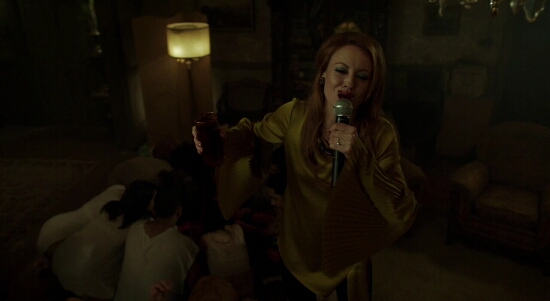
A significant part of the episode is spent in the vampires’ den (reminiscent of 7X01: Hungry), giving actress Fiona Vroom time enough to shine (she was also the young Cassandra Spender in My Struggle III!) in a role reminiscent of Gloria Swanson’s in Sunset Boulevard. The episode’s gore culminates with a gory combination of a song over horrific images, a stylistic choice used many times by Morgan & Wong! There are comments about scientists going beyond what regulation and morals permit so as to attain a goal for the good of humanity, as in 1X15: Young at Heart (although Dr. Lovinus’ tirade comes at an odd time in the episode though, pausing the tension of Mulder searching for the missing Scully).

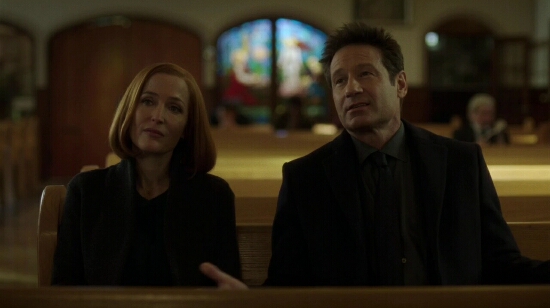
There are parallels drawn between the cult’s literal consumption of human flesh and blood and the Christian act of symbolically consuming Christ’s flesh and blood in order to accept him in one’s life and attain eternal life — both in the way Scully’s communion is shown and how a cult member is willing to sacrifice himself so that he can live on through Barbara. The B-story of “La Avispa” (the wasp, stinging its victims), a Latina Buffy-like vampire hunter straight out of an action movie, is given a short time to develop, but the script makes the most out of it with the two scenes echoing each other of the two different sisters coming down to their mother, who is weeping and praying for the missing one.

Overall, this is not an episode for the faint of heart! Wong’s directing does an excellent job, particularly putting attention to the transition between scenes, and not hesitating to add icky sound effects of chewing and licking and squishing to maximum effect (remember that a sound — a baby crying — was a specific element that did not pass the censors for Home!), making use of his experience with American Horror Story, a show with a similar tone. Between this and Ghouli, Wong signs two of the best-directed episodes this season, making it obvious how important directing, not only writing, is for a show like The X-Files. One has to wonder how the episodes directed by Carter and the Morgans would have turned out with directors of Wong’s caliber: the auteur approach of a single person writing and directing his own episodes is interesting, but it has shown its limits in this revival.

Mulder and Scully and that church scene

The aptly titled Nothing Lasts Forever ties the theme of the episode of working against the natural process of ageing with how our main characters have grown old as well — the passage of time is something that almost every single episode has dwelled on in this revival with uneven results, and it would have been repetitive here would it not have been for the quality of the dialogue. Yes, Mulder and Scully are older, the show itself is old, there is no denying it.

This comes off almost like a meta commentary on the show itself: it too wants to be young an hip when it is two decades past its prime, and goes through all kinds of artifices to trick itself and its cult (us fans) that you can go back. More than just mentioning these characters are older, like This, it is integrating this fact in its story; in a sense it is building on ideas discussed in The Lost Art of Forehead Sweat. Certainly the Mulder & Scully scenes show that the episode is conscient that it is in the closing age of the series and not before a new golden era. There is a sense of inter-connectedness between the episodes this season more than in season 10, rarely in character continuity but at least in the underlying themes.

Mulder and Scully’s scenes together are destined to remain among those most remembered from this revival. They are in tone with the show, much better written and acted than the ones in Plus One, far from the sappiness of love declarations of 9X08: Trust No 1, and strong enough to convince even this agnostic noromo; their dialogue rings true in the mouth of these characters and for once we really have the impression that we are watching the characters and not the actors. Although it could be said that this is the sort of discussion that is one or two decades too late and that they might have had it repeatedly offscreen in the past already, the fact is that such a discussion openly addressing their relationship and their common future has been a long time coming for viewers, and this potentially being their penultimate episode together it fits very well here.

Scully laments her failures: “I believed I could protect our son, and I failed. I believed that we could live together, and I fled.” Mulder’s fear is that their work in the X-Files has been holding Scully back from living a better life, echoing the hallway scene in Fight the Future or the motel scene in 7X22: Requiem. But Scully absolves Mulder of all that guilt (“I don’t begrudge you any of those things“): their shared history has been going on for so long that it is not about Mulder’s obsession in the paranormal, it is not about who is pulling who into the X-Files. Mulder is very much ready to start again, and it has been Scully who has been thinking things over.

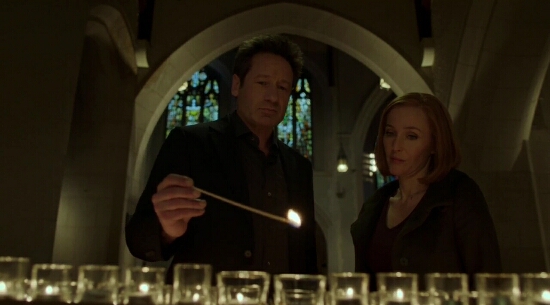
While Carter did not include any scene in the revival to show how their relationship broke up, he did describe the end scene of Babylon as an important moment for them; but it is really the moments in this episode that are the important (and superior) ones. The question is, bluntly, “are we together?“, however the acting and directing, the church scenery, and the a religious and spiritual connotations of Mulder lighting Scully’s candle give this a lot more weight and significance than any melodrama from a telenovela. As frustrating as Scully’s inaudible whisper was upon first viewing, it is indeed a beautiful moment of intimacy for them and them only — similar to us not knowing what were their gifts in 6X08: How the Ghosts Stole Christmas or what happened after the credits in many an episode.

This analysis would not be complete without mention of the pregnancy theory. Picking up on the discussion and sex and the name of the St Rachel motel in Plus One; the stained glass depicting children joining Jesus under which the discussion takes place; the mention here again of Scully as a mother (“have a bunch of kids that you wouldn’t have to give up“); all of these seem hints that a pregnancy is brewing. Indeed, why discuss “miracles” so heavily, a term associated with the conception of William, when all Scully is mulling over is their future together? What action and project does she refer to when she says “I’d like to do it together“? It somehow feels more than a decision to “be” together, but to “do” together. It can be read both ways, and probably purposefully so — My Struggle IV itself might leave it ambiguous as well!

Regardless, dialogue like “reason and faith in harmony” is a summation of everything in The X-Files: a callback to season 7, when the show was also ending then, during which Mulder and Scully’s beliefs drew progressively closer until they became one. A great point to leave these characters, if there was any.

Next week: finale!

“This Man” is again present in this episode (graffitied on the building of the vampires’ den, when Mulder and Scully enter it), and its status as something significant or as an Easter Egg should be revealed next week.

And thus we come to the end of the string of eight stand-alone episodes this season. The X-Files has always worked by being more than the sum of its parts, by having a base template that could be used to explore all sorts of stories and genres. The longer length of season 11 has allowed the show to look at science fiction stories, technology parables, supernatural horror, paranormal thriller, gore. The longer length has also allowed episodes to tackle their story and not fusing things together like 10X4: Home Again. There has been, at times and far from consistently, some continuity (here: reference to Charlie Scully, Scully’s mother’s coin from Home Again, an 1121 reference, a 9X03: 4-D reference (?)); much less so than how other shows do it but more than the stand-alones in an average X-Files season; the mythology is another issue altogether. Each episode has had its more or less big ball of problems, some with huge, but the overall feel is that of a more satisfying season than season 10 (a feel perhaps reinforced due to two of the season’s strongest are these two last ones).

It is interesting that only one of the old gang, Wong, and two new writers, Van Allen and Nielsen, are the ones that seem to understand what works in The X-Files and give episodes that feel satisfying as “scary stories” and as emotional stories. It has been an uneven run of episodes, which shows that The X-Files still has life in it left when it is handled well, but that it should really think about the stories it wants to tell in an environment where so many quality shows out there make viewers less forgiving of missteps.

11X08: Familiar

The X-Files Season 11 / Event Series 2 : Introduction 11X01: My Struggle III 11X02: This 11X03: Plus One 11X04: The Lost Art of Forehead Sweat 11X05: Ghouli 11X06: Kitten 11X07: Rm9sbG93zxjz

When this season was announced, one of the aspects I was most interested in was to see how episodes both written and directed by newcomers to The X-Files would turn out. Certainly my main expectation from this revival was closure with the mythology and characters, but Carter expanded the revival to cover stand-alone episodes as well, and with more quantity of episodes this season comes experimentation and open slots for new blood. Kitten was extremely derivative of the past and lacked stamina; Followers was all concept and not enough content; Familiar is the first one to truly get it right. It is written by Benjamin Van Allen (writer’s assistant/staff writer in the two revival episodes in the first solo script of his career!), and is directed by Holly Dale (veteran TV director, newcomer to The X-Files).

Release the Hounds of Hell!

The story is not something we have never seen before. Small town witchcraft where those calling it get more than what they can handle, couples cursing each other because of extra-marital affairs: see the landmark 2X14: Die Hand die Verletzt and 7X16: Chimera. The little boy in yellow parka and the scary clown figure inevitably bring Stephen King’s It to mind. The use of whatever is familiar to the victims to attract them or scare them is reminiscent of the changing monster of 7X12: X-Cops, but here it is in fact derived from a real belief: the familiar spirit of Medieval European folklore, reminiscent of the succubus (3X21: Avatar). The originality of the episode is not in the paranormal phenomenon itself.

However, the story is approached as a true mystery with enough twists and turns throughout as to what is happening and why that the result is gripping and fresh. We get to care for the drama happening to the people we meet here, be it due to the horror of children dying, due to some good acting, or to some tight editing. We feel for the raw wrath that leads to an innocent person getting accused because of his past and hunted like a witch by a mob, in a scene that is reminiscent of classics like Frankenstein or 3X13: Syzygy or 5X06: Post-Modern Prometheus. It is true that Mulder & Scully are more spectators and their investigation does not prevent any murder — actually, Scully’s involvement inadvertantly results in an additional murder, but such are the complexities and perils of law enforcement — and this is not something we haven’t seen in several episodes. The only odd passage would be them not attempting to do anything while Mrs Strong spontaneously combusts at the end.

Another aspect that the episode gets right is Mulder and Scully’s interaction: the intense intellectual exchanges between them, throwing theories at each other to see what sticks, seeing them grinding their gears while the events are unfolding around them. Mulder being Mulder with his encyclopedic knowledge of all things paranormal and his knack for literally tasting the evidence;
Scully taking the role of the one looking for a grounded explanation, using medical vocabulary and actually performing an autopsy. It is really a mystery why it took us fourteen episodes in this revival to get scenes like these.

The other trademark element that is present here as well is the Vancouver atmosphere. The forests are utlized better here than in Kitten, and there is rain and mud in several scenes. It helps that the shooting was advanced enough by this time, November, that they could make use of the rainy weather that defined the early seasons of the show — in contrast to the light due to the shooting during summer months in season 10 and the early part of season 11. Mark Snow’s music is noticeable this time, in horror mode, and includes that damned catchy Mr Chukleteeth theme song. The incredible design of Mr Chuckleteeth and the Teletubbies lookalikes all contribute to the overall spookiness. Incredibly enough, it is also the first episode of season 11 to feature the normal tagline, “The Truth Is Out There“!

The fact that all the elements work is a tribute to Holly Dale’s directing, I really wish she would have been involved in this revival from earlier on.

MOTW vs Mythology

Thus we have here a stand-alone episode that could have been pulled straight from season 2. And that is almost true too in the way Mulder and Scully interact. While it is wonderful to have Mulder and Scully arguing their case to each other again, there is no denying that 25 (26?) years have passed since these characters met and they cannot be behaving in exactly the same way. Phrases like “as we’ve discussed before, people don’t just spontaneously combust” are interesting, since they both acknowledge a precedent, yet omit the fact that at one point Scully was the one opening up to Mulder’s theories and proposing spontaneous human combustion to interpret a murder (a memorable dialogue in 6X17: Trevor)! Can Scully still say “it doesn’t mean that witchcraft has any basis in reality” after all she’s seen? (e.g. 7X14: Theef) While Scully mentions it’s always difficult to autopsy a child, it’s a lost opportunity not to make the connection of the name of the second child victim, Emily, with her own child (5X05 Christmas Carol / 5X07: Emily).

Of course, that kind of radical shift from mythology episode to stand-alone episode and lack of experience accumulation are encoded in the series’ DNA since the beginning. Even so, season 7 was notable and enjoyable for its progressive convergence of worldviews of the two central characters, which could be felt not only in the mythology episodes but in the stand-alones too. It is evident the revival is not attempting such ambitious character development and prefers to return to the roots of the series. Mulder as the archetype of the believer, Scully as the archetype of the skeptic, in a formula that could be repeated in any number of reboots for future generations. Perhaps this schizophrenia is even more noticeable now given the short amount of episodes and our impatience at approaching an end that might be very final. Indeed, one’s enjoyment of episodes such as this one is colored by one’s expectations: more and more of “Golden Age” type of episodes; or advancement of character and plot towards a long-awaited conclusion? While this site’s focus on the mythology definitely tells you my preferences, there are few things to nitpick here. Familiar does not tackle a big current societal concern, it does not cover completely original ground for The X-Files, but — finally! — it works.

11X07: Rm9sbG93ZXJz

The X-Files Season 11 / Event Series 2 : Introduction 11X01: My Struggle III 11X02: This 11X03: Plus One 11X04: The Lost Art of Forehead Sweat 11X05: Ghouli 11X06: Kitten

SSB3YXMgdGhpbmtpbmcgb2YgZG9pbmcgdGhlIHdob2xlIHJldmlldy BpbiBCYXNlNjQgYnV0IHRoYXQgd291bGQgaGF2ZSBiZWVuIGZ1bm 55IG9ubHkgdG8gbWUu

Rm9sbG93ZXJz is written by Kristen Cloke (Glen Morgan’s wife and mostly an actor, memorably as the incredible Lara Means in Millennium) and Shannon Hamblin (s11’s script supervisor) and is directed by Glen Morgan (of This fame, among others), however it seems Glen also had some significant input in the story (initially it was described as his, or that the story would be his and the script would be Cloke/Hamblin) and the approach (the lack of dialogue). So while it might look like this is an episode that introduces new blood into the series, the reality is more ambiguous.

The distinguishing mark of this episode is its near complete lack of dialogue, putting it in a long tradition of “experimental” X-Files episodes like 6X03: Triangle or 7X12: X-Cops. After many episodes that feel too busy with dialogue (although less so in season 11), this is a welcome change! In that sense, this episode is The X-Files‘ counterpart to one of the best Millennium episodes, 3×06: The Curse of Frank Black, and to Space: Above and Beyond‘s Who Monitors the Birds? (both Morgan & Wong episodes)!

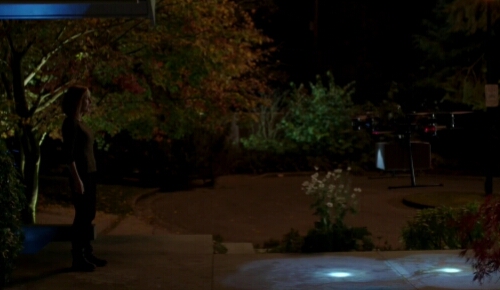
The subject is technology and artificial intelligence: how pervasive technology has become in all aspects of our daily lives, how we grow distant from each other due to our addiction to technology, how incapacitated we would find ourselves were this technology turn or be turned against us. The episode make use of very modern technology at the border of science fiction — Internet of Things, drones deliveries, driverless cars, automated cooks, Anymal dog-like robots — all of which exist but which still feel very science fictional to 2018 viewers, which is indeed exciting.

And that’s it, really.

It doesn’t do much more with all this than point out what 1X06: Ghost in the Machine did 25 years ago: modern technology can be spooky and dehumanizing. There is something about the A.I./children learning from humans/its parents, and that we should better ourselves or our bad aspects will be reflected back upon us, notably in the teaser (inspired by a real event with a Microsoft experiment in 2016) — however that as well is served with the subtelty of a T-800 crushing a skull.

It doesn’t help that the intrigue is, once more, not a case investigation, but a random event happening on our characters, and that the motivation is nothing more but a vendetta over a waiter’s tip. There were many ways to make a more intense use of the A.I. theme and the lack of dialogue: shoot with a smartphone as if it were found footage; show everything from the point of view of the A.I. and the cameras it can access; force the characters not to use dialogue because they fear surveillance; have the agents discover the A.I. is covering something up and that’s why it’s turning against them; etc. This is a more conventional episode. The themes and the approach are not new to either show, but comparisons to Black Mirror are inevitable — especially with the episode Metalhead in its latest season, which was produced essentially simultaneously as season 11 (featuring a manhunt by similar dog-like robots, little dialogue, and a gorgeous black-and-white photography). A.I. is a topical concept, but instead of spearheading the originality in television drama The X-Files is content to lightheartedly tackle themes better handled by other shows more attuned to the present zeitgeist.

The tip vendetta is a joke of course, like a Twilight Zone punch line, in an episode which, talking about silent film, doesn’t know if it wants to be Buster Keaton or Alfred Hitchcock. Despite the seriousness of the threats, the tone is playful; with all the focus on everyday little worries, once more it feels like we are watching the actors instead of their characters; compared to Morgan’s This, it’s a bit “been there done that”. And honestly, who could have imagined that 2018 would give us Mulder cleaning his nose hair and Scully’s smart vibrator, and labelled this The X-Files?

That being said, the episode as a whole is entertaining and enjoyable to watch, with some good scares! Morgan’s direction is competent and gives us some interesting shots of weirdness, such as Scully at eye level with the delivery drone. There was certainly some thought into the cinematography, with cold whites in the sushi bar (a cold version of Hopper’s “Nighthawks“, re-imagined with robots later in the episode!), darkness and infernal reds in the final confrontation with the robots, and human warmth in the closing scene. Technology-focused episodes like 1X06: Ghost in the Machine, 5X11: Kill Switch or 7X13: First Person Shooter don’t tend to age well despite other qualities; with its interesting ideas treated with little inspiration, at least Rm9sbG93ZXJz will be remembered for its pure entertainment value.

Miscellaneous

  • Tagline change, again: “The Truth Is Out There” in Base64.
  • This episode aired on February 28 — fittingly, March 1 is Future Day, as established in 2012 by transhumanist organization Humanity+!
  • The restaurant is “Forowa”, Japanese transliteration of “Followers”, i.e. the decoded title of the episode from Base64, but also the Twitter followers the A.I. was gathering, as described in the teaser. So right before it was shut down, the A.I. copied itself and decided the best way to make a humble living while getting to know people was to open a fully automatized sushi bar.

  • Despite the “our home” talk in This, this episode clearly establishes that Scully and Mulder live separately. And what a home Scully has! Much more interior design and coldness than could be expected from her — and high tech, obviously just for the purposes of this episode. Why does Scully no longer live in the place we got glimpses of in Founder’s Mutation? Why does Mulder drive Scully’s SUV, forcing Scully to take a taxi? Do they swap cars? Why does Mulder drive Scully’s car but has never visited her place? Do we really want to make sense of this?
  • Mulder’s credit card is “Bigly Credit”: a nod to Trump’s sort-of-neologism “bigly“?
  • Poor blobfish: once upon a time Scully would have lectured Mulder on the scientific reason behind his looks, today she just takes a photo of it.
  • It didn’t take long for obsessed fans to track the model of Scully’s vibrator, then Anderson played the game as well.
  • “This Man” sighting again, behind Mulder & Scully in the final robot showdown! Where is this taking us? Hints that this is all a dream? Related to those who want to contact William?

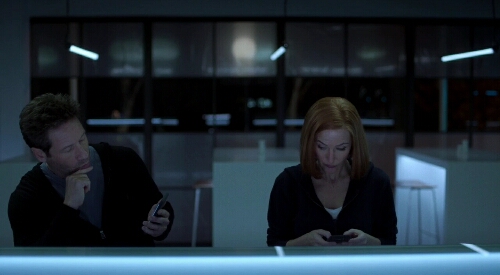
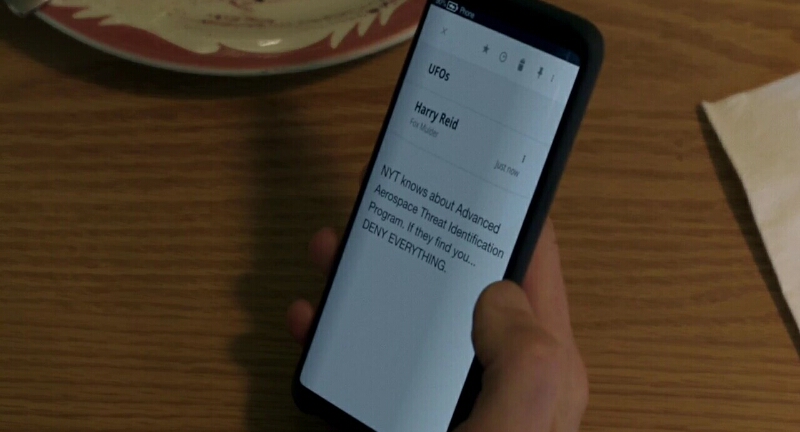
  • We get glimpses of what Scully and Mulder are reading on their phones: this August 2017 article about Tesla/SpaceX CEO Elon Musk warning about AI; and something from Nevada Senator Harry Reid, who in December 2017 was revealed was behind the real DoD-sponsored UFO investigation Advanced Aerospace Threat Identification Program (kudos to the team for inserting that, this happened after the episode was shot). In a double touch of meta, Reid said “The truth is out there” when news broke out, and here Mulder receives a warning message from Reid! (Does the episode take place in December 2017 then? Mulder’s parking ticket mentions a date, June 13 2018, but that seems wrong.)