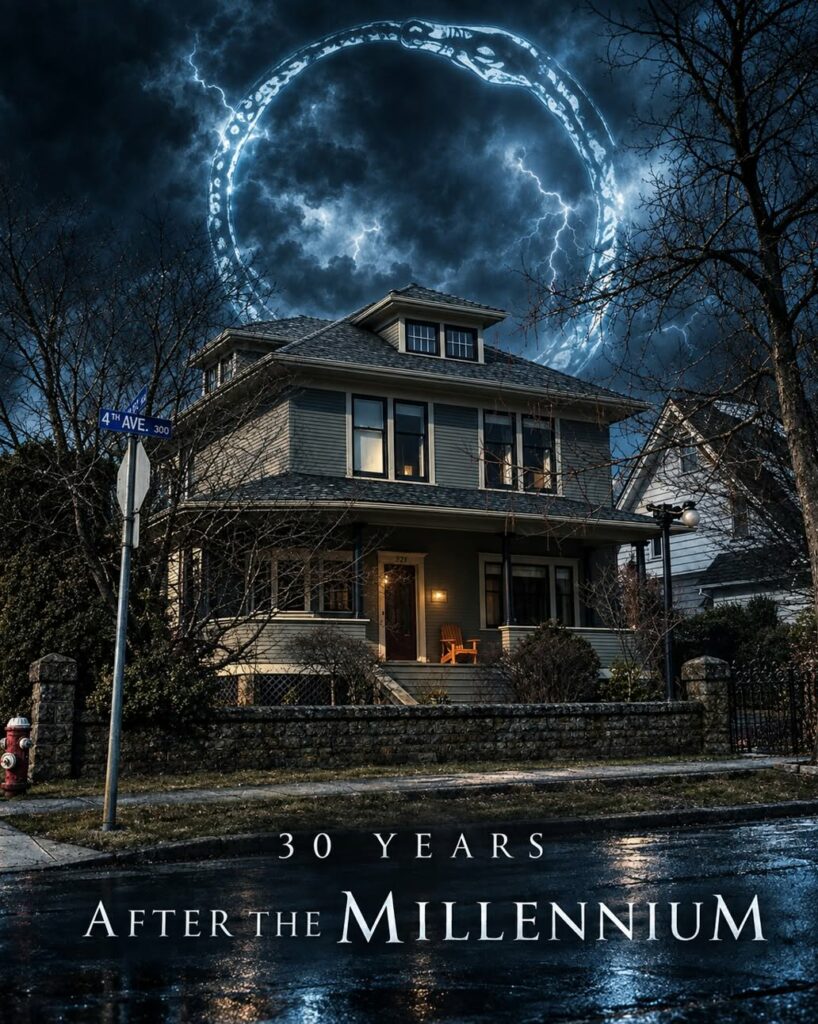
One of the best things Chris Carter’s Ten Thirteen produced, Millennium‘s pilot, aired 30 years ago on October 25, 1996. It started a landmark 3-year journey for Frank Black and for television. After all these years, the show is still unique, radical and profound as ever. It feels like yesterday that The X-Filesreached this milestone!
To celebrate this anniversary, I am proud to present a comprehensive guide to the shooting locations of the show, with some 177 locations across the show’s 67 episodes!
This is the first time the overwhelming majority of these locations have been identified.
This is the result of Jeoffrey Gaspard‘s fine work, combing through the episodes for clues and going through Google Street View, often diving back into captures from older dates, as many locations have since been demolished or extensively refurbished and are today unrecognisable. Still, a great majority can still be seen if you plan a trip to Vancouver or if you want to spend some time browsing through Street View alongside watching the episodes.
For the hardcore fans, it’s even more entertaining to identify which locations are actually next to each other from different episodes, or to map the MM locations to the XF locations and see which ones were used multiple times (and for other series shot in Vancouver: Stargate, Battlestar Galactica…). The essential part is in the Vancouver area, along with some additional establishing shots elsewhere.
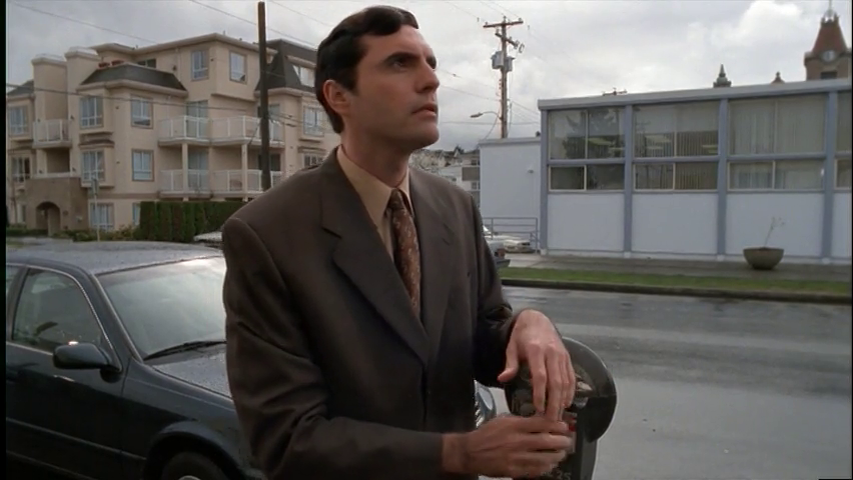
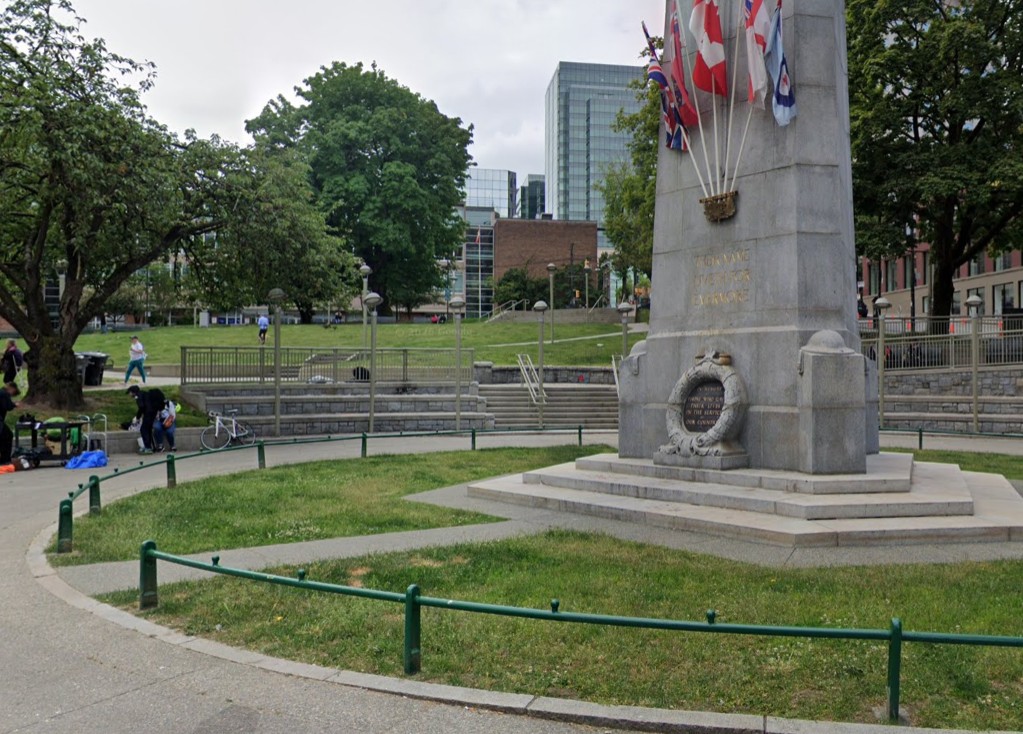
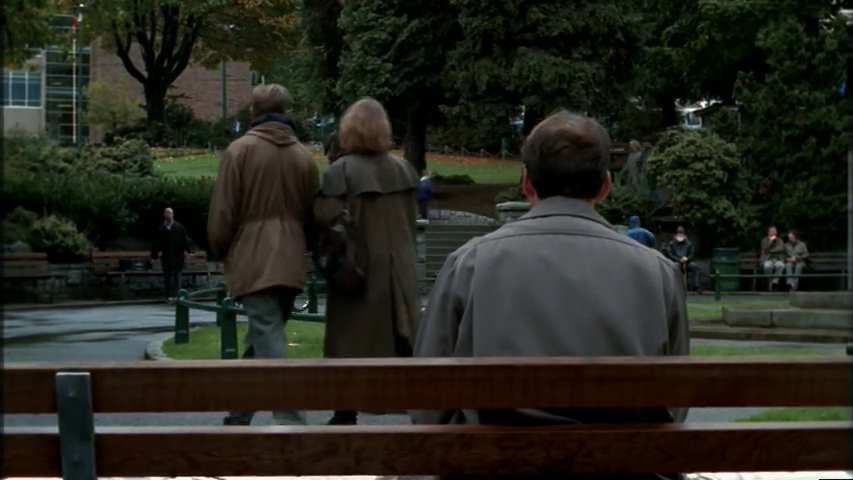
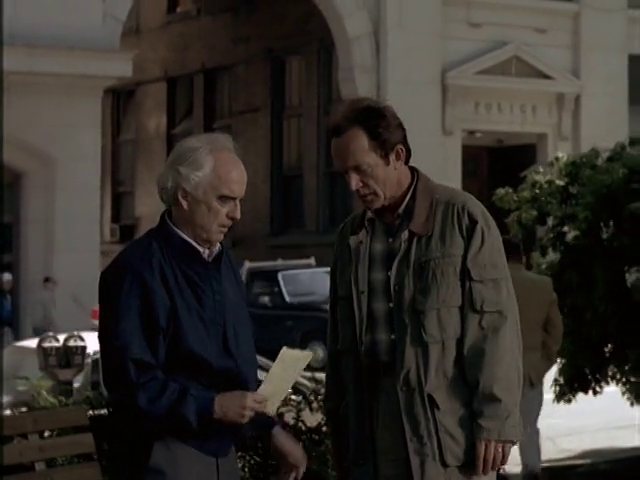
Here are some comparative examples of episode screenshots and location photos for just some of the locations identified. Some are iconic and recognisable from a whole scene, some are just glimpsed in a single shot.
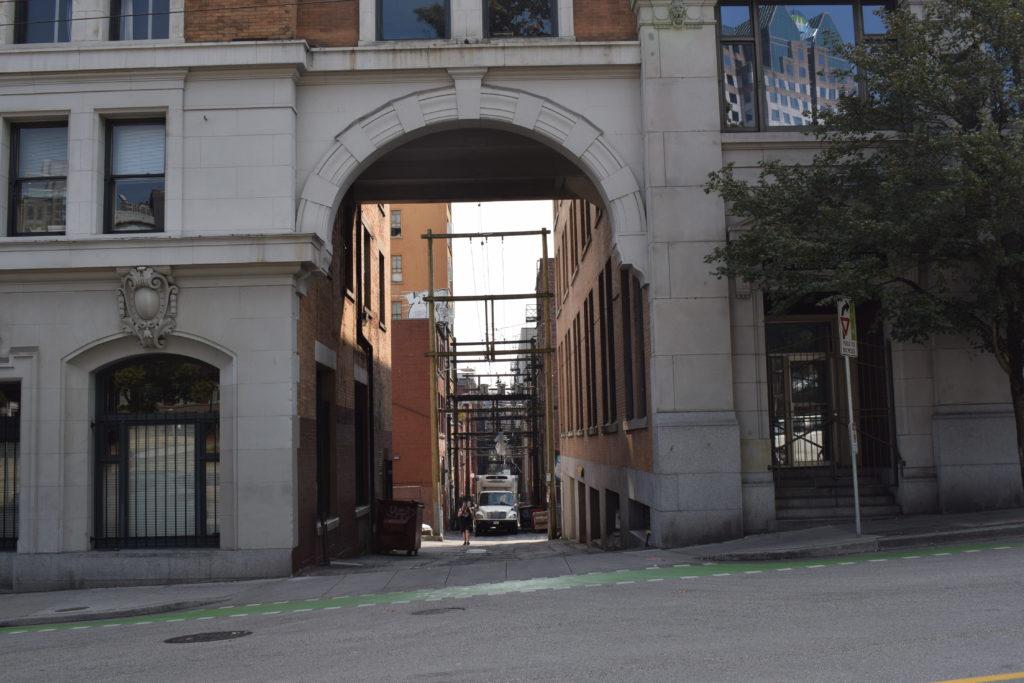
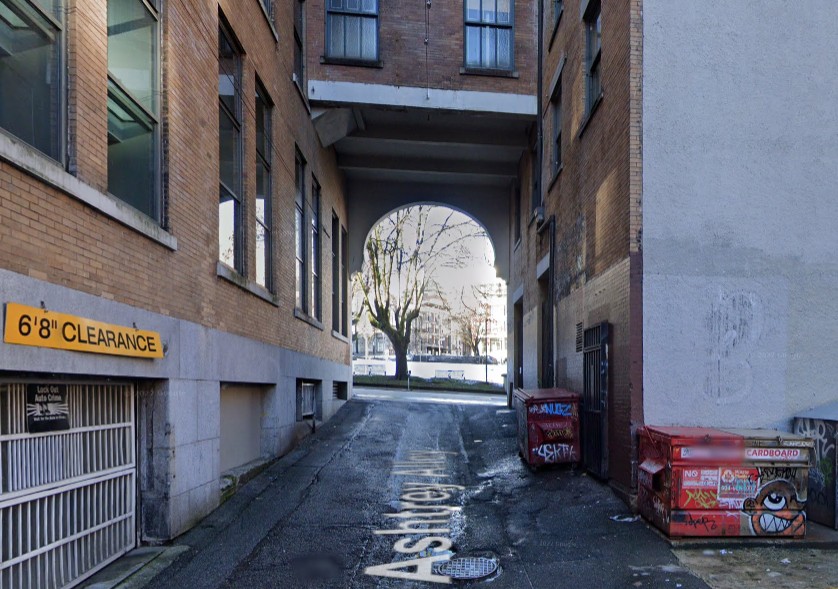
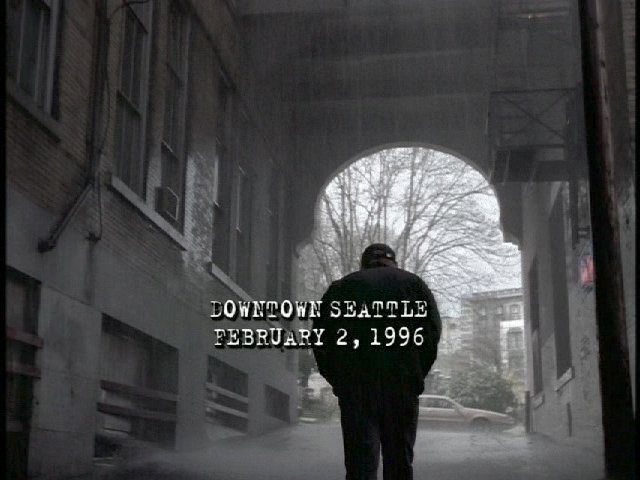
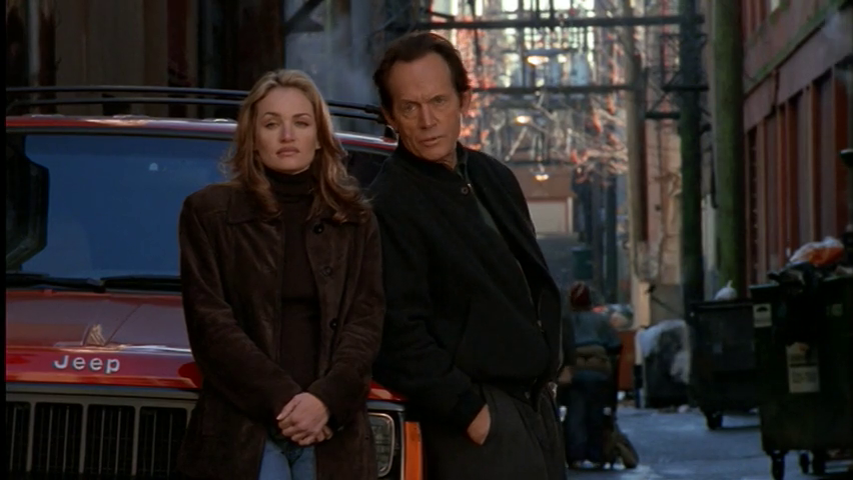
1M01: Pilot: The Ruby Tip and 2M11: Goodbye Charlie: Crisis Center exterior
Location: Ashtrey Alley, Vancouver
A location reused several times, a back alley typical of Vancouver’s Gastown. Also used in The X-Files3X23: Wetwired and 10X4: Home Again.
This is the first shot of the Pilot, the Frenchman heading to the Ruby Tip strip club:
This is also where Lara and Frank stand, watching in to the Crisis Center call center in Goodbye Charlie.
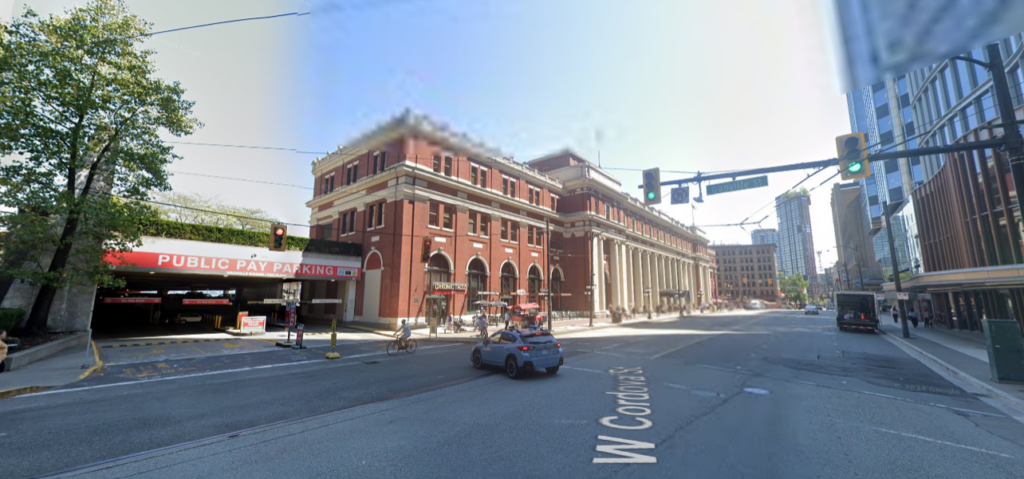
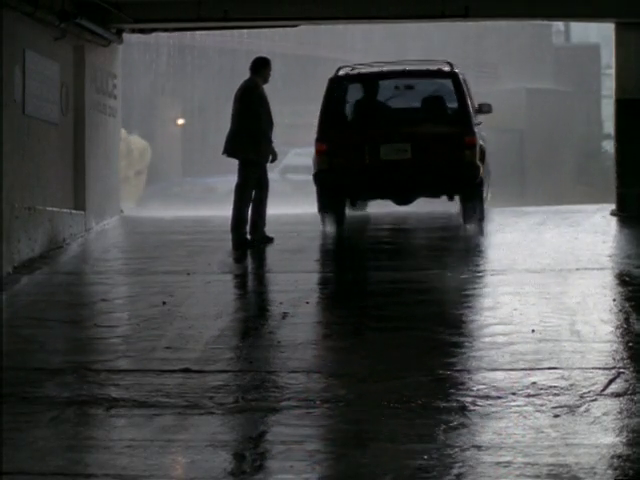
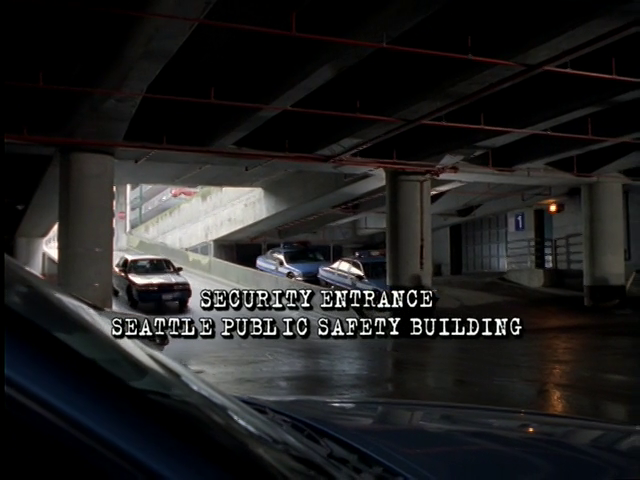
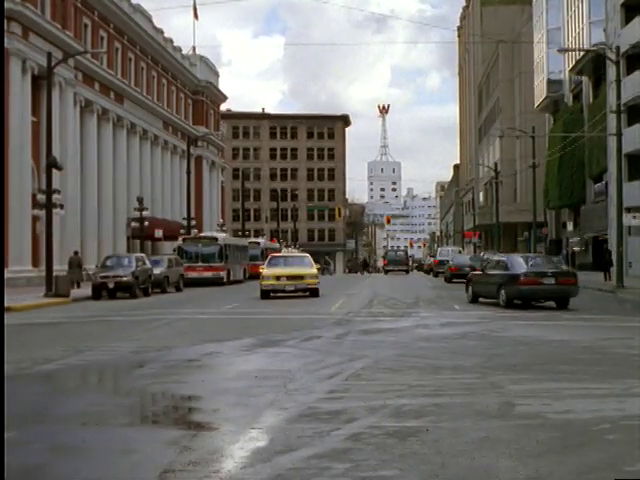
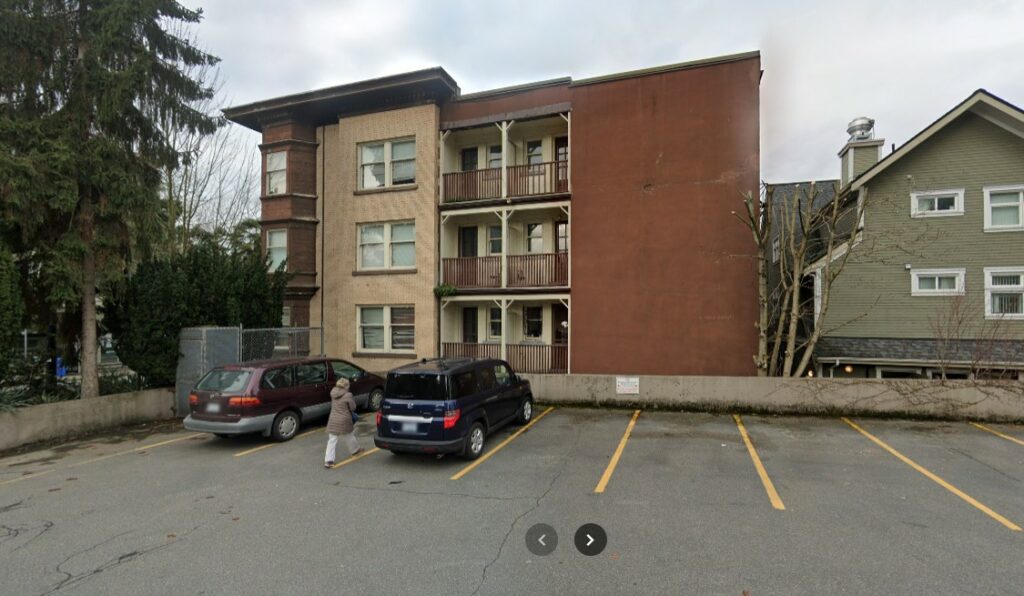
1M01: Pilot and 1M19: Powers, Principalities, Thrones and Dominions: Parking of the Seattle Public Safety Building
Location: West Cordova Street & Granville Street, Vancouver
Frank and Bletch have their discussion on the ramp to the underground parking in the Pilot (“my gift, my curse”).
Later, in PPT&D, that same parking appears when Frank has a sighting of the angel Sammael; he runs up the ramp to find him and looks around on the surface. This is when the surroundings of the parking from outside are visible.
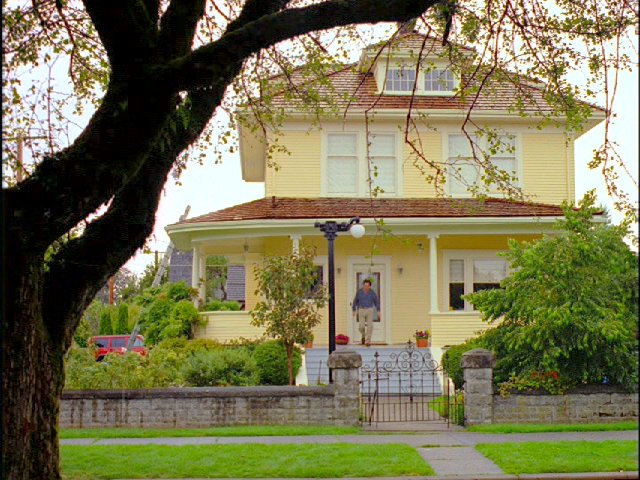
1M02: Gehenna and onwards: Yellow house
Location: 321 4th Avenue, New Westminster
A well-known location. Different house from the one used in the Pilot. Yes, this is the same house as in The X-Files1X01: Deep Throat. It’s a private house.
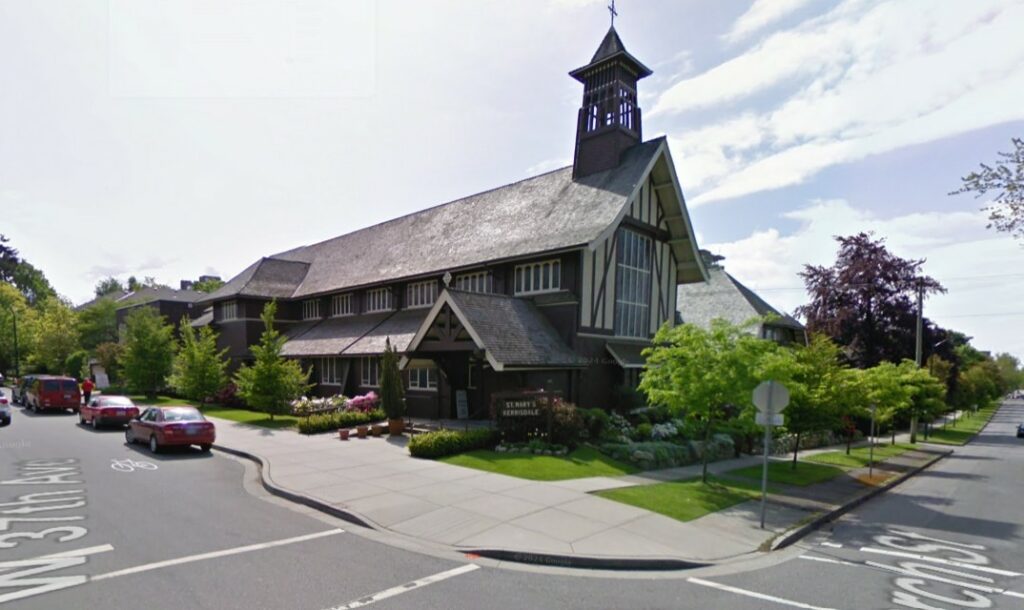
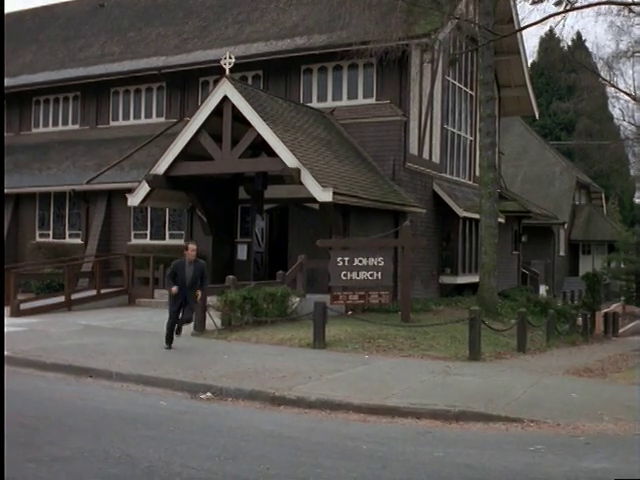
1M15: Sacrament: St. John’s Church
Location: St. Mary’s Kerrisdale church, 2490 West 37th Avenue, Vancouver
This is the church in the beginning of the episode. Frank’s sister in law disappears.
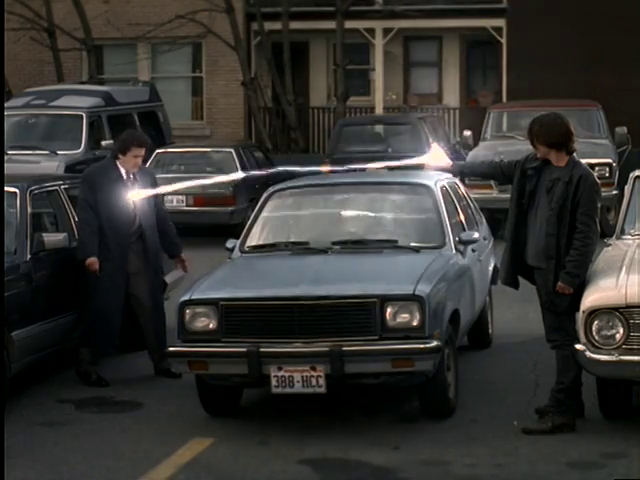
1M19: Powers, Principalities, Thrones and Dominions: Sammael shoots Al Pepper
Location: Whole Foods supermarket parking lot, 1675 Robson Street, Vancouver
One of the series’ most iconic shots. Pepper comes out of the supermarket and heads towards his car in the same parking lot.
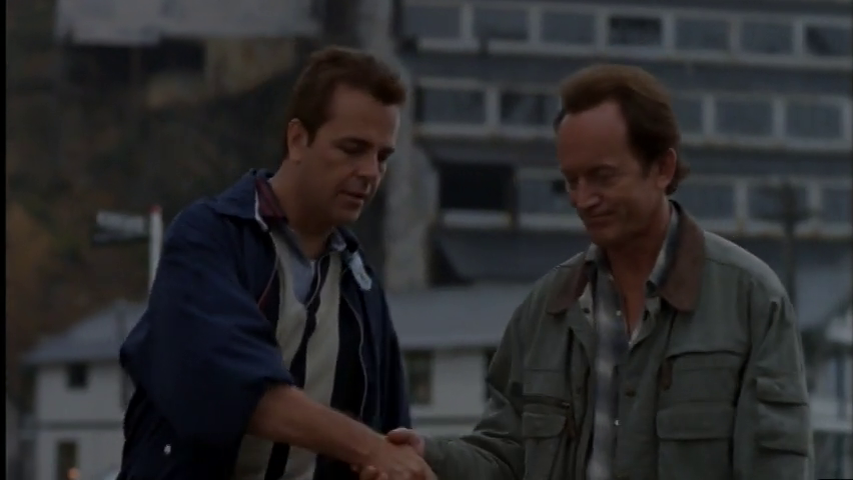
2M02: Beware of the Dog: Bucksnort
Loction: Britannia Beach
All of the Bucksnort scenes were shot here. The mining museum can be seen in the background. Yes, it’s the same location as the Strughold Mine in The X-Files3X02:Paper Clip. Beebe’s cabin and the Old Man’s cabin were shot elsewhere.
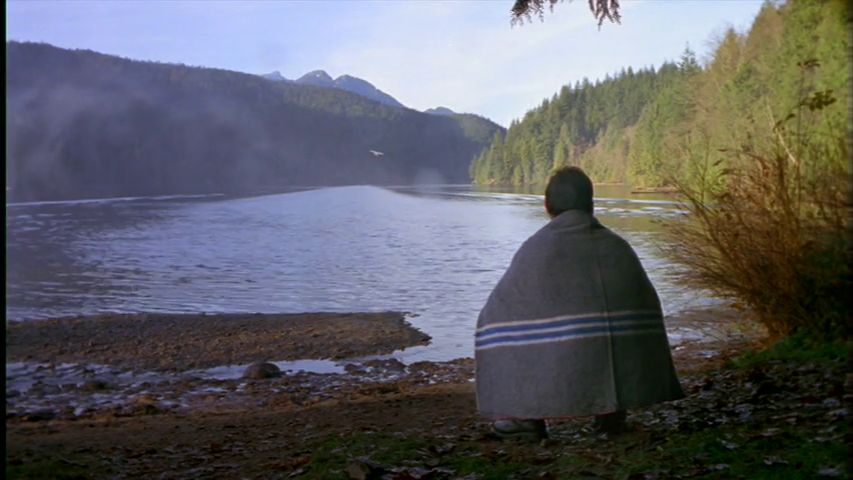
2M12: Luminary: lake front
Location: Buntzen Lake, Anmore
Frank lands with the hydroplane and later, when Alex “Ventoux” is rescued, Frank stays on the lake shore, watching the hydroplane take off.
Also used in 1M07: Blood Relatives, 3M07: Through a Glass, Darkly, 3M20: Nostalgia, as well as The X-Files1X03: Conduit and 3X22: Quagmire.
2M21: Somehow, Satan Got Behind Me: parking scene
Location: Main & 14th plaza, Vancouver
The TV Standards & Practices censor has a psychological breakdown and sees things he wants to censor everywhere. This is unacceptable!
3X06: Skull and Bones: Park
Location: Victory Square, Vancouver
This is where Ed has his visions in the beginning of the episode.
This is actually the same spot where Frank meets Mike Atkins in 1X02: Gehenna and discuss the polaroids, and it’s just next to the Ruby Tip arch alley from the Pilot!
So, as we loop back… Enjoy, and don’t hesitate to contact me if you identify locations that are missing! The map is rich but not entirely complete.
After The Millennium
Meanwhile, you can also purchase the expanded and reworked fan passion project documentary “After the Millennium”. Remastered, remixed and with additional material including an all-new interview with Bill Smitrovich (Lt Bob Bletcher), it is over an hour longer than the original “Millennium After The Millennium” 2019 version.
Two videos on the mythology of The X-Files have gathered attention. Both say that they hold the final word on the mythology and that it all makes sense from start to finish. Interestingly, both defend the same theory, that the twist presented in the beginning of the revival seasons has actually been true all along: aliens are real but they never intended to colonize, and that the colonization story is a smokescreen from a group of conspirators that was manipulating everyone all along, including the Syndicate.
Helped by great production values, they make a particularly convincing case. Is it airtight though? I have my own thoughts (hint: I had expressed this theory and given the pros and cons all the way back when ‘My Struggle 2‘ aired in 2016) but I wanted to post this already before I revisit this in a longer article. What do people think?
Video 1: Rick Worley: The X-Files Mythology All Makes Perfect Sense, Actually
Video 2: Guigui: Théories & analyse de la mythologie des X-Files: La vérité vraie de la mythologie
(and thanks for the Eat The Corn mention!) (Voir aussi ma discussion avec Guigui en podcast ici)
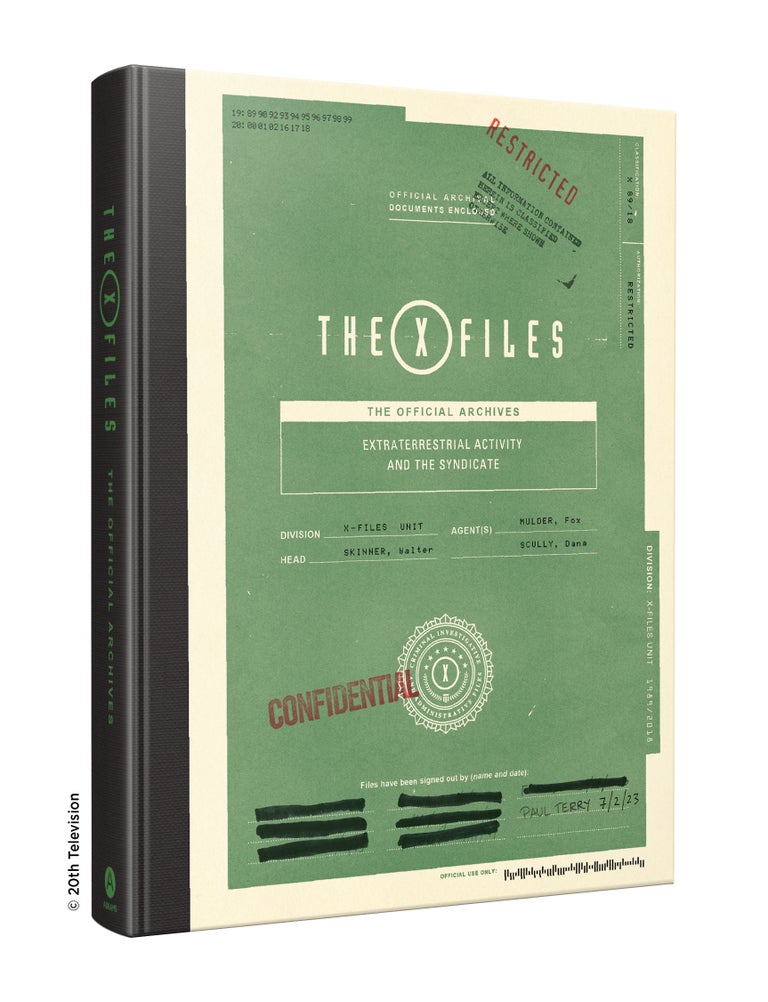
The follow-up to the first volume of The X-Files Official Archives in 2020 has now been postponed many, many times since its original announcement for December 2023.
Now in an interview with The Wrap, author Paul Terry teases the next volume, for March 7, 2027. On the publisher’s site, Abrams Books, now says March 9, 2027. Let’s hope it will happen this time!
“The X-Files: The Official Archives: Volume II: Extraterrestrial Activity and the Syndicate” will cover the show’s mythology — so you can be sure I’m very excited to hold this in my hands! At 360 pages, it’s also 60 pages longer than Volume 1, it’s going to be big!
Note the date on the cover page next to Terry’s name: 7/3/2023, which is probably when he finished making it, already over three years ago (Volume 1 had 3/21/20, and it was published in September 2020).
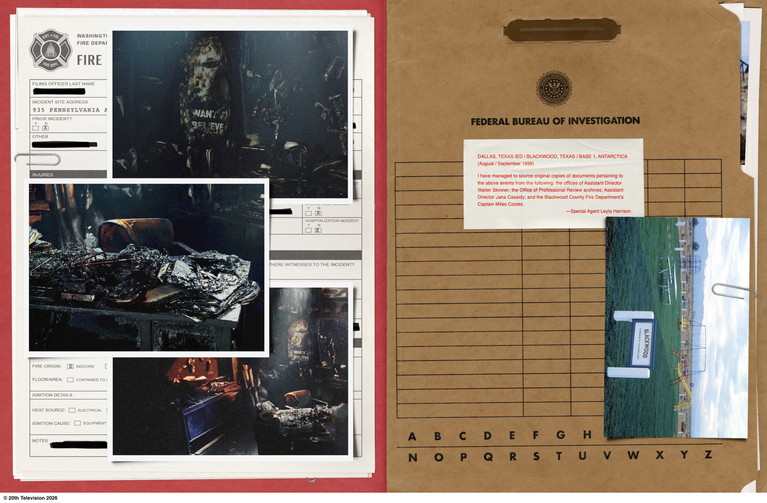
The interview includes the first look of the interior: looks like the last page on 5X20: The End (the burnt X-Files office) and the first page on Fight the Future (Blackwood county, Texas).
As with Volume 1, there will be a meta-narrative woven into the files. I am guessing it will be again about Agent Leyla Harrison putting together this collection of files, or it could be something else. Terry says: “Mulder and Scully’s investigations into extraterrestrial activity and the Syndicate was often very dangerous. With volume two, I felt it was important to capture the spirit of that. And so, as the reader studies the case files, they will gradually pick up on something else that is going on. Something perilous. It heightens the classified nature of what Agents Mulder and Scully, and others, investigated, in search of the truth.”
It will cover everything from the beginning all the way to the revival, so I’m curious how and if the book will deal with the jump from the original mythology to the revival’s reworked mythology that swept several things under the rug (or contradicted what came before, take your pick).
Of course, rather than any new information on The Truth of it all, the joy of this book will be more the physical object itself, and the replicas of props and images unearthed by Terry at the Fox archives!
Why the accumulated delays? We don’t know. But we can theorize it had something to do with Disney’s takeover of Fox and the subsequent streamlining of their merchandising. Maybe they were keeping such a release handy to go together with the release of the Coogler/Yale project on Hulu/Disney+, in which case this new release date gives us a hint as to when that is coming out.
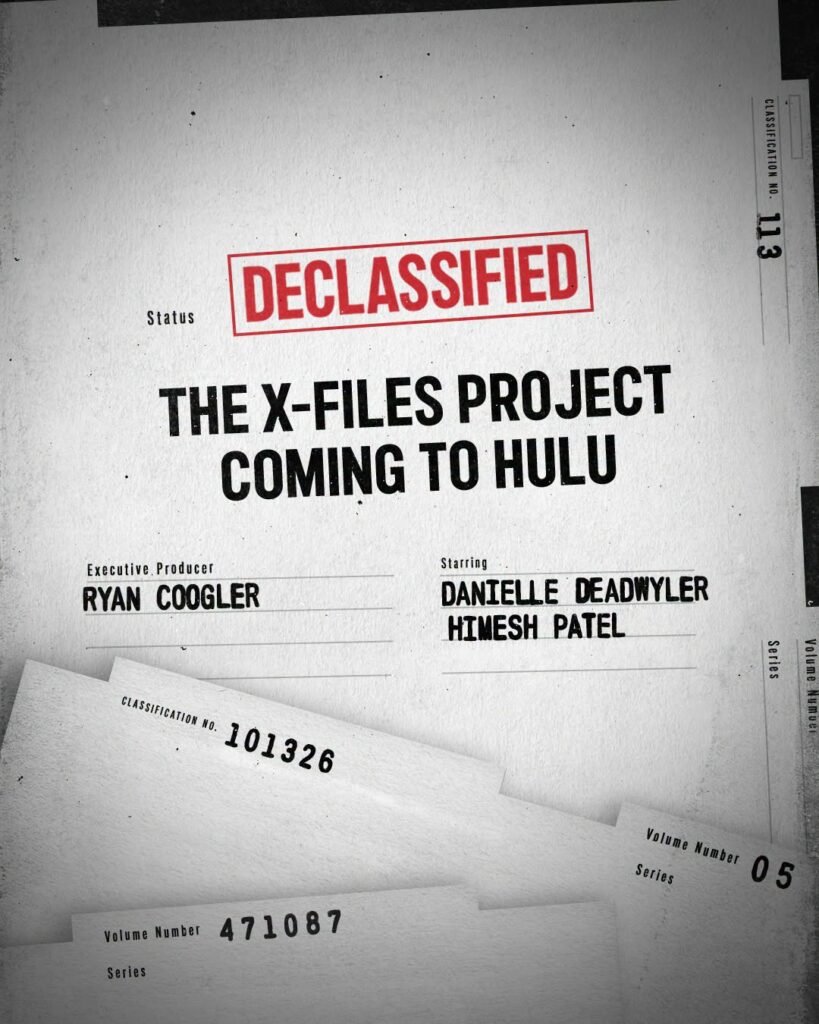
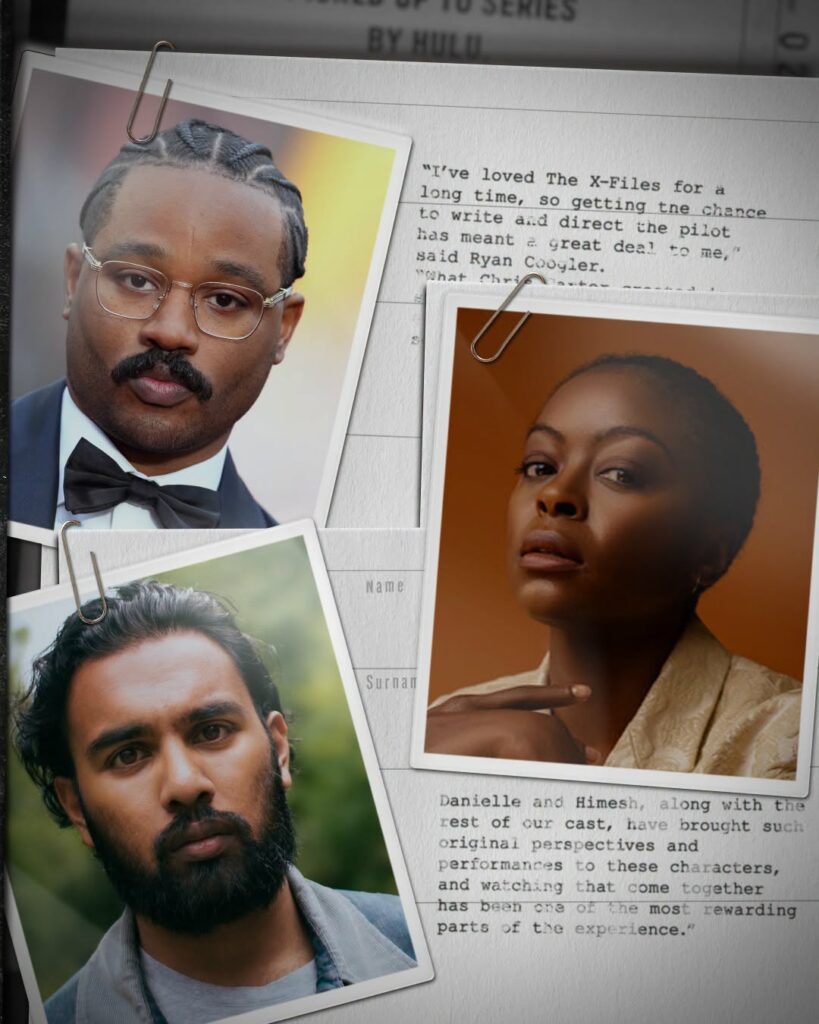
And so the recycling machine continues on its path. Disney is taking advantage of Ten/Thirteen day to announce that the Coogler/Yale The X-Files project will be more than just the pilot: it is going to series!
Ludwig Göransson confirmed as the composer for the pilot, which is good news!
No other details announced (number of episodes, when it would air). The episodes actually have to be made before any of that comes, unless Disney/Hulu wants to just release the pilot ahead of time first. 2027 would be a good guess.
As reported previously, the two-hour pilot finished shooting in June. Coogler liked it so much he was considering pushing for a feature film release. It was also announced that Coogler was moving to developing series for Netflix, so apparently he would not be further involved with the TXF series; indeed, Coogler’s five-year development deal with Disney started in 2021. Jennifer Yale will be the TXF series showrunner.
Happy 70th birthday for Chris Carter and happy 65th birthday for Fox Mulder…
Edit: this could just be a rumor, but World of Reel, that also said that Coogler’s pilot was a two-hour feature shot on 65mm film, says that both Mulder and Scully appear already in the pilot!
I love The X-Files video game! The one with full motion videos from 1998 (aka 3X79: Agrippa). I’m not much of a video game person, but this one recreated the look and feel of the show, and was even a mythology story that fut well with the show’s story in season 3. And not many people know this, but this website got its name from an inside joke from the game.
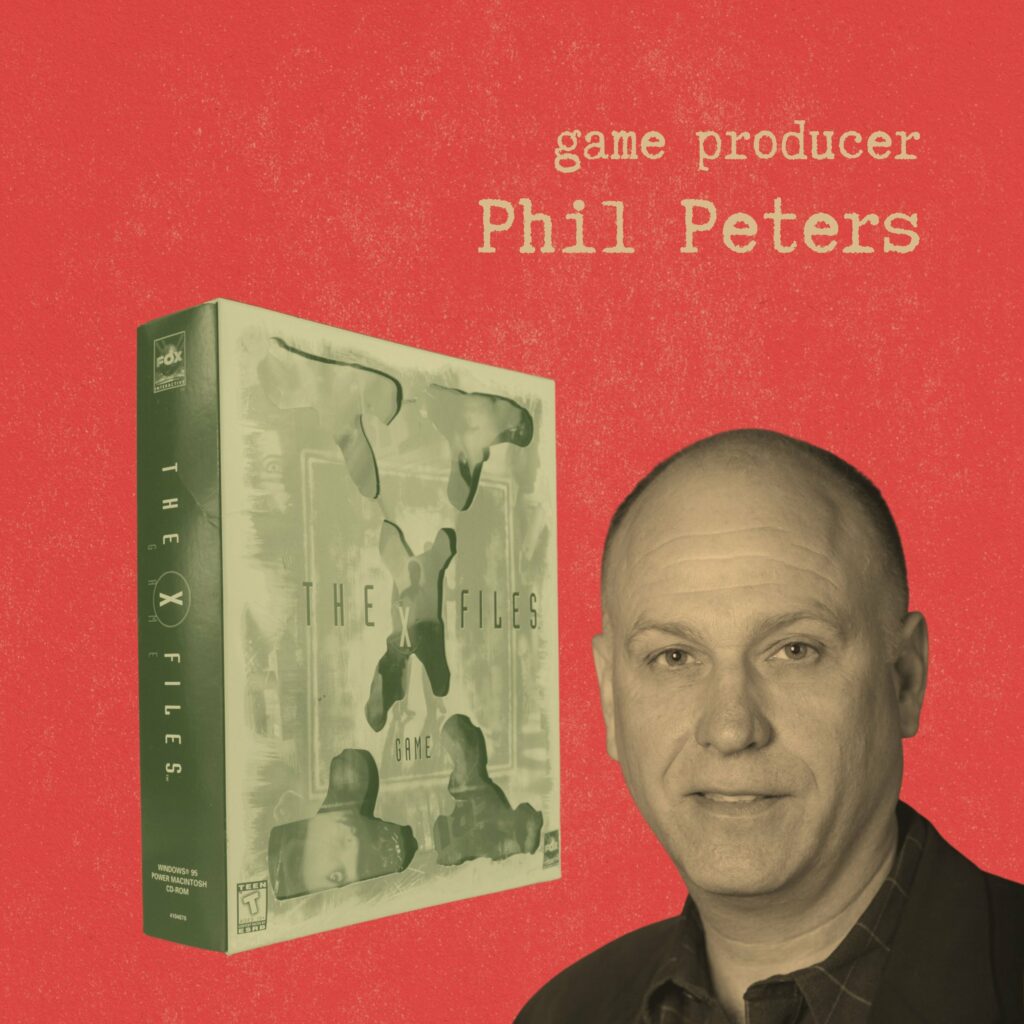
Here is an interview with game producer and production designer Phil Peters, courtesy of the Hey Danny, it’s Mulder podcast!
Peters was involved with the game from the first preproduction meetings to after the release, with the porting to PlayStation 1, alongside the director Greg Roach.
The entire production took 3-4 years. [It’s not clear when it started: the years 1994, 1995 and 1996 are all mentioned. The game was released in 1998, during season 5 and the run-up to the movie. This could explain why the game is set during season 3, which was produced 1995-96.]
He came to game production design after doing costume design for theatre then film production. He had just finished design on Northern Exposure.
First, Hyperbole Studios did a proposal to Chris Carter and Fox studio for a game. They wrote and shot scenes for that. Jordan Williams (Agent Craig Willmore; RIP) was the original lead, a personal friend of his, he was not recast for the final game.
The film world didn’t have knowledge or interest for video games at the time. Everything they did was new.
The only restriction they had was that it had to feel like an extension of the show.
Richard Dowdy, a personal friend of Carter’s, wrote the script, and often came from San Diego, to keep the spirit of the show. [He was not otherwise involved with the show, actually this was his only credit anywhere, so Carter must have trusted him quite a bit. Carter and Spotnitz are credited for the story.]
They were sent all episodes and binge-watched to get to know the show.
The production (coding) and live action photography took place in Seattle. They drove up the 3 hours to Vancouver several times to visit the main series production.
The series’ second unit director of photography, Jon Joffin [seasons 3-4; later DoP for a handful of season 4 episodes, and part of Fight the Future], came from Vancouver and was their DoP, to make sure it would have the same feel.
It was approximately a 30 day shoot.
He made floor plans and figures, like a paper board game, to try to visualise how the gameplay would be like.
The script and related documents was a fat 6 inch binder. [He doesn’t confirm that it was a 750 page document but it must have been something like it.]
Most construction was done in an ex Navy base, Sandpoint naval base. It had huge hangars, they built sets inside. Filming was approached exactly like film or TV. The glass lab (at the end of the game) was built into brig of the navy facility.
The Tarakan ship was at Ballard (Seattle neighborhood), it was an oceangoing tug that had been seized for drug trade between South East Asia and the US West coast!
The motel was a real motel at Mercer Island.
They shot some 6 hours of footage. They had a huge editorial department and a huge spreadsheet to organise.
The game crew were in their 20s. The film crew was more experienced.
In reviews at the time, gamers said it was not interactive enough, while TV fans loved it.
The interactive movie game genre never took off. They were at the cusp of it. The game was on 7 CDs, and studios were already seeing streaming gaming coming up, but it took 5 years.
After other projects in the Seattle area, with the dot com boom, he went into academia, teaching film and documentary in Florida.
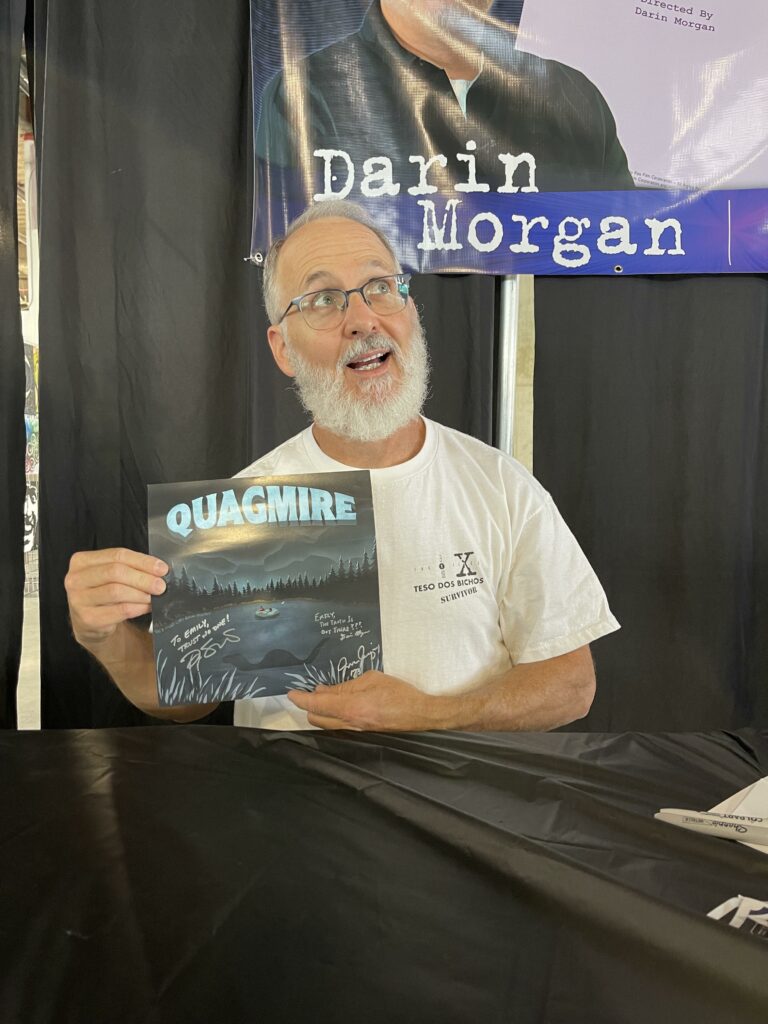
In my effort to cover in-depth all the Ten Thirteen interviews, there are times I get lost in my obsession with notes-taking. Here is a long (3 hours!) interview with the unparalleled Darin Morgan from… January 2025 — an interview for the X-Files Diaries podcast (now rebaptized Seriously Obsessed). What a joy to have such long interviews! In the past, interviews were most often written pieces by professional journalists for published magazines; in the past few years, there has been an explosion of interviews with the democratization of podcasting. Today, I get the impression that we are at the tail end of that wave as well.
Darin goes in-depth on all of his X-Files episodes and offers many details I don’t remember hearing elsewhere. Enjoy! Here are my notes [and occasional comments].
Jose Chung’s ‘From Outer Space’: from the very moment he was hired in season 2 he had the idea of the teaser, an alien abduction abduction; he didn’t have the rest of the episode, he couldn’t figure it out. As a result, he did “the killer cockroaches episode” first. While casting that, one actor was just like Truman Capote (they didn’t cast him). He thought that instead of In Cold Blood he would write a story about alien abductions, and he figured the story out! Earlier in Coprophages he has Scully reading a Capote book, which was an inside joke to Duchovny’s appearance on Jeopardy, as if the idea was there and trying to tell him to pay attention, he was not receptive to it yet.
Blood: Glen gave him the story, machines tell people to kill people, and told him to write it. Glen would try to convince Carter to hire him, then they needed urgently a script in a day. He came in to break the story with Glen, Jim and Howard Gordon, then Glen and Jim would write the script real quick. Darin remembers contributing with nothing. Gordon thought Darin “got” the show. Then a writer was fired, there was an opening. The Flukeman role was because Carter knew Darin was looking for a job. He thinks he got the writing job thanks to Gordon. Carter says he perceived something in Darin, but he hadn’t read anything of his. Carter had a sixth sense to recruit people he could trust, a talent.
He discussed with Glen how long the show would last, they estimated 3 seasons. Jim told him to save the idea for season 4.
Humbug: Glen told him to do an episode about circus freaks, he loved the movie Freaks. He gave him a VHS of Jim Rose. He can’t write without comedy, he’s not purposefully trying to deconstruct. Carter should have fired him when he pitched the idea, but he liked the story. Glen had him change a few things, but mainly he wanted Chris to know what he got into. Carter liked the script even if it was “not the show”. Fox had a huge problem, they were worried. The talent of Chris was that he thought the fans would accept the difference.
He recognizes that he wrote few episodes and had an influence on the show. Although he thinks that somebody would have done comedy down the line, and he’s not a fan of many of the comedic episodes that followed. If the first one had been bad, like Fight Club [ha!], then they wouldn’t have done more. Everybody was nervous. Manners thought it would end his career. He is somewhat resentful of the comedy episodes that followed his because they didn’t have to go through what he did, they were not new, there was no pressure. Humbug was enjoyable, it was raw energy. The end product is always less than what the idea was, some lines were not great [typical self-depreciating Darin]. He would have written it differently now, better.
The audience is so-called more sophisticated now. But Humbug was received more easily than Were-Monster. He had no computer during the original run. In the revival he read everything, that was unhealthy.
Coprophages: he had a very hard time writing it. His own opinion of the episodes is tied to the personal experience of working on them. The inspiration for Bambi was an entomologist in the University of Illinois, she did a festival around insects in horror movies, and a few years ago she invited Chris to show Fight the Future and Coprophages, and Chris invited Darin, so he saw it with an audience. About the stoners: he read someone was trying to get high on crap. TXF needed unreliable eye witnesses.
Quagmire: he is credited as doing a rewrite but it isn’t true, he wrote the Conversation on the Rock [That’s already a lot!] and he helped break the story. The stoners were not his idea, it was Vince who wrote that scene. It was a group effort. He doesn’t like Easter eggs, he likes references to past episodes, it’s amusing, like how the past carries weight, like how a continuous story series would do now.
Back in the day nobody wanted to have Mulder and Scully romantically involved, as it would become a different show; they had to be thinking about weird stuff, monsters. The M&S couple was interesting because they had been through so much and nobody else could relate to them. The jealousy in Coprophages was for comedic effect, it had not been tried before. Gillian had to do some other work, she would not be much available, hence she had less scenes, Bambi was introduced, it was a scientist taking Scully’s job away from her, it was also a professional jealousy. The performances played the MSR well.
MSR in the revival: people who have been through so much, on and off, understand each other like no other, they don’t need to define what they have. He wonders what it would have been like if M&S each had had life partners. The long term trajectory of the MSR was accidental.
Coprophages doesn’t have a good main character that the episode would be centered around. Bambi and the roboticist are one-note.
The only actor he wrote the part for and was cast was Jesse Ventura. He didn’t have actor in mind for Clyde Bruckman; he considered Bob Newhart jokingly for 5 minutes. He drove Rick Millikan crazy, he was a movie guy, he didn’t know TV actors. He was very lucky with the casting. Casting is very fun but also torture. He wanted to cast Rip Taylor for Jose Chung, he seemed more hip, but he was unavailable. Charles Nelson Reilly gave the best audition. His first scene was the interview with Scully, Darin was there on set, he seemed perfect for the role. He knew Reilly from “Lidsville” (1971-1972) and “Match Game” (1990-1991). He didn’t meet Peter Boyle [Clyde Bruckman] until after the episode was shot. The guest stars had problems adjusting to his episodes, they thought TXF was a drama. Watching Stuart Margolin’s audition tape [Dr They], Glen said older actors understand what they’re looking for, they have experience in theatrical performance, younger actors don’t. He knew Stuart from “The Rockford Files” but he didn’t watch it as a kid. These actors always worked, either in theatre, or directing. He gave him directions and he understood immediately, he was in complete control of the craft.
He didn’t write Scully to be immortal, that’s bad sci-fi. But after he left, the writers were free to do whatever they wanted, it was out of his hands. Maybe that’s what Chris’s plan. Same with Mulder-Scully relationship, if they’d ever kiss he wouldn’t be the one writing it.
Clyde Bruckman: he was trying to do an episode like Beyond the Sea, he thought it was the best episode of the early seasons, very inspired. Vince was an admirer of Clyde Bruckman, perhaps it inspired him for Tithonus? Chris let writers have their own voice, their own approach, but not everybody had a good experience writing for the show. The best work of the different writers is recognizable and connected across the series. A series is its best episodes and for TXF they are very different from each other. He is proud that Chris didn’t have to spend time breaking, writing and re-writing his season 3 episodes. Glen & Jim could do 8-10 episodes per season on their own, Chris needed writers like this.
Mulder was on a mythic quest and acted like it, he wanted to make fun of him. He felt sorry for Scully, to be involved with someone she cares about but is crazy. In the revival his attitude to Mulder changed dramatically, he was more sympathetic to him, David appreciated that. Once he finds the truth, then what happens, what does my life amount to? And he is still sorry for Scully. M&S are obviously in love with each other, but they don’t get along all the time necessarily. Mulder is absorbed in his quest, he couldn’t see he had this beautiful woman next to him, in the revival he is more receptive.
The preying mantis scream in Coprophages was from his own experience, he saw a “walking stick” in a tree as a kid. He still laughs at Mulder’s yell in Jose Chung.
Jesse Ventura’s car scene in Jose Chung: the old car moved slow, so it was accelerated to make it look faster. Then they started pulling apart the set, and Rob Bowman was not sure if it would look too comical; Darin’s answer was “maybe!”, then Rob rushed to shoot one more take with a different speed. That’s the chaos on set. The car exit in reverse is an example of Darin’s theatrical writing, like a scene exit.
While he was walking his dogs he ran into Rob Bowman! He hadn’t seen him in decades, they had lunch. He told him about fans loving Jose Chung, this was odd for him, he doesn’t consider it his best work. [Wow!]
Part 2
Jose Chung: He was a fan of Jesse “The Body” Ventura, he was a wrestler fan as a kid. He’s hilarious as a commentator and in action films. He wrote lines for him, but he had trouble with them. It was the best performance in any of his film work!
For the Men In Black (Alex Trebek) he had originally in mind Salman Rushdie [!]. Carter and Bowman shot down that idea. Glen suggested Johnny Cash, but he was unavailable. Darin thought of Steven Spielberg [!!!]. He wrote a letter to Spielberg, but they got word he was unavailable before the letter was sent. A couple of years later Darin had a meeting with him, and he said he would have done it! [Imagine that! Also, Darin and Spielberg met?! In what context?]
He was throwing names around with Jeff Vlaming and came up with Alex Trebek, with the Duchovny Jeopardy connection.
Small Potatoes: He did a single shot after morphing back into Eddie from Mulder, Gillian was probably not there when it was shot, the SFX shots were done last; he was not wearing pants during that shot. If you don’t see David or Gillian from the front, then probably it’s not them, it’s their stand-ins. He hadn’t acted in a while, he could have been better. Vince saw a weird quality in him, that he had an ability that he didn’t know what to do with, so he cast him.
Queequeg: he didn’t have a dog at the time, he gave Scully a dog without thinking of the implications or running it by Carter. The fans started asking about it, and Carter said to get rid of it. Gillian didn’t like the dog, Darin didn’t choose it. He broke the Quagmire story in a day. He needed a victim for the end; he pitched it to the staff; someone suggested the dog. He wouldn’t do that now, neither would Carter.
When they started the revival he didn’t know that they had had a kid.
In the revival, Scully needed a dog, to make up for it. She got a better looking one. He didn’t have the intention to bring Dagoo back. In his mind, Scully has a pack of dogs.
Directing in revival: he had forgotten how long things took, it was frustrating for that. There are things wrong with Were-monster but he doesn’t know what he would change in it. He had fun with Forehead Sweat. When the director is another person you have to explain things, sometimes they bring good things. He learned a lot from the 3 great TXF directors. He was glad Carter let them direct in the revival.
Guy Mann has a line about internal logic, it was a meta comment about TXF, none of it makes sense. He was watching old Universal monster movies like The Wolf Man, the detailed logic didn’t make sense. TXF is that type of story. It was also a comment on our lives that make no sense. He lived in fear somebody would do the were-monster story before he could do it.
Forehead Sweat: what would Rod Serling write about Trump?
The best Twilight Zone episodes are a guy trying to explain what’s happening, and their heads have forehead sweat. “Lost art” because he doesn’t see that any more. Then he would rewatch it and he would only find just a handful of episodes like that, a Mandela effect.
His dad’s favorite episode that he wrote is Small Potatoes. [Ironic!]
He read comments that fans said this episode is going to age so quickly because of Trump references, but the episode is more relevant now than when it aired. He watches news about gaslighting, disinformation, waiting to hear “it’s like that episode of TXF”, it’s only gotten worse.
It predated QAnon; the middle name of Dr They was “Q”; he wanted to start a rumor that QAnon was a publicity stunt by TXF.
Being specific vs being vague. In the end, was Reggie crazy? The episode aired one year after Trump’s inauguration. One year ago, Reggie had a nervous breakdown. The last flashback was when Trump was coming. It was the demise of American idealism, Trump becoming president was the last straw. He had a line for Reggie, “Trump became president and my head exploded”, it was too on the nose and he cut it. The alien-as-Trump is part of his breakdown. Reggie was when the president no longer represents your country’s ideals. But nobody saw that. TXF had to have a vagueness to the ending, like, “here’s the explanation, but, who knows?”.
For the fake credits scene, the script was due the next day and it was the last thing he wrote. He watched the series in fast-forward, he only had the DVDs for 2 seasons, he bought a subscription to Hulu just to search a scene to insert Reggie during that one night. In the Small Potatoes butt crack shot, the SFX guy told him there was only enough room to insert Reggie if they just removed Mulder. He always laughs when Reggie shoots him [Darin].
The intention was for the alien to give a Trump-like speech. But then it would be perceived as anti-Trump. So it the speech had to be verbatim, to use the exact words.
He has tons of references to the 1970s, film quotes. It was the beginnings of conspiracy paranoia. One of the references was the Elvis cape, his Las Vegas era, which people found weird; then recently people started referring to Trump as being in his “fat Elvis” stage, now it works.
He doesn’t remember that Mulder is color blind.
The episode’s ending “can’t be” a series ending, but it is his ending, his finale for the series. [It’s a great series finale all right!]
He didn’t call the episodes “monster of the week”, he called them “stand-alones”.
As per Frank O’Connor, two characters in fiction are actually one person. This is Mulder and Scully. They are “platonic soul mates”.
 The X-Files mythology episode by episode analysis
 Thematic articles on X-Files and everything 1013
 The archival database project