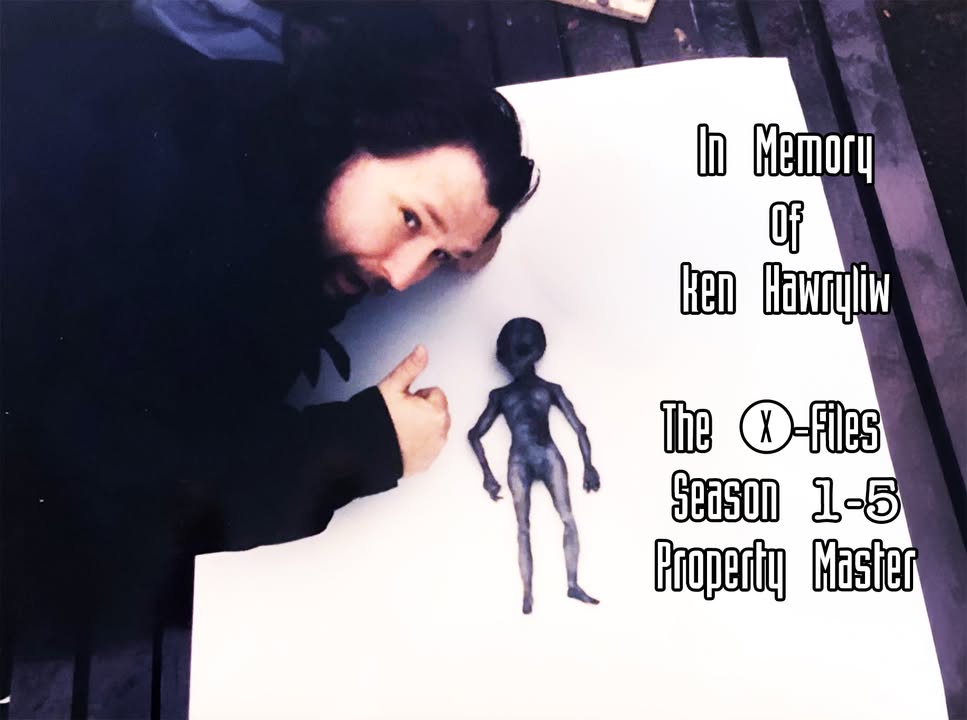
He hit it off very well with Chris Carter, he knew all about the sources for the mythology/conspiracy and the UFO lore. Both had seen a TV rerun of the “Mysterious Island” (1961) with Ray Harryhausen stop-motion effects which inspired them to get involved in the movie business. [I grew up with that movie too!]
Early on, Paul Rabwin was busy and Ken would be the one directing the insert shots; then he was stopped because he was not part of the directors guild.
It was shot on 35mm film. The mandate to all teams was to do work that would be worthy of a feature film. The props were made so they would hold up to high definition.
By season 5 the props team grew to 15 people, they had 1st unit, 2nd unit, an inserts unit, a photos unit. By then he’d rarely have the time to show up on set himself, he was too busy with prep [preparation of an episode before shooting takes place]. Shooting the photos [which were then used as props, like crime scene photos or evidence or portraits] was just as important as the main work, because it was guaranteed that these photos would get an extreme closeup shot and would drive the story.
The biggest compliment for him was that sometime in season 3 Chris stopped coming to the “show and tell” meetings, where the props were shown to the director and producers, he was trusting him.
Shooting “Blood”: they spent 2 days shooting crime scene photos. The director David Nutter called Ken to show him the dailies: they had used all the many photographs, in slow panning shots, to show him that his work was appreciated. [That must have been the shots during Mulder’s profiling early in the episode.]
Don McGill was the on-set props guy.
Shooting “Fearful Symmetry”: Ken had worked with the person in the gorilla suit before in “The Clan of the Cave Bear” (1986) and that person had previous similar experience [Ken is not credited in that movie, and the person that is credited in the episode, Jody St Michael, either…I suppose a lot of people with small roles go uncredited !]. That person asked for a toy prop for the gorilla to play with. A props guy was sent off to buy it; the director of photography John Bartley purposefully delayed the lighting setup just so much so that the props guy would have time. They made it just in the nick of time. There was a lot of solidarity between the teams, everyone was doing their best.
Shooting “Ice”: the episode was airing that Friday and on Wednesday he was still shooting two insert shots. It was too late to ship the reels to LA, they sent them via optic fiber. They made it just in time to be inserted into the already edited episode.
“It was ordered chaos.”
Importance of doing research pre-internet. Amazing help of researcher Jeanne Lister who eventually joined them [she is also credited only in two episodes, but obviously she worked on much more]. The story of an army Colonel in DC that got them the photos they wanted, for what the security police at Andrews Air Force Base looked like [see other interview for details; still unclear which episode this refers to, not “Deep Throat” as Lister was not preseant that early, possibly “The Red and the Black”]. They had a great relationship with the military. The relationship with the FBI had ups and downs, there was a before and an after Waco; some years they had props with “US Bureau of Investigations”, others “FBI”.
Ken designed the props too, not the art department. He worked with production designer Richard Hudolin as an art director and learned a lot. [They share some credits in the 1980s like “Stakeout”; Hudolin was also the production designer in “Stargate SG-1” and they worked together again in RDM’s “Battlestar Galactica”.]
On designing the faceless alien fire wand: Chris told him to “make it look like it came out of the same factory as the stiletto”. [to keep a consistent look for alien tech, or is there more to this?]
There was no 3D printing, it was all done on a CNC mill and a lathe, they worked a lot with metal.
Preference of doing practical effects over CGI. Importance of prep. Attention to detail.
The philosophy with Carter was that, if you made the show look as realistic and true as possible, then the viewer would be ready to follow you on the supernatural ride.
He learned everything about props and props design thanks to watching as a kid all the 1960s Irwin Allen shows on TV: “Voyage to the Bottom of the Sea”, “Lost in Space”, “The Time Tunnel”, and the 1966 “Batman”. He has put various Easter eggs in his shows to those inspirations.
An extensive interview courtesy of the Danish podcast Conspiracy/Sammensværgelsen with Ken Hawryliw, prop master for The X-Files seasons 1-5 + the writer of the season 6 episode “Trevor” + a cameo appearance as Buyers’ colleague in “Unusual Suspects” — a.k.a. Sci-Fi Props Guy. This is a long one, Ken has a lot of stories to tell, and he has no filter! There’s plenty of interesting detail on the painstaking process to develop a script through many ideas, pitches and iterations. As always, notes and [own comments]:
Stories with props researcher Jeanne Lister, from the UK. [she’s only credited in two episodes, but obviously she helped with more]:
For Anders/Andrews Air Force Base [not clear what episode this is: the Ellens base in “Deep Throat”?]: she made a friend over the phone, a Colonel. Normally they would go through the armed forces liaison in Beverly Hills. That Colonel dispatched photographers from the Pentagon to take the photos she wanted, had the photos developed, had an F15 fly to a FedEx depot in Kentucky, in order for the photos to get to them by the next morning, 10 am!
For “Nisei/Piper Maru”: they couldn’t get satellite photos of the Panama canal and the Norfolk Virginia naval base for security reasons. Jeanne reached out to a satellite relay station during a snowstorm, they were eager to help and reprogrammed a spy satellite to take the photos and sent them using a snowcat! For the final photos they photoshopped the ship carrying the UFO under tarp.
Stories from s1-5 production:
He knew producer JP Finn from when they were 17 years old, doing theater together. JP brought him to TXF.
Typical process: at script stage, they had a concept meeting with all heads of departments. If the script was late, the writer gave them hints to prepare. He worked closely with the special effects team, set decorator, and wardrobe. More meetings with the director followed. They had only 8 days to prepare for shooting. They prioritized the prep for the first 3 days of shooting to buy time. They were very busy, they worked many weekends. It could happen that he’d work for 6 weeks continuously every day, with no day off.
The general idea was to make things as real as possible, then the audience will buy in the fantastic elements.
As the show’s success grew, the unofficial guideline from Fox was don’t worry about the budget, just don’t miss an air date.
He designed many of own props. He tried to keep a general aesthetic, especially with alien props like the stiletto and the firewand. [These props are so, so iconic!]
He and Carter liked “Apocalypse Now”, the feel of the files and dossiers in that assignment scene. He tried to do a prop using thin onion skin paper; an assistant tried to make a photocopy of it and it jammed the photocopying machines, even set two on fire!
Ken introduced Gillian Anderson to Kyle [Clotz]. He was the first Gillian and Kyle told they were engaged.
In season 1, David Duchovny was just glad he had work. “People change when they become big stars.” With success, David started asking for Armani suits. David didn’t like the way his Motorola cell phone looked big and asked for something smaller and even froze shooting on this issue. Carter said they should use those un-fancy government-issued phones that real FBI agents use. Ken negotiated with David: he wanted his head to look bigger, like all big movie stars have big heads. This was solved by having his phone run over by a train, so he could get a new phone. [Sounds like a legit story. Can a fan check if Mulder gets a smaller phone after “Nisei”?]
Carter made the announcement they were leaving for Los Angeles during lunchtime, when much of the crew was there, it was emotional. There are 3 characters in TXF: Duchovny, Anderson and Vancouver.
Back then, TV was the poor cousin of feature films. Jimmy Chow was a props guy working on features, respected in the business [in 1994 he did “Legends of the Fall” and “Little Women”], he called Ken during season 2 and told him he was doing a great job, that was validation.
Stories from specific episodes:
“Nisei/731”: the Japanese notebook had 5 pages of material copied again and again. The insert shots director was not Rob Bowman, and so the shot of flipping through the pages was not as they had agreed, and the viewers noticed (!). He dreaded the Monday morning for what people would find. Carter said “they can’t all be pearls”. [Such a minor issue!]
“Nisei” was inspired by a news story program about the Japanese version of Project Paperclip. Jeanne found the son of the reporter who did the story, sent plenty of photocopies, including classified documents. Ken burned them immediately.
“Musings of a CSM”: a specialist of the JFK assassination came over, he had graphic photos of the “real” autopsy of JFK, not the official ones. [I get the sense that Ken is an amateur conspiracy theorist himself!]
“Colony”: originally, Carter described the stiletto as an alien ice pick. Ken’s design was inspired by 1960s Star Trek and Batman, simple and graceful. There were many versions. They couldn’t make it practical (no space for a spring), the special effects team made a pneumatic version. For the later versions he scaled it up to make space for the mechanism, and even more because the alien bounty hunter actor was big.
“Teso Dos Bichos”: the burial urn was huge, it was made by local artists, they had to tear down the door of the workshop where it was made to take it out. The writer originally intended it to be in Brazil using a real tribe name, to avoid issues with that it was moved to Peru.
“Chinga”: Joanne [Service, Carter’s assistant] got some 25 live Atlantic lobsters to shoot the lobster fishing scene; many of them escaped. 20 years later, he heard news that they are an invasive species in the BC area, the conservation people are not happy, there’s a huge fine and prison for that, but the statute of limitations has probably passed. [probably!]
“Ascension”: for the scene of Scully’s belly being inflated, he was the one operating the laparoscopy equipment, also holding Gillian’s hand; she gave birth just two days later.
“The Blessing Way”: a sand painter came from Arizona or New Mexico. They had to transport the sand paintings from lot to lot.
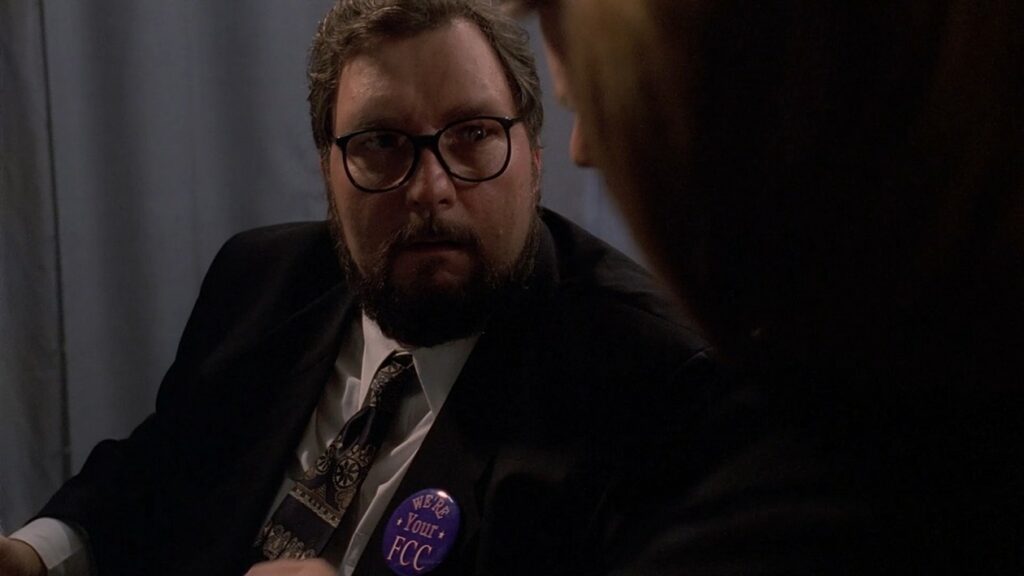
Vince Gilligan asked Ken if he wanted to play a part. His character has his own name in the script. He was the Pete Best of the Lone Gunmen [The Beatles’ drummer before Ringo Starr].
Vince wrote his “whatever!” line because Ken said it all the time.
In his scene, he played a video game on his computer. There were laughs and applause from the crew. It was two days of work and one day of ADR. He got higher pay because he was not in the actors’ union.
He joked that his character should have come out of jail and looked for the Lone Gunmen.
The unmade episodes: Philadelphia Experiment and Monkey King/Bigfoot:
Season 4 or 5: A friend of a friend had an idea, gave Ken a script, he liked the idea, and the friend said write it with me. [This has to be Jim Guttridge, with whom he eventually wrote “Trevor”.]
Ken wanted to write about the Philadelphia experiment, almost a mythology story. In it, there was a line about “this is a plot from a B-grade science fiction movie”, Mulder’s joke was that “Nancy Allen movies are not everybody’s cup of tea”. [Allen was the co-star of the 1984 movie “The Philadelphia Experiment”. Also in “Robocop”.]
Ken gave the spec script to Vince, he liked it, liked the Mulder-Scully dialogue, and the script sat in the writers’ offices.
Gillian was an advocate for Ken to write an episode. He asked her to read the spec script (she did), in order to give a good word to Frank Spotnitz.
They gave themselves two weeks to write the full script as if they were professionals, to prove they could do it.
The story: a monk gets killed by a drug gang in the Pacific Northwest . The Stupendous Yappi with this TV show shows up to solve the mystery. The story reveals the gang is killing animals to sell body parts to Asia. It develops with the Bigfoot and the Yeti as a guardian of the forest, it ties in with the Chinese legend of the Monkey King. An environmental theme, partly comedic. [Frankly I would have loved to see this! I love episodes around nature, and TXF somehow skipped doing an episode on the Bigfoot.]
Season 5: after Christmas, a writing duo was due a script but didn’t turn it in; Ken got a call from Carter’s assistant to get the script ready. But Fox allowed two failed scripts per season and they had already reached the limit, so it didn’t happen.
Then, after they moved to LA, Ken got a writing deal. Carter read the spec script, kind of liked it, but he gave them a fresh writing assignment.
“6X17: Trevor”:
It was going to be Season 6 episode 18 but the script for 17 [“Milagro”] wasn’t ready so it was pushed to 17.
It took them 12 or 13 story pitches. It was difficult to come up with a new idea that hadn’t been done before.
After the story approval, they only had a week and a half to deliver the script.
He worked with a theoretical physicist to develop the idea. Going through things was theoretically possible if you survived a particle accelerator. There are tornado stories that sound completely paranormal. The idea was that the tornado acted like a particle accelerator and changed Trevor’s molecular structure.
Several iterations on what happened when Trevor would go through people: they would become just carbon or heavy water, but it was too gruesome.
This was quite a science-fictional idea. But for Carter, XF can’t be science fiction, you have to have “a beautiful idea”. The bad guy can’t be pure evil, he has to have a motivation, something more humanistic. Hence, Trevor wanted his child, the human element was love.
The jokes relate to Mulder’s/David’s sarcastic sense of humour, à la David Copperfield.
“Dear diary, today my heart leapt” line was in the script, it was slightly modified (had “my heart skipped a beat”).
Probably John Shiban did a rewrite, Vince did a polish. The condoms line was probably Vince’s. [Which line is that?] Only Carter and Vince were not rewritten. Carter’s assistant said you were rewritten less than William Gibson and Stephen King.
He likes old school X-Files. He didn’t want Mulder & Scully split up, he wanted them to work as a team. The splitting up was due to schedules: David wanted to be on the Larry King show, Gillian on a Vanity Fair shoot, this became more frequent in LA, they were also tired. From Vancouver, David was flying every Friday to LA.
The original character and episode title was “Roy”, it was changed (probably by John Shiban) to Trevor after Mitch Pileggi’s role in “Shocker”.
Vince liked the script, “it reads like a very good XF script”, that was validation.
Act 4 had a big action sequence. The studio wouldn’t approve it because of the budget. Trevor would have gone through many rooms through the walls. Ken actually prefers the emotional beat ending that we got.
There were more scares in the script, but they were not needed, the end result is better. Like the shark in “Jaws”, the less you see the better it works.
He was not involved in casting. He was on set for the first day of shooting. Rob Bowman got the episode just because of the directors’ rotation.
Ken and his partner had a run in with a security guard with a Dodge Neon like the one in the episode.
They got kudos from US Magazine, “thank god XF is scary again”.
He watched it with friends at home, it was surreal.
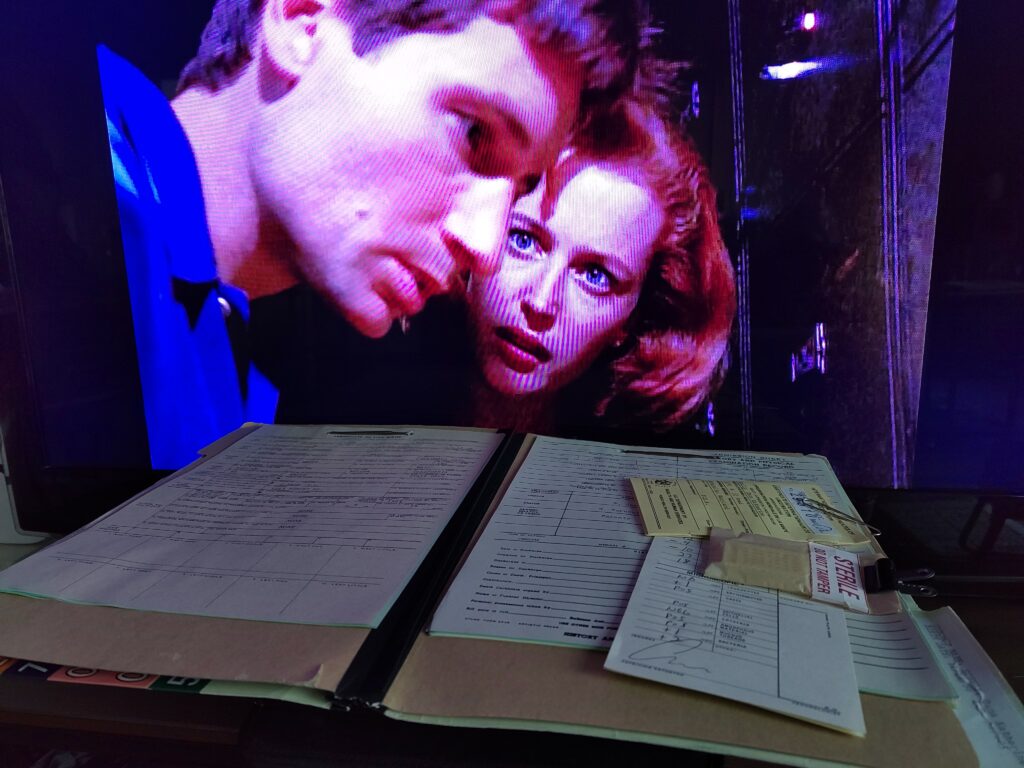
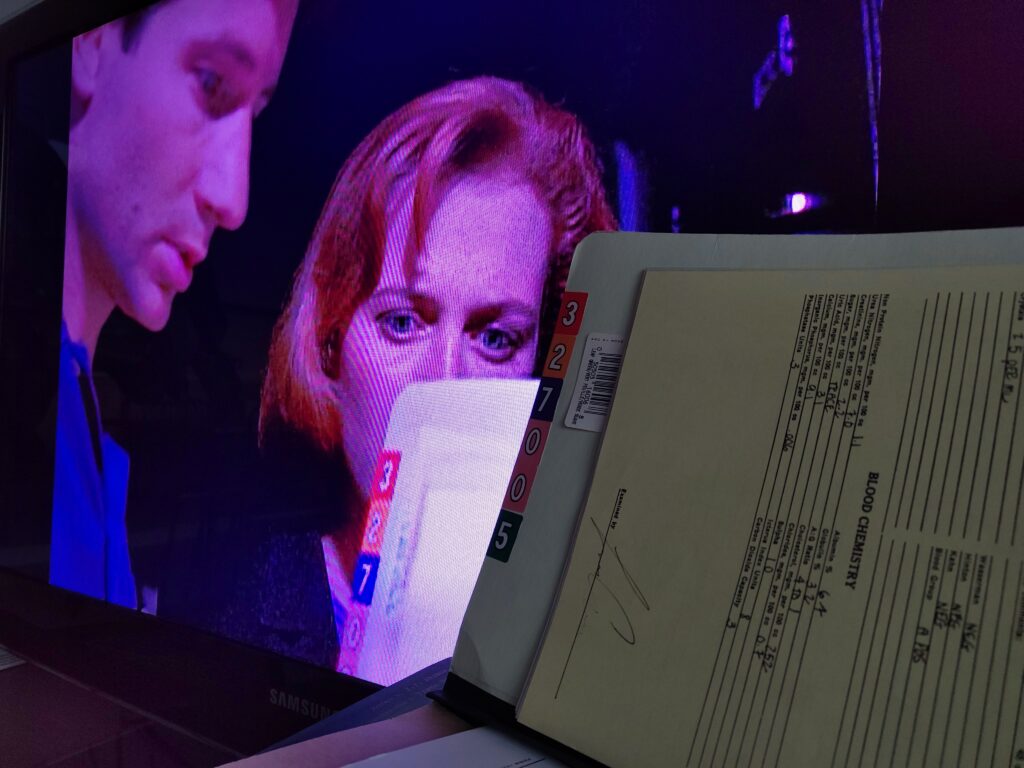
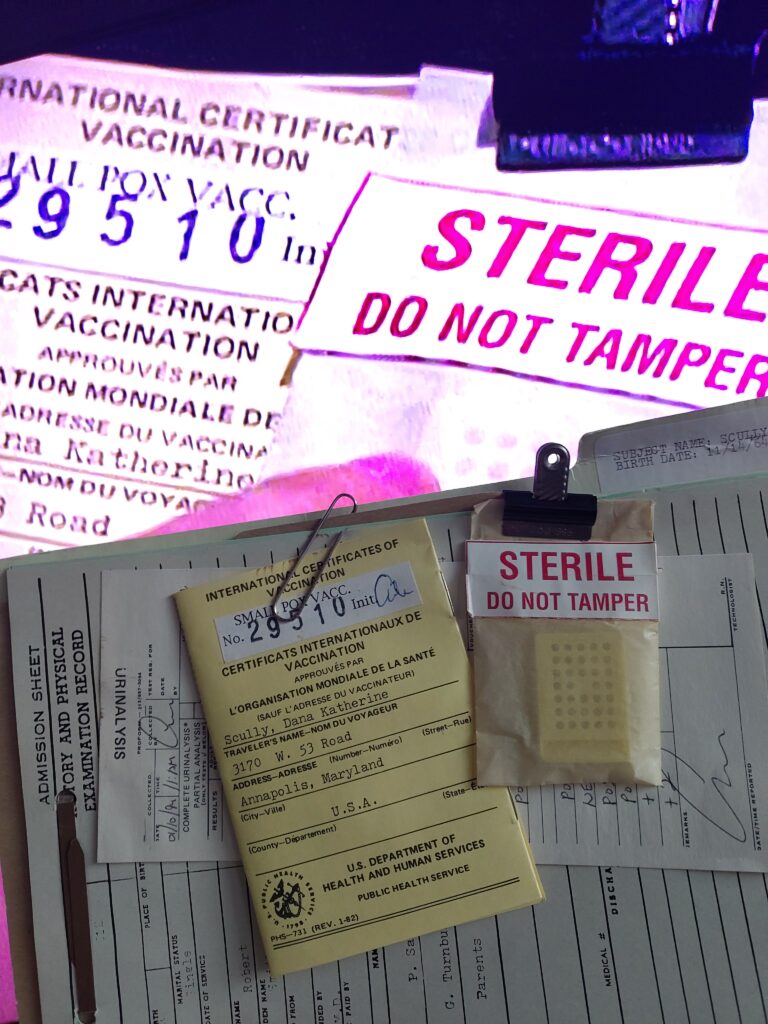
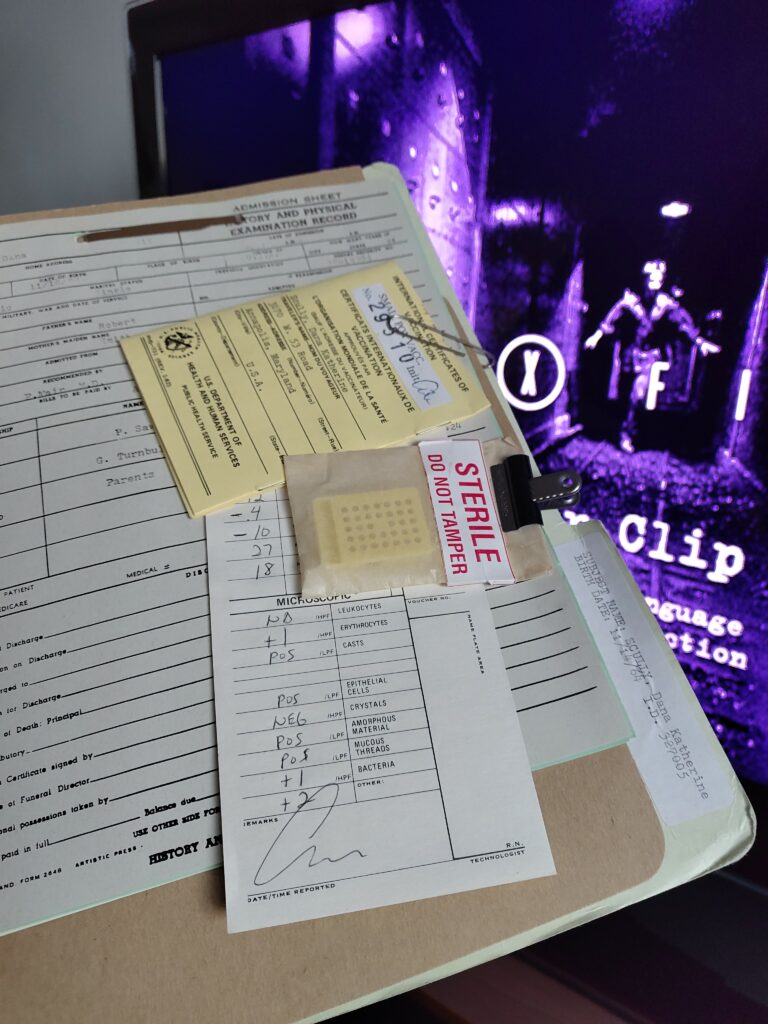
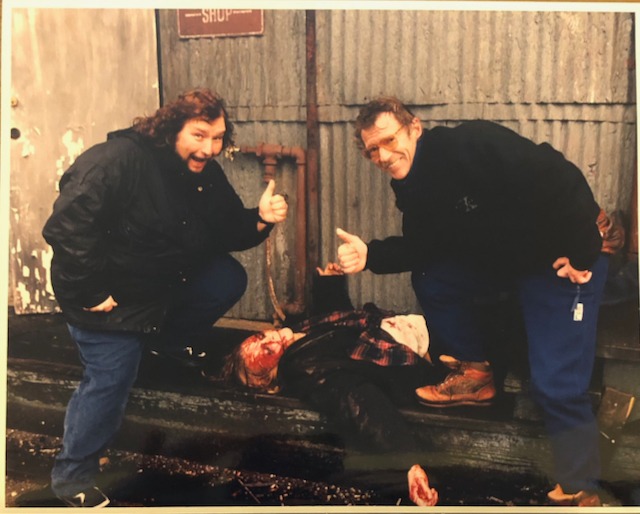
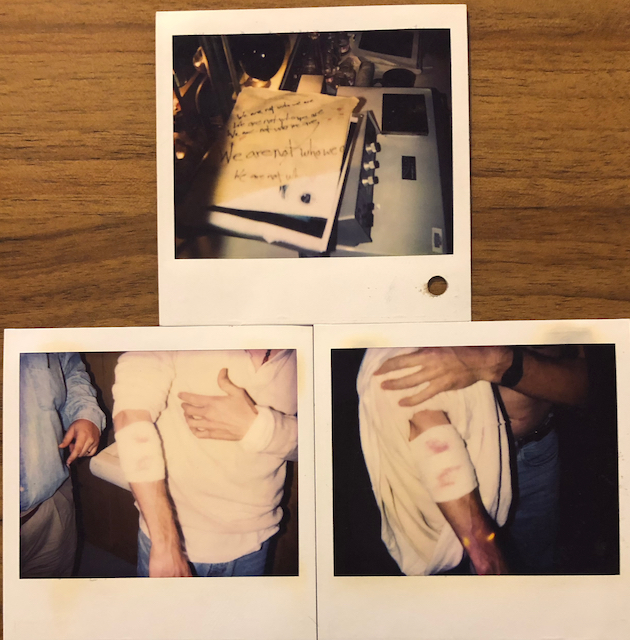
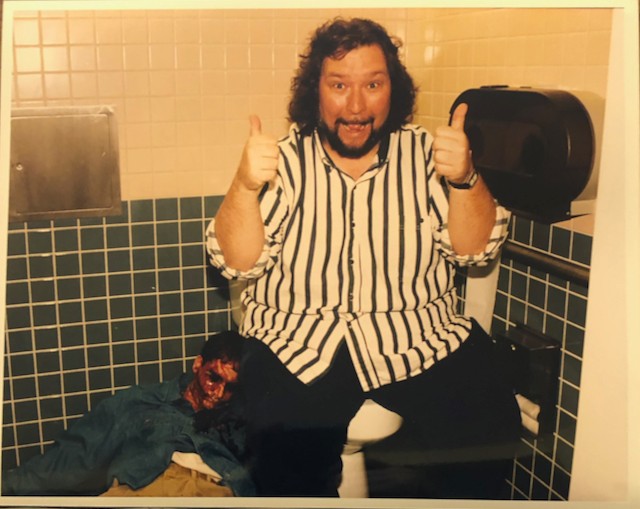
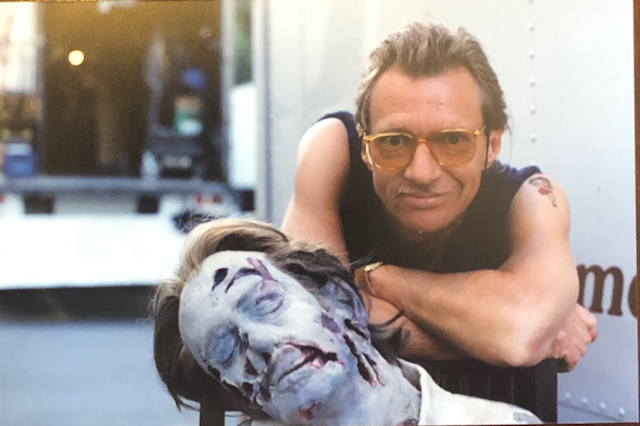
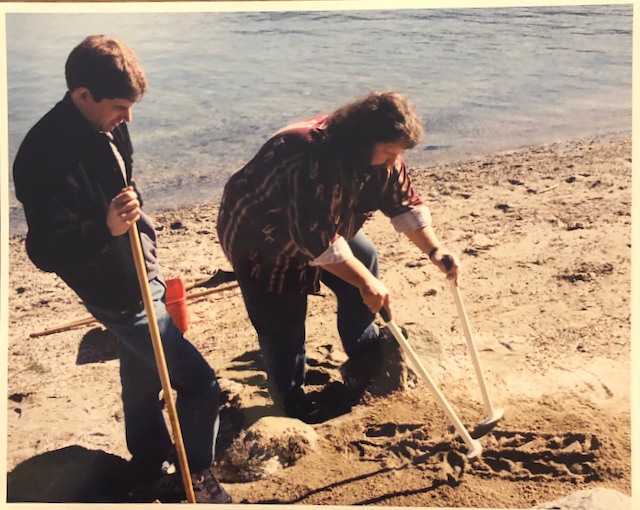
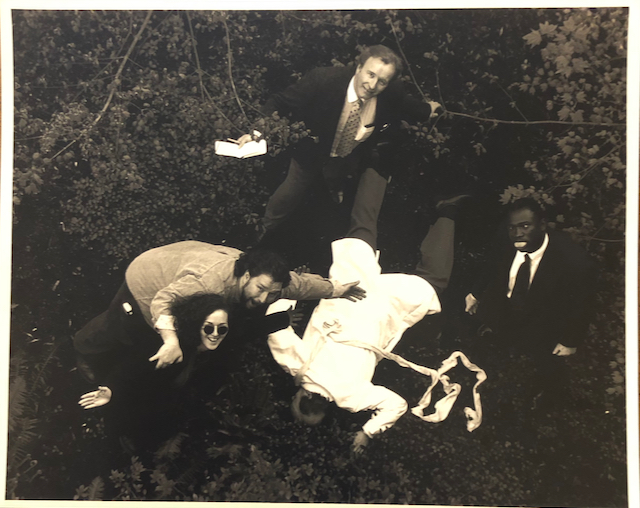
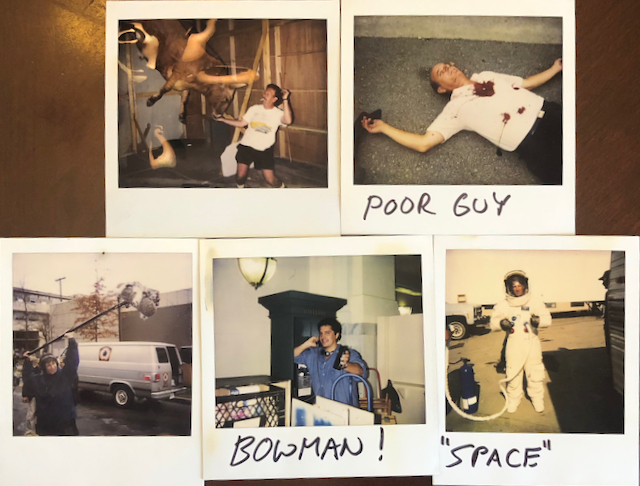
Some season 1-2 behind the scenes photos from prop master Ken Hawryliw! Can’t place them all, but there’s at least “Ice” and “Space” there. Possibly “The Erlenmeyer Flask”, “Sleepless”, “Fresh Bones”?