I love The X-Files video game! The one with full motion videos from 1998 (aka 3X79: Agrippa). I’m not much of a video game person, but this one recreated the look and feel of the show, and was even a mythology story that fut well with the show’s story in season 3. And not many people know this, but this website got its name from an inside joke from the game.
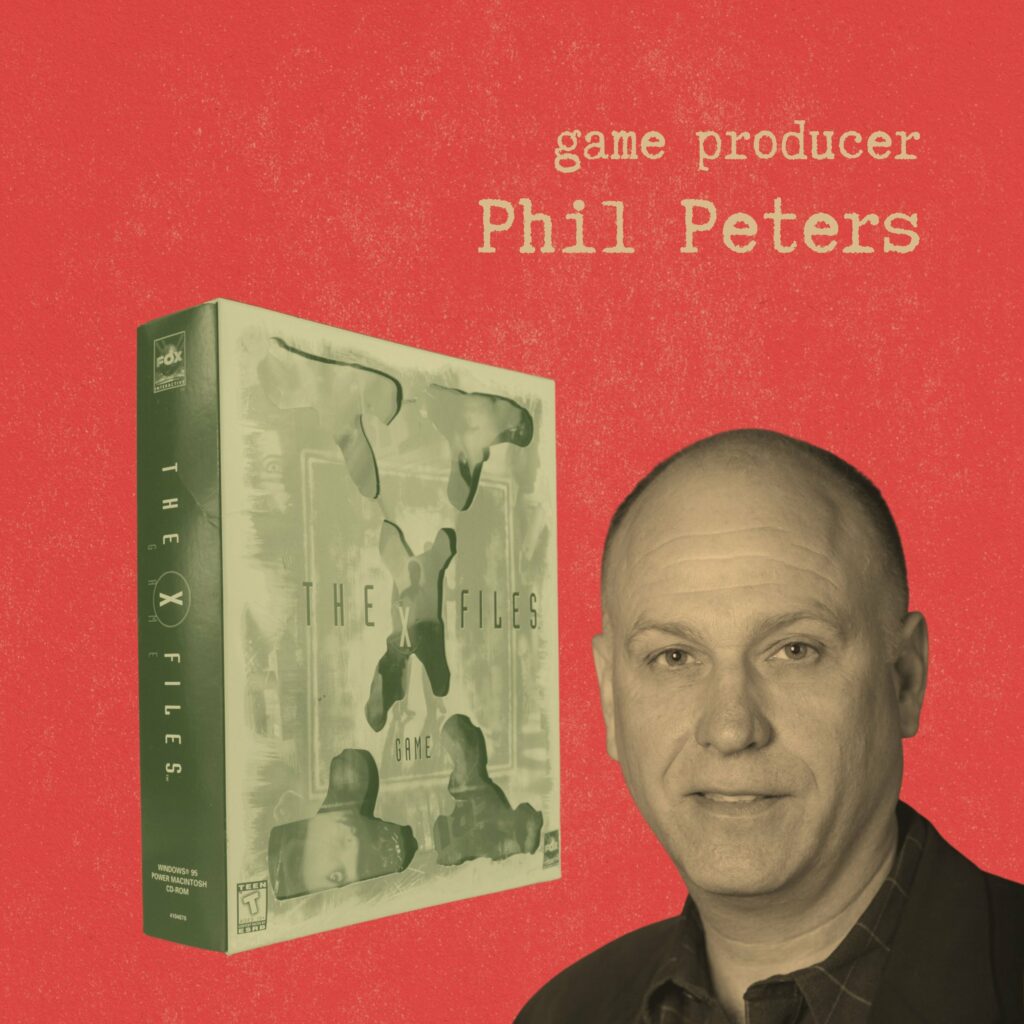
Here is an interview with game producer and production designer Phil Peters, courtesy of the Hey Danny, it’s Mulder podcast!
Peters was involved with the game from the first preproduction meetings to after the release, with the porting to PlayStation 1, alongside the director Greg Roach.
The entire production took 3-4 years. [It’s not clear when it started: the years 1994, 1995 and 1996 are all mentioned. The game was released in 1998, during season 5 and the run-up to the movie. This could explain why the game is set during season 3, which was produced 1995-96.]
He came to game production design after doing costume design for theatre then film production. He had just finished design on Northern Exposure.
First, Hyperbole Studios did a proposal to Chris Carter and Fox studio for a game. They wrote and shot scenes for that. Jordan Williams (Agent Craig Willmore; RIP) was the original lead, a personal friend of his, he was not recast for the final game.
The film world didn’t have knowledge or interest for video games at the time. Everything they did was new.
The only restriction they had was that it had to feel like an extension of the show.
Richard Dowdy, a personal friend of Carter’s, wrote the script, and often came from San Diego, to keep the spirit of the show. [He was not otherwise involved with the show, actually this was his only credit anywhere, so Carter must have trusted him quite a bit. Carter and Spotnitz are credited for the story.]
They were sent all episodes and binge-watched to get to know the show.
The production (coding) and live action photography took place in Seattle. They drove up the 3 hours to Vancouver several times to visit the main series production.
The series’ second unit director of photography, Jon Joffin [seasons 3-4; later DoP for a handful of season 4 episodes, and part of Fight the Future], came from Vancouver and was their DoP, to make sure it would have the same feel.
It was approximately a 30 day shoot.
He made floor plans and figures, like a paper board game, to try to visualise how the gameplay would be like.
The script and related documents was a fat 6 inch binder. [He doesn’t confirm that it was a 750 page document but it must have been something like it.]
Most construction was done in an ex Navy base, Sandpoint naval base. It had huge hangars, they built sets inside. Filming was approached exactly like film or TV. The glass lab (at the end of the game) was built into brig of the navy facility.
The Tarakan ship was at Ballard (Seattle neighborhood), it was an oceangoing tug that had been seized for drug trade between South East Asia and the US West coast!
The motel was a real motel at Mercer Island.
They shot some 6 hours of footage. They had a huge editorial department and a huge spreadsheet to organise.
The game crew were in their 20s. The film crew was more experienced.
In reviews at the time, gamers said it was not interactive enough, while TV fans loved it.
The interactive movie game genre never took off. They were at the cusp of it. The game was on 7 CDs, and studios were already seeing streaming gaming coming up, but it took 5 years.
After other projects in the Seattle area, with the dot com boom, he went into academia, teaching film and documentary in Florida.
In my effort to cover in-depth all the Ten Thirteen interviews, there are times I get lost in my obsession with notes-taking. Here is a long (3 hours!) interview with the unparalleled Darin Morgan from… January 2025 — an interview for the X-Files Diaries podcast (now rebaptized Seriously Obsessed). What a joy to have such long interviews! In the past, interviews were most often written pieces by professional journalists for published magazines; in the past few years, there has been an explosion of interviews with the democratization of podcasting. Today, I get the impression that we are at the tail end of that wave as well.
Darin goes in-depth on all of his X-Files episodes and offers many details I don’t remember hearing elsewhere. Enjoy! Here are my notes [and occasional comments].
Jose Chung’s ‘From Outer Space’: from the very moment he was hired in season 2 he had the idea of the teaser, an alien abduction abduction; he didn’t have the rest of the episode, he couldn’t figure it out. As a result, he did “the killer cockroaches episode” first. While casting that, one actor was just like Truman Capote (they didn’t cast him). He thought that instead of In Cold Blood he would write a story about alien abductions, and he figured the story out! Earlier in Coprophages he has Scully reading a Capote book, which was an inside joke to Duchovny’s appearance on Jeopardy, as if the idea was there and trying to tell him to pay attention, he was not receptive to it yet.
Blood: Glen gave him the story, machines tell people to kill people, and told him to write it. Glen would try to convince Carter to hire him, then they needed urgently a script in a day. He came in to break the story with Glen, Jim and Howard Gordon, then Glen and Jim would write the script real quick. Darin remembers contributing with nothing. Gordon thought Darin “got” the show. Then a writer was fired, there was an opening. The Flukeman role was because Carter knew Darin was looking for a job. He thinks he got the writing job thanks to Gordon. Carter says he perceived something in Darin, but he hadn’t read anything of his. Carter had a sixth sense to recruit people he could trust, a talent.
He discussed with Glen how long the show would last, they estimated 3 seasons. Jim told him to save the idea for season 4.
Humbug: Glen told him to do an episode about circus freaks, he loved the movie Freaks. He gave him a VHS of Jim Rose. He can’t write without comedy, he’s not purposefully trying to deconstruct. Carter should have fired him when he pitched the idea, but he liked the story. Glen had him change a few things, but mainly he wanted Chris to know what he got into. Carter liked the script even if it was “not the show”. Fox had a huge problem, they were worried. The talent of Chris was that he thought the fans would accept the difference.
He recognizes that he wrote few episodes and had an influence on the show. Although he thinks that somebody would have done comedy down the line, and he’s not a fan of many of the comedic episodes that followed. If the first one had been bad, like Fight Club [ha!], then they wouldn’t have done more. Everybody was nervous. Manners thought it would end his career. He is somewhat resentful of the comedy episodes that followed his because they didn’t have to go through what he did, they were not new, there was no pressure. Humbug was enjoyable, it was raw energy. The end product is always less than what the idea was, some lines were not great [typical self-depreciating Darin]. He would have written it differently now, better.
The audience is so-called more sophisticated now. But Humbug was received more easily than Were-Monster. He had no computer during the original run. In the revival he read everything, that was unhealthy.
Coprophages: he had a very hard time writing it. His own opinion of the episodes is tied to the personal experience of working on them. The inspiration for Bambi was an entomologist in the University of Illinois, she did a festival around insects in horror movies, and a few years ago she invited Chris to show Fight the Future and Coprophages, and Chris invited Darin, so he saw it with an audience. About the stoners: he read someone was trying to get high on crap. TXF needed unreliable eye witnesses.
Quagmire: he is credited as doing a rewrite but it isn’t true, he wrote the Conversation on the Rock [That’s already a lot!] and he helped break the story. The stoners were not his idea, it was Vince who wrote that scene. It was a group effort. He doesn’t like Easter eggs, he likes references to past episodes, it’s amusing, like how the past carries weight, like how a continuous story series would do now.
Back in the day nobody wanted to have Mulder and Scully romantically involved, as it would become a different show; they had to be thinking about weird stuff, monsters. The M&S couple was interesting because they had been through so much and nobody else could relate to them. The jealousy in Coprophages was for comedic effect, it had not been tried before. Gillian had to do some other work, she would not be much available, hence she had less scenes, Bambi was introduced, it was a scientist taking Scully’s job away from her, it was also a professional jealousy. The performances played the MSR well.
MSR in the revival: people who have been through so much, on and off, understand each other like no other, they don’t need to define what they have. He wonders what it would have been like if M&S each had had life partners. The long term trajectory of the MSR was accidental.
Coprophages doesn’t have a good main character that the episode would be centered around. Bambi and the roboticist are one-note.
The only actor he wrote the part for and was cast was Jesse Ventura. He didn’t have actor in mind for Clyde Bruckman; he considered Bob Newhart jokingly for 5 minutes. He drove Rick Millikan crazy, he was a movie guy, he didn’t know TV actors. He was very lucky with the casting. Casting is very fun but also torture. He wanted to cast Rip Taylor for Jose Chung, he seemed more hip, but he was unavailable. Charles Nelson Reilly gave the best audition. His first scene was the interview with Scully, Darin was there on set, he seemed perfect for the role. He knew Reilly from “Lidsville” (1971-1972) and “Match Game” (1990-1991). He didn’t meet Peter Boyle [Clyde Bruckman] until after the episode was shot. The guest stars had problems adjusting to his episodes, they thought TXF was a drama. Watching Stuart Margolin’s audition tape [Dr They], Glen said older actors understand what they’re looking for, they have experience in theatrical performance, younger actors don’t. He knew Stuart from “The Rockford Files” but he didn’t watch it as a kid. These actors always worked, either in theatre, or directing. He gave him directions and he understood immediately, he was in complete control of the craft.
He didn’t write Scully to be immortal, that’s bad sci-fi. But after he left, the writers were free to do whatever they wanted, it was out of his hands. Maybe that’s what Chris’s plan. Same with Mulder-Scully relationship, if they’d ever kiss he wouldn’t be the one writing it.
Clyde Bruckman: he was trying to do an episode like Beyond the Sea, he thought it was the best episode of the early seasons, very inspired. Vince was an admirer of Clyde Bruckman, perhaps it inspired him for Tithonus? Chris let writers have their own voice, their own approach, but not everybody had a good experience writing for the show. The best work of the different writers is recognizable and connected across the series. A series is its best episodes and for TXF they are very different from each other. He is proud that Chris didn’t have to spend time breaking, writing and re-writing his season 3 episodes. Glen & Jim could do 8-10 episodes per season on their own, Chris needed writers like this.
Mulder was on a mythic quest and acted like it, he wanted to make fun of him. He felt sorry for Scully, to be involved with someone she cares about but is crazy. In the revival his attitude to Mulder changed dramatically, he was more sympathetic to him, David appreciated that. Once he finds the truth, then what happens, what does my life amount to? And he is still sorry for Scully. M&S are obviously in love with each other, but they don’t get along all the time necessarily. Mulder is absorbed in his quest, he couldn’t see he had this beautiful woman next to him, in the revival he is more receptive.
The preying mantis scream in Coprophages was from his own experience, he saw a “walking stick” in a tree as a kid. He still laughs at Mulder’s yell in Jose Chung.
Jesse Ventura’s car scene in Jose Chung: the old car moved slow, so it was accelerated to make it look faster. Then they started pulling apart the set, and Rob Bowman was not sure if it would look too comical; Darin’s answer was “maybe!”, then Rob rushed to shoot one more take with a different speed. That’s the chaos on set. The car exit in reverse is an example of Darin’s theatrical writing, like a scene exit.
While he was walking his dogs he ran into Rob Bowman! He hadn’t seen him in decades, they had lunch. He told him about fans loving Jose Chung, this was odd for him, he doesn’t consider it his best work. [Wow!]
Part 2
Jose Chung: He was a fan of Jesse “The Body” Ventura, he was a wrestler fan as a kid. He’s hilarious as a commentator and in action films. He wrote lines for him, but he had trouble with them. It was the best performance in any of his film work!
For the Men In Black (Alex Trebek) he had originally in mind Salman Rushdie [!]. Carter and Bowman shot down that idea. Glen suggested Johnny Cash, but he was unavailable. Darin thought of Steven Spielberg [!!!]. He wrote a letter to Spielberg, but they got word he was unavailable before the letter was sent. A couple of years later Darin had a meeting with him, and he said he would have done it! [Imagine that! Also, Darin and Spielberg met?! In what context?]
He was throwing names around with Jeff Vlaming and came up with Alex Trebek, with the Duchovny Jeopardy connection.
Small Potatoes: He did a single shot after morphing back into Eddie from Mulder, Gillian was probably not there when it was shot, the SFX shots were done last; he was not wearing pants during that shot. If you don’t see David or Gillian from the front, then probably it’s not them, it’s their stand-ins. He hadn’t acted in a while, he could have been better. Vince saw a weird quality in him, that he had an ability that he didn’t know what to do with, so he cast him.
Queequeg: he didn’t have a dog at the time, he gave Scully a dog without thinking of the implications or running it by Carter. The fans started asking about it, and Carter said to get rid of it. Gillian didn’t like the dog, Darin didn’t choose it. He broke the Quagmire story in a day. He needed a victim for the end; he pitched it to the staff; someone suggested the dog. He wouldn’t do that now, neither would Carter.
When they started the revival he didn’t know that they had had a kid.
In the revival, Scully needed a dog, to make up for it. She got a better looking one. He didn’t have the intention to bring Dagoo back. In his mind, Scully has a pack of dogs.
Directing in revival: he had forgotten how long things took, it was frustrating for that. There are things wrong with Were-monster but he doesn’t know what he would change in it. He had fun with Forehead Sweat. When the director is another person you have to explain things, sometimes they bring good things. He learned a lot from the 3 great TXF directors. He was glad Carter let them direct in the revival.
Guy Mann has a line about internal logic, it was a meta comment about TXF, none of it makes sense. He was watching old Universal monster movies like The Wolf Man, the detailed logic didn’t make sense. TXF is that type of story. It was also a comment on our lives that make no sense. He lived in fear somebody would do the were-monster story before he could do it.
Forehead Sweat: what would Rod Serling write about Trump?
The best Twilight Zone episodes are a guy trying to explain what’s happening, and their heads have forehead sweat. “Lost art” because he doesn’t see that any more. Then he would rewatch it and he would only find just a handful of episodes like that, a Mandela effect.
His dad’s favorite episode that he wrote is Small Potatoes. [Ironic!]
He read comments that fans said this episode is going to age so quickly because of Trump references, but the episode is more relevant now than when it aired. He watches news about gaslighting, disinformation, waiting to hear “it’s like that episode of TXF”, it’s only gotten worse.
It predated QAnon; the middle name of Dr They was “Q”; he wanted to start a rumor that QAnon was a publicity stunt by TXF.
Being specific vs being vague. In the end, was Reggie crazy? The episode aired one year after Trump’s inauguration. One year ago, Reggie had a nervous breakdown. The last flashback was when Trump was coming. It was the demise of American idealism, Trump becoming president was the last straw. He had a line for Reggie, “Trump became president and my head exploded”, it was too on the nose and he cut it. The alien-as-Trump is part of his breakdown. Reggie was when the president no longer represents your country’s ideals. But nobody saw that. TXF had to have a vagueness to the ending, like, “here’s the explanation, but, who knows?”.
For the fake credits scene, the script was due the next day and it was the last thing he wrote. He watched the series in fast-forward, he only had the DVDs for 2 seasons, he bought a subscription to Hulu just to search a scene to insert Reggie during that one night. In the Small Potatoes butt crack shot, the SFX guy told him there was only enough room to insert Reggie if they just removed Mulder. He always laughs when Reggie shoots him [Darin].
The intention was for the alien to give a Trump-like speech. But then it would be perceived as anti-Trump. So it the speech had to be verbatim, to use the exact words.
He has tons of references to the 1970s, film quotes. It was the beginnings of conspiracy paranoia. One of the references was the Elvis cape, his Las Vegas era, which people found weird; then recently people started referring to Trump as being in his “fat Elvis” stage, now it works.
He doesn’t remember that Mulder is color blind.
The episode’s ending “can’t be” a series ending, but it is his ending, his finale for the series. [It’s a great series finale all right!]
He didn’t call the episodes “monster of the week”, he called them “stand-alones”.
As per Frank O’Connor, two characters in fiction are actually one person. This is Mulder and Scully. They are “platonic soul mates”.
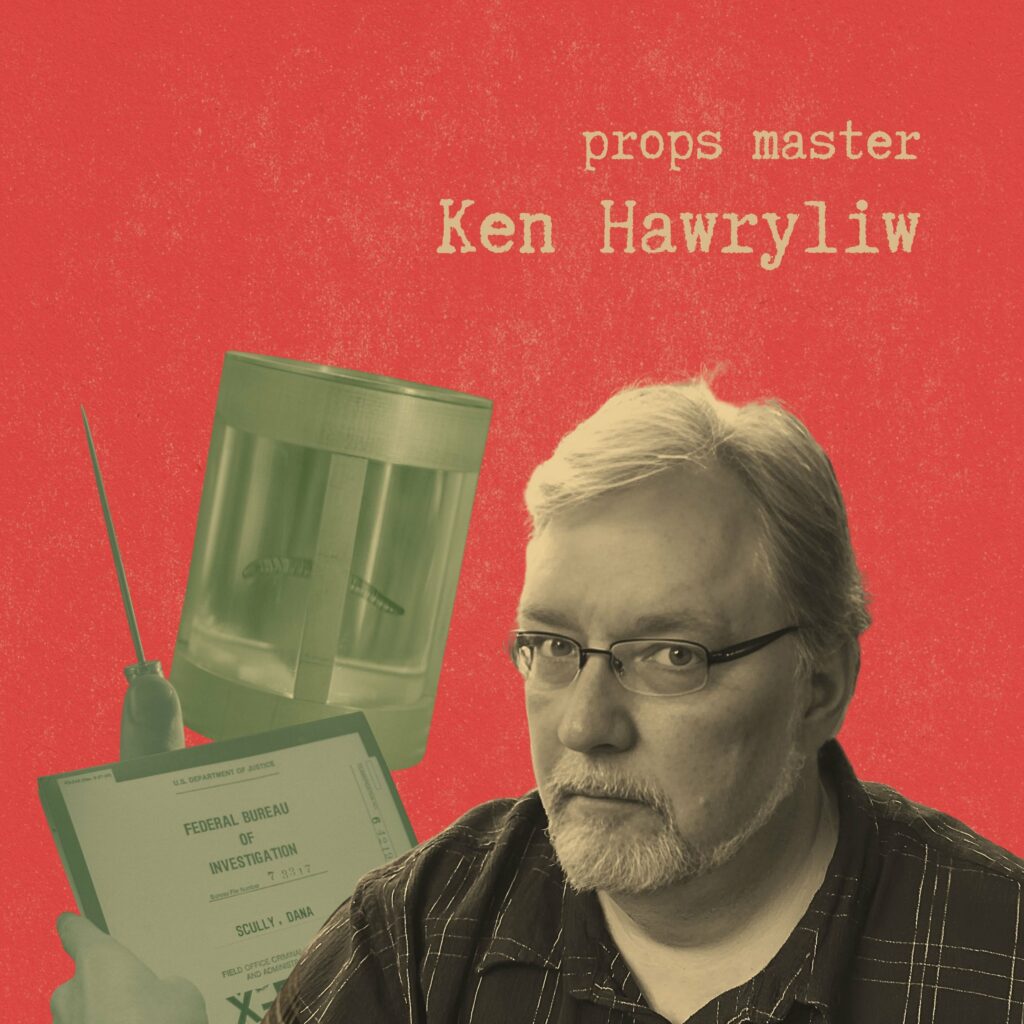
This is a rather recent interview with Ken Hawryliw that I postponed covering because it turned out to be his last interview: Ken died earlier this year. (The GoFundMe fundraiser in his memory is still open.) He was the props master for the first five seasons of The X-Files and season 3 of Millennium (and things like Battlestar Galactica), and I am the proud owner of one of his props.
He had a treasure trove of stories to tell around the making of the shows. The interview ends on an interesting note on how things have changed since the analogue 90s. The interview is from December 2025, from the Hey Danny It’s Mulder podcast. There is some overlap with two otherdetailed interviews he did not too long ago. Detailed notes follow:
He would have loved to have worked on the pilot, but timing didn’t work out. 1X01: Deep Throat was his first episode. He “got” Chris Carter immediately. They had both seen the very same TV rerun broadcast of “Mysterious Island” when they were young.
He designed a lot of the props: the art department was glad to get this task off their back. He and his team ended up doing a lot of the research, and that meant libraries, phone calls, pre-internet. Over the years he had collected six 6-foot tall bookcases full of books, on topics like forensics. He sold much of that all together for a bookshop that was opening.
They’d develop a relationship with useful contacts, like the head medical examiner of the BC province, military advisors. Starting with 1X08: Space, they had military advisor Ian Fryatt, who got them to use military surplus uniforms correctly; he eventually opened a specialized company on military equipment, Phoenix 1 International Film Services. Then they got Ron Blecker [he has credits on all 1013 series], ex-Black Hawk Down, just two weeks after he left the Army, he wouldn’t say if he had been CIA or not.
They brought people in to make Scully act like a scientist.
In 1X23: The Erlenmeyer Flask: due to the liquid nitrogen, the acrylic fetus neck cracked and snapped off, the head fell on Gillian’s foot, thankfully she didn’t knock over the nitrogen tank. He designed the cradle.
He learned a lot on prop design working with Richard Hudolin [of Stargate SG-1 and Battlestar Galactica fame], and with Harry Lange on “Hyper Sapien” (who had worked on “2001”, “Star Wars”!). Carter wanted props designed from scratch, not take another object and modify it. Film didn’t have the high definition resolution of today, so they had some leeway.
He directed a lot of the insert shots during the first years, which drove the Guild crazy. His first time was for 1X07: Ice, with meal worms.
For the alien stiletto, he knew immediately how it should look like. If it were done with a spring mechanism it would have been twice the size, so they did it pneumatically. The alien artifacts’ look was based on the feel of the Roswell debris, metal fragments, their sheen. For the firewand, Carter told him to make it look like it came from the same factory as the stiletto.
His philosophy was to make it look real. He had the same philosophy in Millennium season 3. He had a reputation as the writers’ Nemesis, correcting them, but it was just to help things be realistic and credible.
About the 3X18: Teso Dos Bichos funerary urn: Originally it would have been from Uruguay, not Peru. The UN passed a law, you have to get permission to transport human remains across borders. She got hold of the Ambassador to learn what such a letter would look like. It was an urgent phone call, things were lost in translation, the Embassy thought they urgently needed the permit or the shooting would stop.
They got huge cooperation from the military. They got a VIP tour of the USS Constellation, visited the CIC. Story of photos [unclear whether this is for 1X01: Deep Throat or a later episode]: Jeanne was from West Sussex, could seduce people on the phone. She called a Colonel at the Pentagon, they had to know what security and uniforms look like for Edwards Air Force Base. The Colonel dispatched his own photographers to Edwards, back to Pentagon to develop the photos, flew them to the Fed Ex hub in Kentucky because they missed the day’s deadline, so they got them in Vancouver before next morning for the show-and-tell meeting.
For 5X01: Unusual Suspects where he acted: he had a line, “Whatever”. He asked Kim Manners how to say the line, but Vince had written it exactly because that’s what he always said, “Whatever”. Just be yourself.
“Apocalypse Now”: that’s where the CSM was from, and the texture of the print files. Secret files used to be printed on onion skin paper, so they couldn’t be photocopied. They tried to do the same and photocopy them, they burned down their Xerox machine. They had to be typed by hand with old typewriter.
They had two photographers. Ken Staniforth, who has since died, and Marcel [?]. Ken did the art direction of the photo shoots, he had a small crew, to do the crime scene photos. Like with the 3X23: Wetwired photos. It was guaranteed that such photos would be in a close up, because they move the story forward. He had to train the crew that these were important. For the UFO photo in 1X16: E.B.E., they shot the plate, then the art department would do photo retouching.
The case files would be in extreme closeup. The info in them was extremely accurate. This was to help the actors too. Story from Battlestar Galactica: His wife Alison is an author, she wrote a report that Admiral Adama would read. When shooting, Eddie James Olmos stopped the shooting to congratulate the writing, he summoned Ken on set.
Sometimes they would add a little joke in the text. They did it once with Gillian. Clyde Klotz’s nickname was “Dog Boy”. They gave Scully a file to read, and the perpetrator was Clyde “Dog Boy” Klotz, she had a good laugh. They worked long hours, the agenda was to make the best show possible, there were no personalities.
Before 6X17: Trevor: Film director Phil Spink asked Ken to meet Jim Guttridge [a film music composer], who had written a spec script for The X-Files. Ken found it was not quite a TXF script. They thought, why don’t we write one together? They wrote “Remembrance Day”. Carter’s assistant Joanne Service and Vince Gilligan thought it was really good. They got it to Frank Spotnitz; time passed, weeks. Gillian is the only actor with who Ken is friends with, he introduced her to Clyde, he was the first one they told when she got pregnant; so Ken asked her to read the script. In the interim, Ken and Jim wrote another script, just to prove to themselves they could write one in two weeks: it was about the Monkey King, Bigfoot, Stupendous Yappi was in it, it was comedy. Eventually Carter read both, he said to take more time next time. So it became a writing assignment.
Making 6X17: Trevor: It took them 13 pitches to get to Trevor. By season 6 almost everything had been done. The episode’s “beautiful idea” was that this man could do anything except connect with his son. They worked a lot on the scientific part but most was left out. They worked with a theoretical physicist. In an electromagnetic vortex, nobody knows what happens inside. A tornado is like a particle collider. What if you could survive something like that but it would change your molecular structure? It would only work with high-conductivity matter, not for things like glass. If you’d cross something, matter would be charred to its basic molecules, only carbon would remain. The first idea was that Pinker would walk through people and water in their bodies would turn to heavy water, and all cells in their body would rupture, bleed out spontaneously. It wouldn’t fly, too gory, it couldn’t be too sci-fi. The core was that he was propelled by the love for his son. In the first draft they wanted a huge action sequence for the end: Pinker runs through walls of motel rooms. The wind shield idea was taken from what was an earlier scene, where Pinker was stopped by car, and then Mulder figured out the conductivity thing.
Props move the story along, they are like clues. A senior props master who worked in movies like “Legends of the Fall” [Jimmy Chow] used to call him every two months to tell him “you guys are doing amazing work”, it was great to get credit. He is most proud of the attention to detail. At the end of some season, he told Chris “thanks for making me do the best props in my life”, Chris said “we are making television history”.
The only prop from the show he has left is a firestarter wand. There’s a detail that you couldn’t see in the final episode: the handle has a side glass with a liquid fuel gauge.
He’s happy he got to design props. His inspiration is from Richard Hudolin, he’s a child of the 60s, Batman (1966), Irwin Allen shows like Lost in Space and Land of the Giants. , the way prop curves give texture.
John Bartley [TXF director of photography for the first 3 seasons], the first thing he directed was a series pilot with David Hemmings [?], he learned not to use pure white. The directors of photography that came after just tried to “make a Bartley shot”, don’t make it your own. He worked so many hours in the first episodes to get the look right. Studio people asked if they could make production go faster, Bartley said, “hire a different camera man”.
The process to make props has changed a lot: the CNC [Computer Numerical Control] mills, the 3D printing. Things made by human hand had an organic quality. With Harry Lange things had an organic design, which is lost when using keyboards and machines. He’s old school, likes to sculpt, there is no replacement for that. Chris was inspired by “Jason and the Argonauts”, the skeleton fight had a nightmarish quality, you can’t get that with computers. He’s glad TXF was made in an analogue period, it would have been a different show today, way too much CGI. It was the last gasp of analogue times.
Another Carter interview in a long list of interviews for the new Director’s Cut of IWTB: this one on the ex-X-Files Diaries / Seriously Obsessed, plus some “Queens For A Day” news.
Two things are new and important here.
First: he justifies cutting down on the Mulder-Scully romance from the second movie as keeping things in store for his post-season 11 continuation that he has in mind. There was a word for this type of MSR enjoyer in the old fandom: fini-shipper, a desire to not have the romance take any place on-screen until the very end of the show. Obviously, Carter cannot think of any other way to portray his lead couple than to postpone gratification until they are well in their sixties. Implicitly, that would mean that his envisioned finale would end with Mulder and Scully together.
Second: he has a story to tell as a post-season 11 continuation that he would prefer to do as a series or movie, but when really pushed on this, for the first time he does not close the door entirely to telling it in another format, such as a novel. I really wonder whether Disney will give him the opportunity to make this project a reality and we are I think several years away from when Carter would give up hope on producing this as a live project, but at least we can live with the hope that we will get to know what it is about at some point in the more remote future. Now, I would also love to be able to read Carter and Spotnitz’s story treatment for a mythology-focused third movie that never materialized after IWTB, thank you!
Interview highlights
Cutting Mulder-Scully scenes from IWTB Director’s Cut: “One of the reasons I’m doing this is… When Scully says to Mulder at the end of season 11 ‘I’m pregnant’, that’s not the end of the story in my mind, that’s the beginning of another story.”
“I didn’t know Gillian would leave the show, I had always hoped that I would get to finish my story, because I have a big story to tell.”
“That’s another reason I’m doing the Director’s Cut, I wanted to leave myself some ammunition for when and if that opportunity comes around.”
“When I wrote the finale, My Struggle IV, I didn’t know that Gillian would be leaving the show.”
“He [Coogler] is including Mulder and Scully.” “I don’t know if it’s official, I know he’s spoken to both of them.”
Would you ever consider writing it as a novel? “Well, it’s something I was actually going to say, if there was no opportunity to do another reboot, and if there was no opportunity to do another movie, I still have a story to tell, however it will be told.”
“They [DD & GA] know what I’m aiming for and at, they didn’t before, when the show came to an end there, neither.” “I met with each of them individually and kind of told them what my plan was, whether or not and whenever may or may not come to fruition, they at least have a sense of what I’m planning.”
Adding the song ‘I Fall To Pieces’ was editor Eleanor Infante’s suggestion.
For both IWTB and My Struggle 1: he had hardcore viewers in mind, but he has to balance that with having to spend time reintroducing Mulder and Scully for new viewers.
“Who I was trying to satisfy is my wife, she thought there was too much Mulder and Scully relationship in the movie.”
On the viewer choosing different versions of the movie: “It’s a freeway off-ramp.”
“You have the chance to make a movie so you have to give people what they’re expecting, so you give them the Scully and Mulder kiss, it felt almost like pandering.” “If there’s a third movie, what do they do then?”
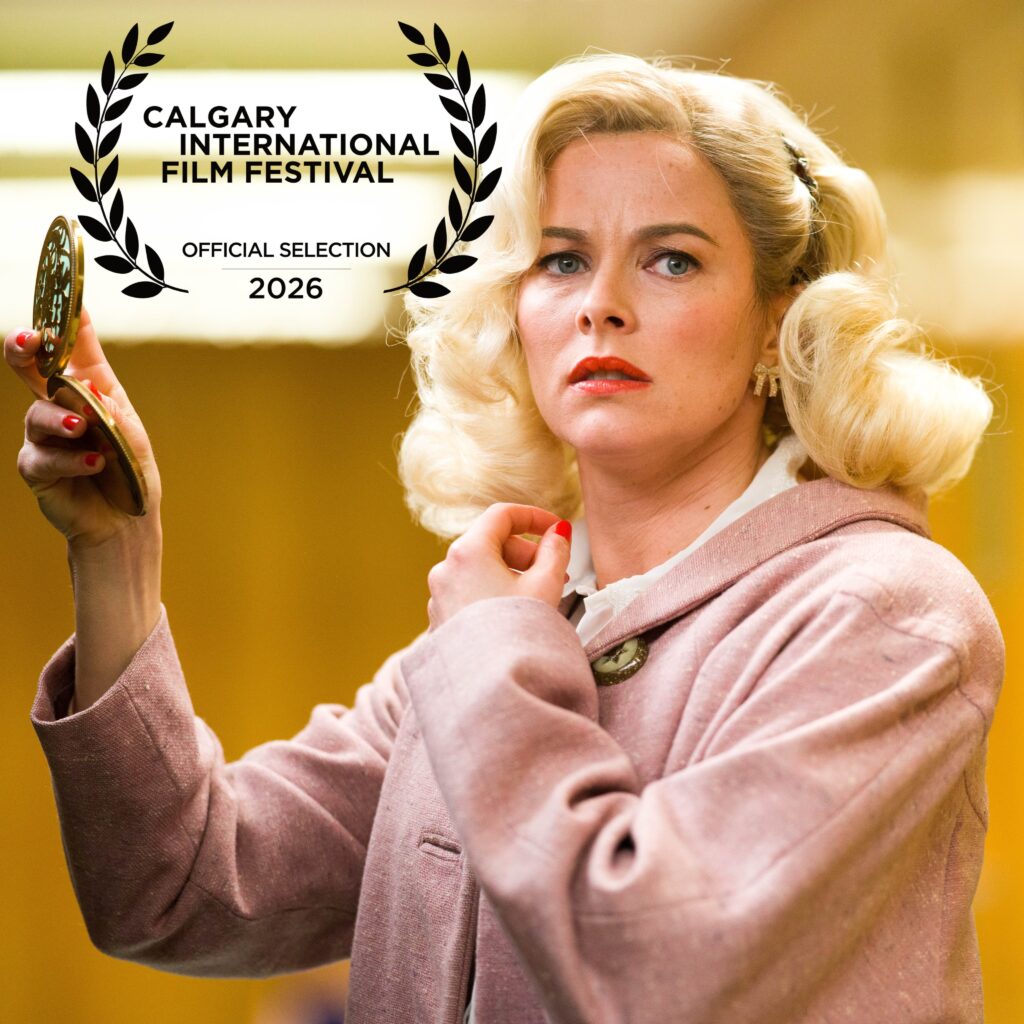
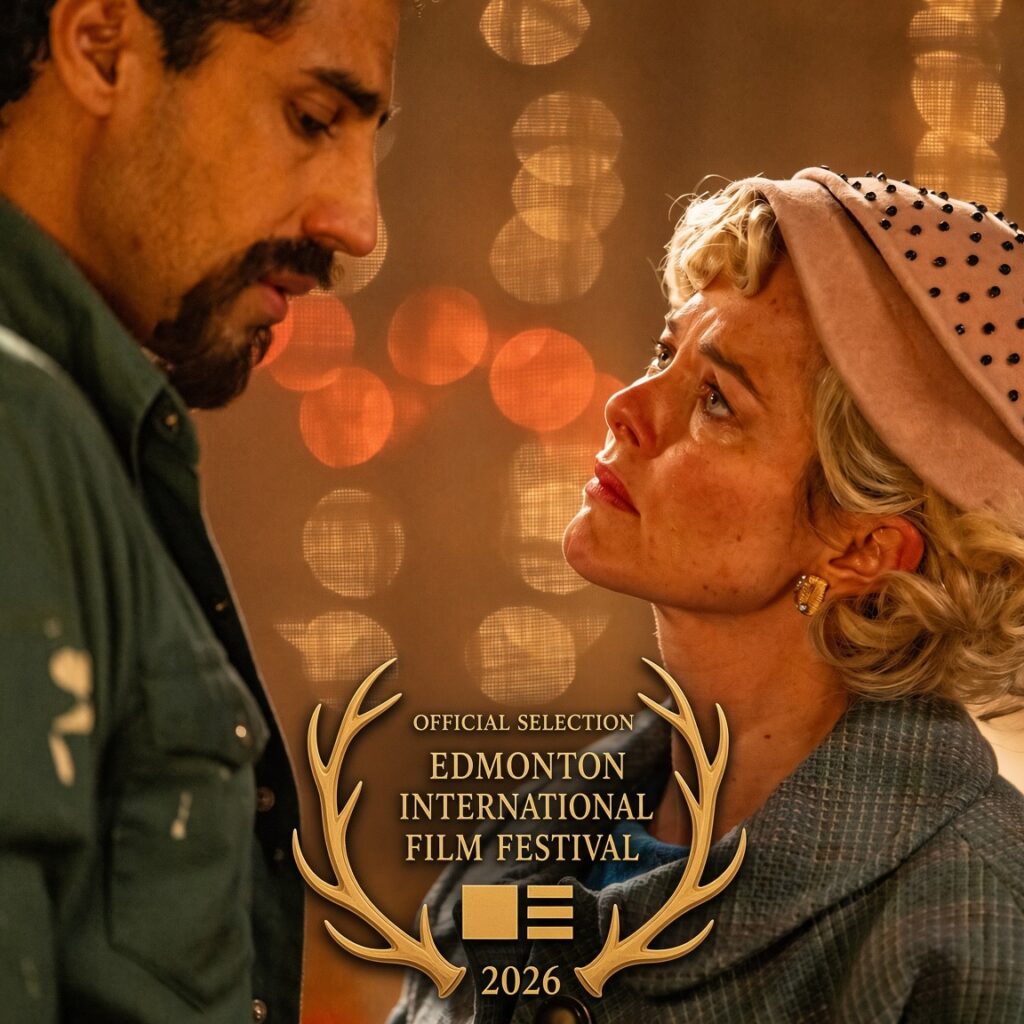
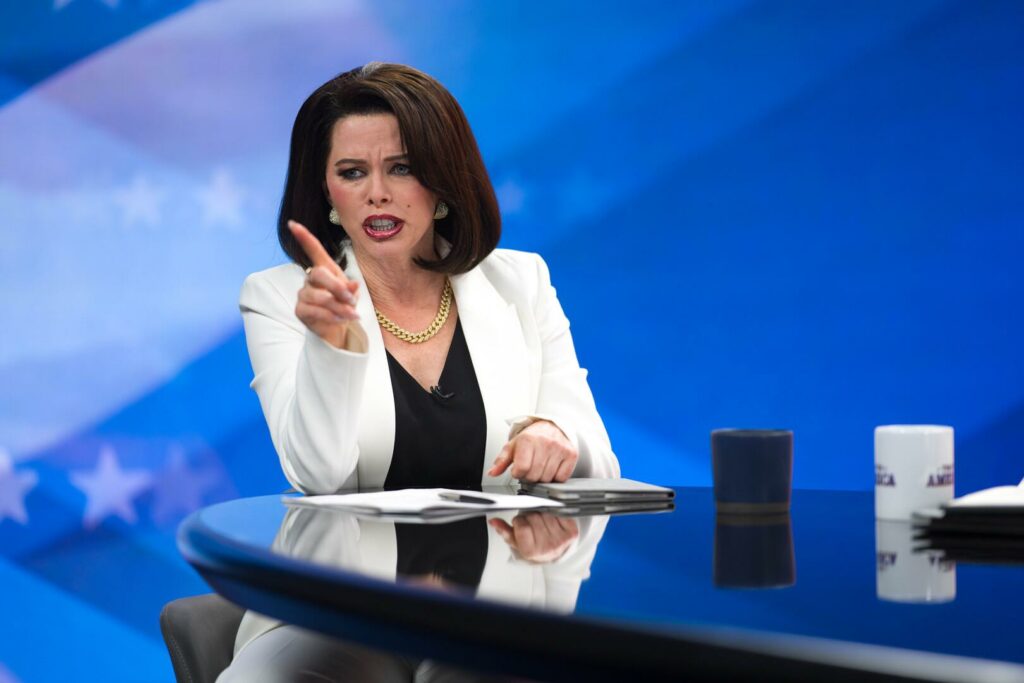
We now have the first stills from the movie, which all feature the lead Erin Boyes, who plays the modern-day conservative talk show host who is catapulted back in time in the life of her own mother.
Some additional information from the above interview:
It will be in 3 film festivals next month. [So there’s at least one more to be announced.]
It’s an independent movie, self-financed. [Hence the festival circuit, hoping to find a distributor.]
Title explanation: it refers to the old “Queen For A Day” talk show, but it’s actually “about somebody who goes back to Queens, New York and spends a long day there”.
Editor Misha Syeed did such a good job during several months on the Director’s Cut that he and Dori kept him on for ‘Queens’.
Music editor Jeff Charbonneau, who has worked on TXF since the pilot and on the new cut of IWTB is also on ‘Queens’.
No less than twenty more Chris Carter interviews, out promoting his new director’s cut of “I Want To Believe” + one interview from someone I had not seen interviewed before: special effects David Gauthier at the very end! Obviously there is a lot of repetition across these interviews and with the interviews from earlier this month. I have tried to quote the new bits for each. I will comment on the new cut itself at a later date.
What transpires from all of this is the following:
On IWTB: Although the Mulder-Scully relationship is his idea of an ideal relationship, one of his main motivations with the new version was to cut scenes that featured the relationship. He really feels he was forced to do this by movie executives who did not understand the show. [This could be the one thing that he regrets about in making TXF, which he mentioned at one point in the past. I’m glad he got it out of his chest and could “correct” it. Whether that makes for a better film…this is debatable.]
On his future idea for a final movie or a season 12: The word “immortality” comes up again and again, as does the question about what happened before the Big Bang. The aliens, the CSM and Scully could be immortal. Searching for immortality as an obsession of our times among the powerful is something he comments on. This is what he set up during the 4 Struggle episodes. [This does tie in with my own wild ideas about alien DNA providing insight to the fabric of time and space! Imagine that, a joke from a Darin Morgan episode (Clyde Bruckman) becoming canon. Is this an exciting development for the mythology? I don’t see how the Struggles were subtly setting this up, although we do know for a long while that (self-)healing is an alien power, and obviously William is shown surviving at the very end (is that the big hint?). As a culmination of the mythology I’m not sure it brings much more than what has been said already: whether it’s alien colonization or human conspiracy, what it has always been about is the manipulation of our genome to gain power and long-term control over humanity, and we have seen this already. This is another variant of this, with the nice addition of commenting on the current transhumanist obsession of our techbros overlords. I mean, the man can have interesting ideas (that have some trouble translating to a structured narrative end-product) but there’s so much “stuff” being made today, who am I to say no to it and why not giving him the chance to do this at this point?]
A couple more important items: He is working on something with Glen Morgan [tell us more!]. ‘Millennium’ and ‘The Lone Gunmen’ are not available anywhere because of the cost to license their music. [We knew about MM, this is new for TLG, and nobody asked about ‘Harsh Realm’ unfortunately. The new cut of IWTB was also costly because of new songs to license, so this is a trend.].
Here are the interviews, with many thanks to Adam Silva:
“I always felt that they forced me to shoehorn that Mulder-Scully relationship in there and that it took away from the scares. When we did the series, the relationship is something we always touched on in passing; it was part of the storytelling, but it wasn’t the object of the storytelling. I was always unhappy with the way that I was forced to do that.”
Have you ever felt tempted to collate the mythology episodes into one long story? “Yeah, it is of interest to me. We went to great pains to make all those puzzle pieces fit. It would be a thrill to put those puzzle pieces together.”
Any message to fans upset you’ve robbed them of some Mulder-Scully Romance moments? “Frank Spotnitz told me people are gonna miss that last kiss. But are they? It’s a touching moment without the kiss. For me, it’s one of the most touching moments in the series. Scully, the emotion she’s experiencing there—she breaks down in a way, and it’s actually better for me without the kiss, as symbolic as it is, of their love for one another.”
“They should know this is more keeping in my vision. This is a re-exploration of something…I put my heart and soul into it.”
If you were still writing episodes of The X-Files, is there a topic you would love to cover? “It’s funny, someone asked me about immortality today, and what I think about immortality. I said I love the idea of living forever. I said I’m not one of those people out there trying every wellness trick to try to live forever, although I try to live a healthy life. But I’m curious. Biblically, people lived for hundreds of years, so there are things in front of us which suggest a kind of relative immortality, and I’m fascinated by that idea. Are aliens immortal? If we were able to access alien technology and science, could we become immortal? All those things are of interest to me. If and when I bring my X-Files back to the screen, not Ryan Coogler’s X-Files, but if I ever bring mine, I actually, set up in the last two reboots, that very idea.”
Carter notices a current connection between the film and what’s happening in society: “It’s funny that the story now actually has relevance as people are talking about looksmaxxing or bodymaxing. There are tech bros who want to live forever. Is a head transplant a way to live forever? If you could do it with a monkey, as we are suggesting, you could do it with a human being. It has relevance in science in a way it didn’t in 2008.”
“The first movie, 1998’s The X-Files: Fight the Future, made money, but the producers weren’t necessarily fans of the show. So they wanted us to hit the relationship between Mulder and Scully really hard. I felt like the relationship took away from the horror of the story.”
“Even after people running 20th Century Fox movies said we should do a director’s cut, I never thought it was going to happen. I just assumed they’d come up with a reason we couldn’t do it. But it was full-speed ahead from the moment we showed them the trailer we cut.”
“What I think was unappreciated when the movie came out was the Frankenstein element, which is only kind of alluded to at the end of the movie when Mulder’s putting a newspaper clipping on the wall. So I added “Vrach Frankenshteyn” to the beginning so that when—if you recall, the search party is following Father Joe out onto the ice and snow and he finds that arm, it suggests a Frankenstein story rather than a kind of a weird and disconnected clue. And it draws the audience into the Frankenstein story.”
“We made the movie for the big screen; I think the production values are big-screen values. Also, what dates this movie is that we shot it with film cameras, not digital video cameras. So it’s old school in that sense, and I think the values are filmic.”
“That relationship of Mulder and Scully is still my idealized relationship for a man and a woman, of mutual respect, of agreeing to disagree [on] faith and science, and of the intersection of those two things. That they can be something that you agree to disagree on and still maintain your relationship. I wish people could agree to disagree more in life because we have more disagreement than we have agreement in our lives and certainly our political lives right now.”
“That’s what we originally intended to do, a monster of the week story, a standalone. The budget was a third of the first X-Files movie budget. We had a limited amount of time to make it. We were making it in a place that was so hard to make a movie in, which was cold and snowy and icy and hard.”
Stand-alone: is that why you also cut mentions of Mulder’s sister and William? “Yes.”
On censorship and 2X13: Irresistible: “There was an episode I did called “Irresistible,” and it was about a man that I originally referred to as a necrophiliac. And when I turned that script in to the people at Standards and Practices, the network sensors, they said, “You can’t do a story about a necrophiliac.” When you’re working in television, the deadlines are fast and furious. And this is the script that I had and it would begin shooting day after tomorrow. And I had nothing to replace it with. And you’re on a conveyor belt, and you’ve got to be feeding the monster, it’s food. And so they basically handed the script back to me and said, “Can’t do this.” So it’s like I had to think about what I was going to do. Do I come up with a new story, try to write a script in two days? Not possible. So, I thought about it, and then I thought, “OK, I think I know what to do.” I referred to the necrophiliac as a death fetishist, and I handed the script back to them. They said, “OK, great. You can do it.” So sometimes, it’s as simple as a tweak, a point of view.”
“There’s a huge hardcore fanbase out there, and bless their hearts, they’ve adopted Mulder and Scully. I think it’s really those two characters are the secret to our success. Their relationship wasn’t just romantic. It’s respectful. It is combative. It is, for me, my perfect idea of a romance, of a relationship, of a friendship, of a mutually respectful relationship. And I think that’s simply the reason that people are still drawn to the show.”
“I was just visiting one of those people the other day, David Nutter, who came and directed some of our very best episodes. I’m working on something right now with Glen Morgan, who he and his partner, James Wong, wrote some of our best episodes and then directed some of them too. I’m still working with these people.”
“I never got to release the movie that we, Frank Spotnitz and I, originally imagined. That was back in 2008. But I got the idea to do a director’s cut only last year.”
“I worked with two different editors, people I respect and I’ve worked with before who weren’t involved with it all originally. I asked them to watch the movie and help me to refine the cut and make it the scary movie that I originally intended to make. It was heroic on their part. The movie was originally edited by an Academy Award winner, and so coming in and basically re-editing his vision took some courage.” “That said, I think the editors alone, just in the way they re-approached the movie, really helped it. I gave them the reins early on, and then when they gave those cuts back to me, that’s when I started to work on it. They added material, they took out material, they restructured material.”
“Scully being a scientist and Mulder being a believer in the paranormal, and that they agree to disagree wonderfully—it’s part of the nature of their relationship. I think it’s their mutual respect for one another. That, for me, is the ideal man-woman relationship. It feels inevitable. It feels destined. I have that relationship with my wife.”
“I really think of science as a search for God, and there are so many big questions that are unanswered, and we are trying to find the answers to those things. And will those answered questions bring us closer to an idea or a how it how it all began? What came before the Big Bang?”
Scully’s Catholic faith is important to her. And I believe that you are a person of faith as well; is that true? “I am a person of challenged faith. I grew up in a religious environment. I have two uncles who are Protestant ministers. Catholicism is of interest to me — I had never been to Mass, and I live near a Catholic church, so I went to Mass the other day, and I found it fascinating.”
“Scully is working at a Catholic hospital, and they’re telling her to let this boy go, and she won’t let the boy go. So she follows her faith in science, and she follows her faith in God to save this young boy’s life. And she goes back to Father Joe. She wants to know about his faith, and how he can have this faith when he has betrayed it. For me, there are wonderful layers in this movie, and I think some of them went unappreciated when it came out in 2008.”
What truth do you still think is out there that we haven’t had the answer to yet? “I’ll go for the big one, which is what was there before the Big Bang? That’s the question of the ages. If and when that is solved, it will take everything that’s wrong with planet Earth right now and turn it possibly upside down and solve so many problems when we realize why we are here, what we are doing, and what we are missing.”
“I wasn’t the biggest science fiction fan as a kid. My brother was the big science fiction fan and he became a scientist. I became a writer, and I think my interest is in telling stories. There’s something I’ll tell you that I don’t think I’ve ever told anybody, but one of the most inspirational movies for me starred Christopher Plummer, and it’s about Jack the Ripper, and it’s called “Murder by Decree”. And in that movie we have some of the same dynamics of The X-Files. And it is really Sherlock and Watson, I think that has gone largely unappreciated.”
What would a Chris Carter X-Files episode look like today? “I think it would be about, and I intend if we come back ever, to explore immortality. I think it’s something that everyone has imagined. There’s some people pursuing it vigorously right now through science. Everyone wants to know what it would be like to live forever, and I think everyone imagines it at some point or another in their life.”
About The Post-Modern Prometheus: “I got to explore it visually in a way we wouldn’t typically explore an X-File because it was in very big close-ups, and the actors are staring essentially right into the camera, just beside the camera, the camera was right in the actors’ faces through the shooting of it. So for me, it was another challenge in directing.
Is the Smoking Man still alive? “Good question. Yeah, he seems immortal, doesn’t he? He survives everything and anything.”
Is Scully immortal? “It’s a good question. If Mulder and Scully ever reunite for season 12, I have something to say about that.”
Would season 12 have been the final season? “I don’t know. It’s funny, I always likened us to Lewis and Clark. We knew where we were going, we just didn’t know how we’re going to get there.”
He has more stories to tell with Mulder and Scully: “For me, it’s not over.”
Rumors persisted that the movie was rushed into production to avoid an upcoming writers’ strike, which Carter denied. He said they didn’t know there was going to be a writers’ strike and were already in shooting when the strike happened. “Because we were already in production, we were given the ability to work and not have to man the picket lines,” said Carter.
He remembered that he and co-writer and producer Frank Spotnitz were in London on the promotional tour for “I Want to Believe” when they got a call from a Fox executive, telling Carter and Spotnitz that Fox wasn’t going to advertise the film. “They were simply going to rely on word of mouth from fans,” Carter said.
[About Millennium and The Lone Gunmen being unavailable on home video or streaming] Carter said that both are filled with “music that needs to be licensed that is very expensive.” “It’s really not any about anything other than the cost,” said Carter.
[David Gauthier was the on-set practical special effects coordinator for the 5 Vancouver seasons and IWTB. The French diver infected by the black oil in ‘Piper Maru’ was named after him!]
On the new cut: “With the the lower rating we had on for the release of the film, he [Carter] wasn’t able to show all the great special effects makeup work that Bill Terezakis came up with.”
The abduction of the second victim: “Chris and I discussed how how he wanted him [the villain] to get into the car to grab her. What he wanted to do was just punch the window, so there’s a shot from inside the car with her face in the car when the villain uses his fists and punches out the window.” “It’s tempered glass, and I had to use tiny explosives to break the glass as his hand approached the glass, so it never really contacts the glass. The glass is broken just as his fist comes to it, and it looks like he’s broken it, but he hasn’t really broken it. That’s movie magic.”
Pushing Mulder’s car off the side of the road: “We wanted to get a shot of David in the car with the with the the pushing of the vehicle with him so we built a a mechanical rig to have the car tilt up while the while the snow plow was pushing it.”
Mulder emerging from the crashed car: “when Mulder escapes from the car that was buried in the snow, I was down there underneath in the car with him and helping him, pushing him out of the window so he could make his way out through the snow.” “Once we got him [David] into position, he had no footholds to push himself through the snow.” “At one point, which you don’t hear, he says, ‘Dave, that’s enough, that’s enough!'”
On IWTB: “The graphic nature of what was taking place in the show highlighted what the interaction of Scully and Mulder was at the time, when they were facing sort of the breakup of their team. I thought when Chris was able to really show the violence and the ugliness of what was taking place by the bad people, the love between Mulder and Scully was highlighted, and to me it made a completeness of to what The X-Files was all about.”
Creating 3X15: Piper Maru: “I took Chris over from the studio across the road to see a manufacturing of the newt suit, which was by Phil Newton, North Vancouver native, and he enjoyed it so much that he put that into a script, one of our lore scripts where the black oil enters the people through a newt suit. And Chris happened to use my name as this newt suit driver at the time.”
Six more Chris Carter interviews! As he is out promoting his new Director’s Cut of IWTB, out on 14/August. Obviously there is significant overlap with the two in-depth interviews I covered already (Hey Danny and Conspiracy). Here I only cover the new elements.
Main new points: the new Director’s Cut is actually shorter than the theatrical run; among the cuts are the Mulder-Scully romantic and emotional bits, which were rather forced on Carter; we get a pitch for his next movie “Queens For A Day”; and he thinks Scully at least and eventually Mulder will appear in the Ryan Coogler TXF project.
It sounds to me that this new Director’s Cut is all about the Monster-of-the-Week, detached from any other ‘superfluous’ elements that might link it to the larger story of the show, like the Mulder-Scully relationship: it is a version of the movie made to attract new viewers. In the interviews below we learn some specific cuts that were made; but apart from the obvious ones, Carter has tightened the whole movie to make it run shorter and has added new music. It’s the latter I am more interested in, to get a new sense of the flow and ‘feel’ of the movie and understand if it works better for me.
The X-Cast
[Context from Tony: Tony was sent a copy of the Director’s Cut that he saw in preparation for the interview. As a consequence, the interview was embargoed until today 12/August. Disney also specified not to discuss the new Coogler project with Carter. This embargo fits with reviews of the new cut, which have now started to come out.]
“I felt that Fox didn’t really promote the movie.”
“We had about the third of the budget” compared to the first movie.
[The reported budgets were 65 million dollars for FTF and 35 million dollars for IWTB; a third of FTF would be about 22 M$; could it be that the 35 M$ figure included both production and marketing?]
“We didn’t lay as heavily into the Mulder-Scully relationship, we stayed heavy on the Frankenstein story element.”
Cuts: several of the romantic aspects and any mention of William; but there is a reference to Samantha.
“Those were marks that we were hitting for the executives, I never that this was exactly right, this is more of the scary movie that I wanted to make.”
“With the two reboots we got a whole lot of Mulder and Scully, so going back to it I didn’t think we didn’t necessarily need as much.”
[This is as straightforward as Carter will ever get: he is uncomfortable with the Mulder-Scully romance, and moves towards that direction are forced on him. He has spoken in the past about not wanting to “domesticate” M&S, and these cuts must be to avoid these things. This is certainly going to be extremely unpopular among a big part of the remaining fandom. As for myself, I did think some bed jokes were cringe; however, they were together, it’s pointless to make their relationship even more ambiguous, this even makes the movie incomprehensible as there already were viewers who thought that M&S were not living together.]
Cut: exposition dialogue in the scene travelling in the car with Father Joe.
Cut: the George W Bush photo moment.
“Anything that felt extraneous or where we were goofing around got cut out.”
“At the same time I hope I didn’t cut out things that people liked about the movie.”
Added: Agent Whitney (Amanda Peet) actually gets impaled when she falls down that shaft.
Music changes: no main theme melody at the start, it’s directly more ominous, and it’s different throughout. Jeff Charbonneau did all that.
Addition of the [Patsy Cline] song “I fall to pieces”, which is ironic.
Added: a scene with Scully crying.
In memoriam in the end credits: it used to be only Randy Stone, now it includes Nicky Aycox, Mark Snow, John Bartley…
“Queens For A Day”: “It is a horror fable.” “It’s about someone who time travels and goes back and has to walk in someone else’s shoes.” [This sounds straight out of “The Twilight Zone”! It can be fun.]
He has never thought about doing the same Director’s Cut approach for FTF — if so, he would bring in Rob Bowman, Dan Sackheim and Frank Spotnitz.
The Pop Culture Principle
[Interview by Millennium fan Troy Foreman.]
“I always felt there was a big push to lay into the romantic relationship between Mulder and Scully. It always got in the way of the scary story for me. I tried to balance those things better.”
“There was some concern that it’s coming out in as it were competition with Ryan Cooger’s reboot and that’s not the case, it’s coming out months in advance, at least. I didn’t want these two things get confused.”
“I don’t know what the future holds. I’m really anxious to see the Coogler take on the show and how it will effect or not effect my ideas about going forward with Mulder and Scully.” “I don’t know how one thing will influence another.”
Troy: IWTB is very “Millennium”-like and you could substitute M&S with Frank Black and Emma Hollis. Carter: “I never thought of that! Yeah, it’s got a Millennium vibe to it. That’s astute.” [I remember the summer of 2008 and in anticipation of the release some were hoping for a Frank Black cameo! IWTB is so Millenniumistic, it’s wild that the creator does not realize these connections when they are so obvious to some viewers!]
At some point Carter asks his assistant something about the music. His assistant can be heard saying that they removed the emotional music, but everything they added in was from Mark Snow. [Some of Mark Snow’s best lyrical work was in tracks like “The Surgery”, it’s a shame this is toned down. The tone of the new cut is pure horror.]
“Unlike most director’s cuts, I didn’t throw in everything but the kitchen sink. It’s actually shorter than the original.”
“My feeling is that the movie became a relationship heavy movie. The scares were second to that. I wanted to go back and put in the scares.”
“When the original was released, I went out and promoted it. The studio didn’t promote it, so it I felt it was never really seen by a wider audience.”
“We made it for less than $25 million.” [That small figure again. Much less than the reported $35 million at the time. With that measure, it was a box office success!]
About continuing the story beyond season 11: “There’s a point at which you need to deliver on a promise. And I wanted to deliver more than the promise. I wanted to give them what they least expected. I know that sounds somewhat confusing, but I had a bigger plan and it all made sense. It will make sense, and so hang with me.” [“Deliver on a promise”: this is 2002 all over again. And 2008. And 2016. And 2018. See earlier interviews on theorizing on all of this.]
“The thing that was unexpected, but now highly anticipated, is the Ryan Coogler reboot. I don’t want to do anything to compete with that. I don’t want to do anything to get in the way of that. I don’t want to play off of that. I want to continue to tell and finish the story arc that I have in mind. That said, I’m anxiously awaiting his version. My name is on it as executive producer, but I have done exactly nothing. I am, like everyone else out there, excited about what it may be.”
He cut the romance, but he also cut some of the gore. “There actually was a lot more of that. I cut it down a little bit because there’s a point at which it gets overplayed, and I didn’t want that. A little went a long way for me.”
“It’s always Scully’s movie. The X-Files wouldn’t have succeeded without Scully. If it were just Mulder poking around in the dark, it would have been only so interesting. Scully, with her science background and her belief that science can explain everything, that is the beating heart of the show. Mulder just takes her on the wildest ride that she never imagined, and us as well. So it’s Scully’s movie until it’s Mulder’s movie.”
“Queens For A Day”: it’s “about a very flawed person who has to go back and live life in someone else’s shoes. If that sounds a little like A Christmas Carol, it’s not by mistake.”
“At least Gillian, I think, is going to appear in the Coogler version. And I’m assuming David will too, so you will see Mulder and Scully there.”
[As suspected, this explains why Gillian has been saying so many positive things about Coogler. Carter drops this bombshell in the middle of a random interview. Does he not realize he is messing with Disney’s marketing, who have wanted to keep this a secret? Or does he fully realize, and cares little about whatever version of TXF is not his own? In any case, this is going to be interesting!]
Does Coogler’s project make his continuation more complicated? “I don’t know. When I see it, I’ll know, and so will the Fox executives. They’ll have a sense if these things are going to be in competition or if they are going to be complementary.” “I would love to do either another reboot, or another movie. My ideas going forward are big ideas. Whether they’re a TV series or a movie, I don’t know, but I have big plans.”
[Very clearly, with this Director’s Cut and the press around it, Carter is attempting to draw attention back to him and his future for the show, he is trying to tell to Disney not to forget him, and that when this ‘craze’ with Coogler’s side project will pass, he will still be there to offer his original take. Let’s see if Disney will listen, and if Anderson will be willing. These are big ifs.]