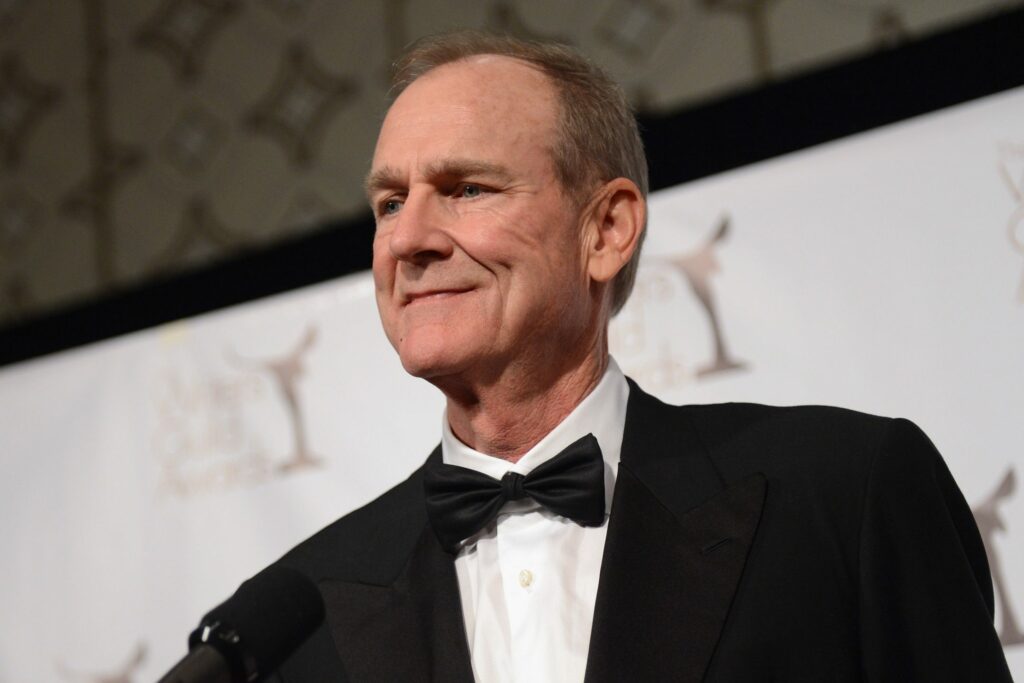
2025 has been a tough year! Writer-producer Ted Mann died earlier this year, in September, aged 72, as reported by Variety.
He was a consulting producer in season 1 of Millennium and wrote 4 episodes: “The Judge“, “Loin Like A Hunting Flame“, “Powers, Principalities, Thrones and Dominions” and the season finale “Paper Dove“.
His credits also include David Milch’s NYPD Blue and Deadwood and Gordon & Gansa’s Homeland. He also did a short cameo in the Morgan & Wong series Space: Above And Beyond!
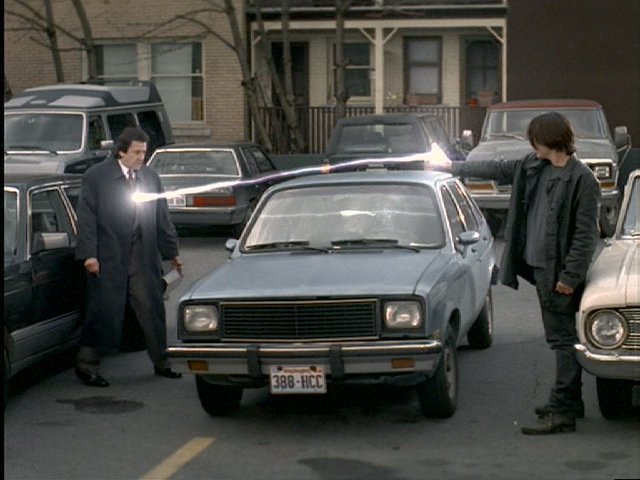
“The Judge” included the first mention of Legion, before anybody thought it would become an important part of the show’s mythology.
The sequel to Carter’s landmark episode “Lamentation“, “Powers, Principalities, Thrones and Dominions” was no less memorable, with Lucy Butler and attorney Al Pepper tempting Frank Black, and the series’ first appearance of an angel, Sammael.
In related news, the Millennium After The Millennium documentary is getting a re-relase with more footage and bonus material! Find all that here.
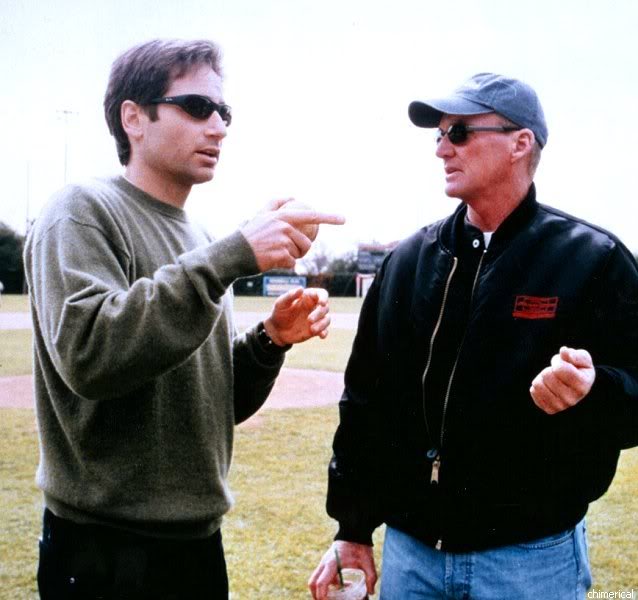
A rare interview with Michael W. Watkins with the Danish Sammensværgelsen/Conspiracy podcast! With Bernadette “Bernie” Caulfield, together they replaced Bob Goodwin as one of the show’s most important roles: co-executive producers, the people who really run the day-to-day business of managing the production. He worked in The X-Files season 6 and half of season 7. He also directed 6 TXF episodes (Dreamland II, Tithonus, Arcadia, The Sixth Extinction II: Amor Fati, Sein und Zeit, X-Cops) and also one Millennium episode (Sacrament in s1). A key person in making the show, but he has done very few interviews on it! Some notes from the interview:
Shift from Vancouver to LA: he personally recruited some 270 crew members (!): 1st unit + 2nd unit + 3rd unit for pick-ups and inserts. He hired everyone apart from stunt coordinator Danny Weselis, a friend of Kim Manners’. He was on set every day, shuttling from set to location to 2nd unit. It took a lot of energy and time.
It was challenging from the start: having to make a nuclear pool for 6X01: The Beginning.
6X02: Drive: Vince Gilligan was the first to adapt to the new setting of the landscape of California.
6X03: Triangle: a huge production, they put a tarp over Queen Mary, they had power shut down at night at Long Beach, they had generators to pour water over the ship, they painted the water green.
6X15 Arcadia: they were ashamed of the monster, they called him “Fecal Fred”, they tried but it was awful, it was cut out.
7X12: X-Cops: they put the cop car on a gimble to tumble it, they were running around at 2 am, they used a real drug shooting house, Duchovny improvised lines and hummed the “Bad Boys” theme, they had weird extras, they were making it up as they went along and were using the surprise effect on the actors as things were happening.
He followed the show from its start. Director of Photography John Bartley used to be a gaffer working for him, he was a DOP himself before becoming a director. [IMDb has one collaboration between them, the 1984 TV movie “The Glitter Dome“.] He is also friends with DOP Joel Ransom. He talks about the lighting choices for the show, not in your face, you didn’t see everything.
He enjoyed a lot working with David Duchovny, helping him with directing.
He left the show to try something new, Steven Spielberg sent him a script for a pilot. [This ended up to just a TV movie, the 2001 Marine Corps movie “Semper Fi“.] His long-time partner Bernie Caulfield left the show together with him. [They were replaced by Harry Bring and Michelle MacLaren as co-executive producers.]
Here are two older interviews (November-December 2020) that came to my attention recently: Chris Carter and Glen Morgan on Strange Arrivals, a podcast researching the UFO phenomenon. As always, some interesting thoughts here, and some surprising musings from these creators looking back at what made The X-Files the success it became.
He turned the tables on gender on who would be stereotypically believer and skeptic.
He had been reading the UFO literature before writing the Pilot; his 3 “go to guys” were John Mack, David Jacobs, Budd Hopkins. [The 3 collaborated in the Roper survey on alien abductions that Carter used to pitch The X-Files to Fox.] What interested him was that these people doubted themselves, that they were smart people conducting a serious investigation.
If you watch the Pilot + “Deep Throat” + “The Erlenmeyer Flask” “you will get a foundational view of The X-Files mythology”.
TXF was about “imagining the world before disclosure”. [“Disclosure” is a UFO literature term for the secret of alien contact being revealed to the public.]
When they started, he didn’t want to show an alien for 5 years; but that lasted just a year, they showed an alien in 2X01: “Little Green Men”.
Mulder and Scully’s investigations: they present theories to each other, are competitive, “it became a 9-year flirtation, a seduction of sorts”.
The disclaimer in the Pilot about being based on actual documented cases was asked to be added by the network. It was a hard sales pitch to get the network to understand that it’s better to be left wondering at the end of the episode instead of wrapping everything in a neat bow.
Mythology: he was trying to create a sense of awe, the idea that science doesn’t have all the answers, that religion either, that there are things beyond the pale.
He has a Scully bias, a prove it to me philosophy. He is skeptical, but he has met so many people who believe in the story that they tell. “Who am I to question them?” He sat on a regression hypnosis session during the time the show was being produced, it was powerful and vivid.
He got very lucky in getting the writers he did. The characters developed over time, everyone added in nuances. But the fundamentals were there from the beginning.
The appeal of the alien stories is the fear of the other, the unknown of whether they have a good or evil intent.
On wanting to declassify UFO documents: Clinton, Obama, now Rubio, they are a long line of people who want to know.
While TXF was about a file cabinet full of the unknown, it was really about Mulder and Scully and their relationship. [Whatever you want to say about Carter styming the relationship, he is clear-sighted about what made the show what it became and what it’s remembered for.]
He singles out production designers Michael Nemirsky (Pilot) and Graeme Murray (seasons 1-5, with things like the examination table in “Duane Barry”), they made better things than what the writers imagined.
A Fox executive literally wanted Gillian Anderson fired because she was pregnant.
He read all of Sherlock Holmes as a kid, it was a big influence on Mulder and Scully’s dynamic.
He grew up in Syracuse, NY: there were cult groups, mediums, seances in the area, his family were all believers in paranormal. He only started considering the skeptic side due to his work on TXF, writing for Scully.
He read “Chariots of the Gods” when he was young, he was into NASA space exploration, loved “Close Encounters of the Third Kind” and “The UFO Incident” [1975 TV movie, a representation of the famous 1961 Hills alien abduction incident, with James Earl Jones], he grew up with all the monster movies and paranoid movies (“All the President’s Men”, “The Parallax View”, “Klute”), “The Twilight Zone”.
The network didn’t want a UFO story every week, they wanted Mulder and Scully to help people. The writers brainstormed and came up with the monster-of-the-week format.
They all came up together with the idea of Scully’s disappearance to cover for Gillian’s pregnancy. They never set out to be serialized, it was brought up by necessity. Write, then just think about what happens next, figure it out, bring ideas. There was no writers’ room.
The XF mythology made new stuff up compared to the established UFO lore in order to have something fresh for TV, which eventually became difficult to manage.
He went to a UFO community show in the Los Angeles airport with writer Marilyn Osborne. There were the exact prototypes for the Lone Gunmen there, down to the “Byers” taking out the magnetic strip out of a dollar bill. He discovered there was a whole industry around UFOs!
Carter was the one with the deeper UFO research.
He read the Science News publication every week for ideas. There was a story about Greenland ice core deep drilling. You take two truth, make stuff up, you make an X-File (like Deep Throat’s quote from “E.B.E.”). He sees that approach in modern myth: people believe in made-up stuff.
The best thing Carter did was “I want to believe”: everybody wants to believe, even the hardcore scientists.
“If TXF played any part in the proliferation of this conspiracy stuff, I’d have big regrets.” It’s now ridiculously out of hand, it’s no longer for entertainment.
When they started the show, Scully would never see an alien ever. But by episode 12 she was seeing the ghost of her father. Mulder is the interesting character; as the show goes on, Scully bends towards Mulder, otherwise the show would have become “Scooby Doo”. Scully experienced things, that’s the benefit and necessity of a TV series, to keep conflict and momentum.
Mythology over time: in the 1930s, the scientist was bad (“Frankenstein”, “The Invisible Man”). In the 1950s, the scientist is creating the trouble and solving it, there was trust in government. 1960s, “The Andromeda Strain”, Vietnam, 1970s, “Close Encounters”, “Star Wars”. Where are we now? How to create a myth about the pandemic? [interview recorded November 2020] Storytelling-wise, you would never come up with a head of a country that is obstructing it. What is it about science and conspiracy, what is it telling us? Where were we then? What does that type of story tell us about where we are now? [All of these are excellent questions and a great way to think of the show in its historical context. These are things any reboot would have to consider and find a reason for its existence — good luck!]
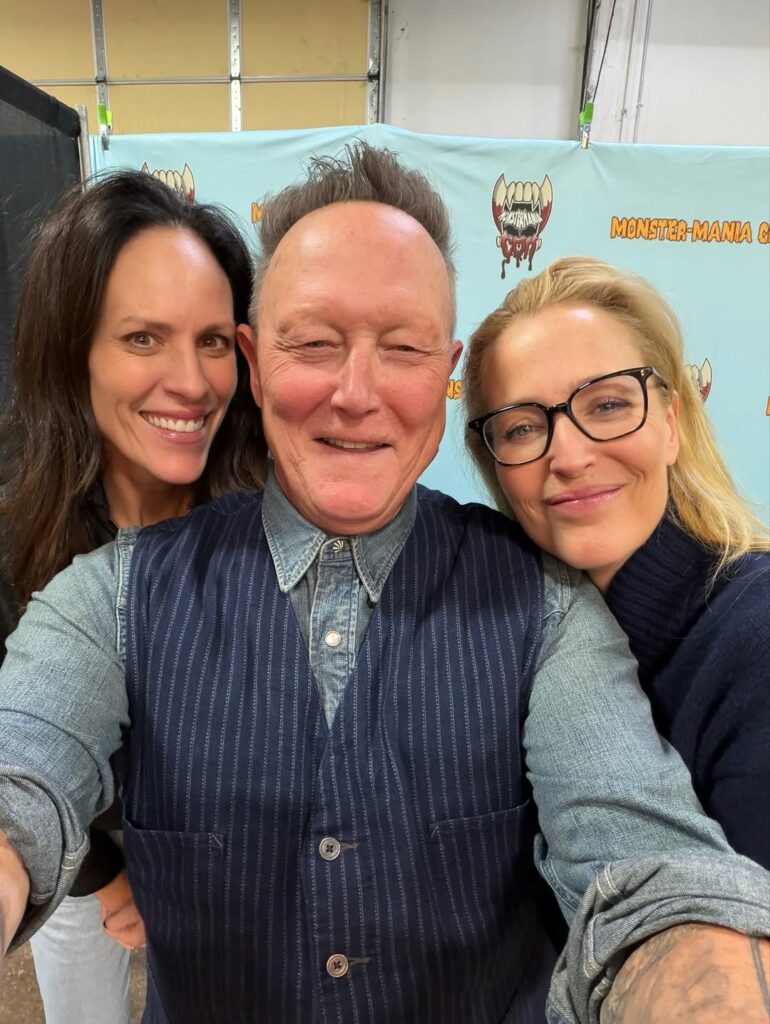
Some recent cast reunions in conventions were billed as The X-Files 32th anniversary events, and it’s true such events with so many cast members are by now rare.
This made for some beautiful photos. Robert Patrick says “pure joy“:
Fan Expo
With Gillian Anderson, Robert Patrick, Annabeth Gish, Mitch Pileggi, Nick Lea. Some highlights:
Robert: Doggett is his favorite role of his entire career!
Gillian typically doesn’t remember anything (but does remember the scene where Scully throws water on Doggett’s face), whereas Nick remembers details.
Robert remembers doing script table reads, nobody else does.
Mitch remembers shooting a scene with Duchovny, Carter called and was rewriting the scene, he passed the dialogue over the phone: that’s how a short notice they had with getting and learning the dialogue.
Nick: he had little notice, except the one time he knew he would have to speak Russian 2 weeks in advance [4X09: Tunguska].
Robert: the director of photography would give them directions to direct their flashlights to hit a board, so that the reflection would light their own faces.
Did they have any input to their character to Carter? Everyone, quickly: “no!”
Mitch didn’t like the prosthetics with the nanobots [6X10: S.R. 819], he told them to get rid of this storyline. [And so sadly this was another story thread that was not followed up, I would have liked it to.]
Annabeth watches Stranger Things and Pluribus, which tackle similar questions as TXF.
About 7X17: all things: Gillian wrote the outline one day until 3 am. Carter got Spotnitz to guide her through the process of turning it into a script. The 1st day directing she felt unbelievably lucky, the 2nd day she just wanted it to be over! She hadn’t thought of it beforehand but she wished she had spent more time working with the actors, working through each scene and what specifically she wanted out of them.
+ a panel just with Gillian, where she mentioned that getting back into the Scully character for the revival was really difficult.
Reboot talk
The Ryan Coogler reboot project was touched upon in Fan Expo.
Mitch has not been approached. Gillian had just one conversation with him it feels like 2 years ago, her knee-jerk reaction would be that she’s not interested as she’s done this already, but Coogler is talented and doesn’t say no, she’s interested to read what he’s created.
Gillian repeated just as much for a Screenrant interview: “I have no idea where they are at, or if it’s at.”
So any Scully reappearance talks in the potential reboot are way overblown, this is far from happening yet!
Monster Mania
Another cast reunion, same with the above minus Nick Lea but with William “Bill” Davis and Laurie Holden. Apart from the usual questions (do you believe, what’s your favorite, how did you meet Arlene, did you really eat the 2X20: Humbug cricket) there were two “incidents” I want to flag:
On the William arc, anything else you want to know? Gillian: I guess to find out who the father is. A fan shouts “The Cigarette-Smoking Man”…and Gillian gives Bill a comic look.
Anything you would like your character to do? Bill: I had to offer to write an episode to get some scenes with Gillian. Gillian: But he gave me something else instead. Bill: I didn’t plan that part.
This is both funny and tragic. It’s awkward to say the least that actors have to answer for the writer in front of fans… They will be doing this for the rest of their lives!
Gillian Anderson on “War of the Coprophages”
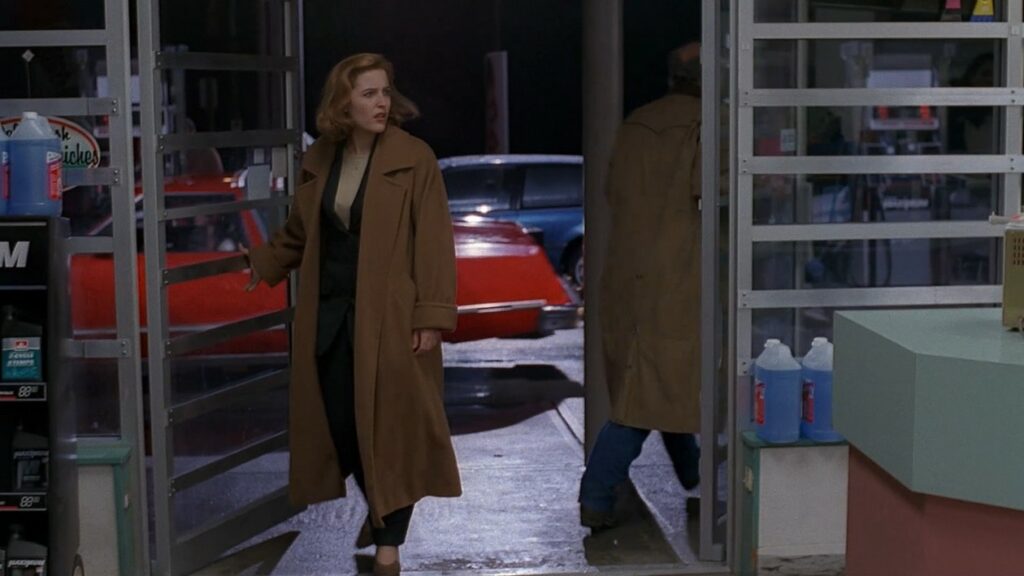
Gillian confirms on Jimmy Kimmel that the happenings in one shot in 3X12: War of the Coprophages were not planned: as she walks into a supermarket, a car accident happens behind her and an extra bumps into her. She continued in-character, and the shot made it to the final episode. Both these things were great and contributed to the sense of panic that the episode was trying to convey at that point!
David Duchovny on “Aubrey”
A story relayed by Annie on X-Files Diaries: David told her that one particular line in 2X12: Aubrey came from him, and not from script writer Sara Charno. The line in question:
Mulder: “I’ve often felt that dreams are answers to questions we haven’t yet figured out how to ask.”
This memorable line was repeated from Scully back to Mulder in 4X08: Paper Hearts.
Is this true? Let’s do some forensic work. We can compare script versions, thanks to boggsfiles: earlier script versions as late as the pink version (dated Nov 14 1994) don’t have it, while the yellow version (dated Nov 16, just two days later) has it. The dailies from that episode show that Nov 22 or 23 was day 5 of shooting, placing the start of shooting to Nov 18 or 19. So it looks like it checks out and that David could have provided that line after a script read just a couple of days before shooting began!
Yes, Eat The Corn was launched 20 years ago today! Without patting myself too much in the back, I think this is objectively a big achievement, especially given how different the internet is today compared to twenty years ago, the remote year 2005. Against the odds, I have continued to cover X-Files news over all those years, although in recent years with more focus on relaying and commenting all the great interviews made by others, instead of doing original analysis myself. The site has become more of an archive, and that’s good enough given how old the series now is.
As long as I’m here, the site is not going anywhere.
Other engagements don’t allow me to celebrate more extensively. But I will relay something fun: a cover version of The X-Files theme, and this one includes the extended version made by Mark Snow for the release of the theme as a CD single (and used in the end credits of the VHS “Files”). Here is the theme played on one of the smallest and simplest analog synthesizers around: the stylophone! By Omen Ahead.
Admittedly, there’s another version from years ago — fun too, but not as good.
A long interview of Chris Carter almost went by unnoticed, and it’s because he talks quite little about #TheXFiles: this is “L8night with Choccy”, the main focus is surfing! Still, some notes on everything else (that was not mentioned elsewhere):
His father was a construction worker, his mother a housewife, both hard workers, he got that from them. His brother Craig, 5 years younger, was always smarter than him, ended up at MIT. His first job was being a paperboy, then at ice cream parlor. He read a lot as a kid, Readers’ Digest, Life Magazine.
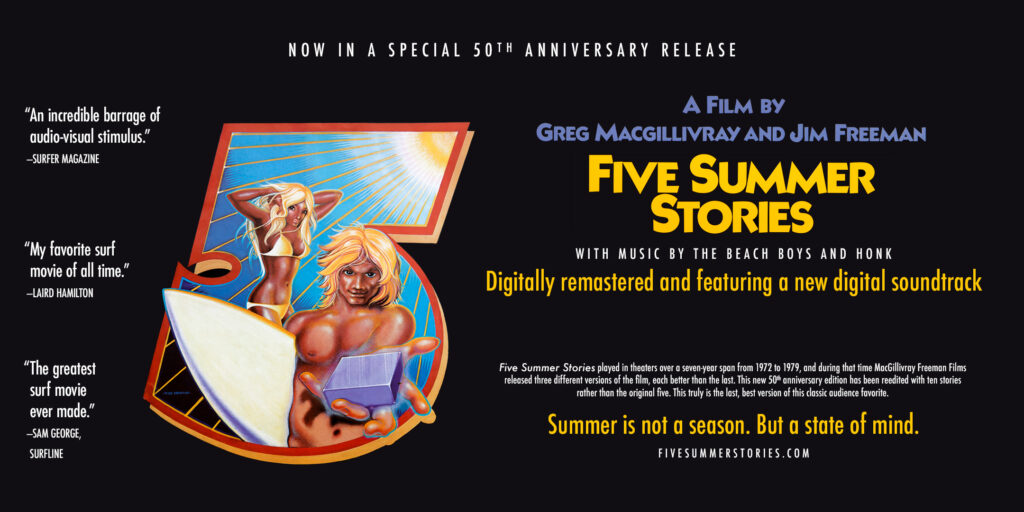
He started surfing age 12. First plane ride at 18, to Hawaii. Lots of talk about surfing spots, surfers, California surfing culture of the 1970s (including surfer movies, like “Pacific Vibrations”, “Endless Summer”, “Five Summer Stories” with its soundtrack by Honk)… Parties, girls, surfing. [Drugs? Look at that poster!]
He started working on Surfing magazine as an intern at 22, writing the captions for the photos, ended up staying for 5 years, left as a senior editor. He was very proud of his first full article, a profile of surfer Jack Lindholm, in Hawaii.
He had been registered on the draft list to go to Vietnam, he was about to get the lottery ticket to go, but the war ended.
He met his wife Dori because her cousin and writing partner was a surfer, he also wrote for Surfing magazine.
After TXF wrapped, he learned how to fly with the series’ flight coordinator. [That must be Steve Stafford.]
He bought a house with his wife when he was 30, they have sold it since and now it has burned down. He was living paycheck to paycheck paying his mortgage until he finally got a good pay with Fox.
First thing he did at Fox was a TV pilot for ABC inspired by the movie “The Verdict” (with Paul Newman), a lawyer that wins against all odds; they liked it but it was not picked up. The second thing was TXF.
In the Vancouver years he sent the writers to follow closely their episodes’ production: “I wanted them to be there to protect the work”, “protect the script”.
They started production of the pilot in LA then they realized they needed a forest. He had gone to Vancouver with his wife to produce a Disney Sunday movie in 1986 and saw the forests there.
He singles out Bob Goodwin for the success of the show, convincing the studio to give them more budget.
Rick Carter’s advice after making “Amazing Stories” was that you will have no money and no time, hide spooky things in the dark.
For the movies, they got more than a season’s worth of budget (25 episodes). [This is probably for FTF, whose budget was about $66M. Budgets per episode grew from about $1M to $4M in the first 5 seasons, so this sounds about right.]
Due to work on TXF, he essentially hadn’t surfed for 9 years. He surfed on the very day he won a Golden Globe. [That was in 1995, 1997 and 1998.] Making TXF between LA and Vancouver, he spent his life on air with Air Canada or on the road.
“Twin Peaks is a show I could watch every night of the week. David Lynch was an original, a titan.”
“Chris Carter is back in business!” He is doing the IWTB director’s cut. “We are doing a spin off of TXF.” [Note the “we”, meaning he is involved to some capacity in the upcoming project led by Ryan Coogler.] He is also writing a movie, the script will be done by end of June. [No indication as to when the interview was recorded precisely.] “It’s going to get made because it’s timely.” “I know where I want to make it, I know who I want to make it with.” [I hope this happens, I’d love to see more by Carter. Although “Fencewalker” is probably sitting on a shelf somewhere.]