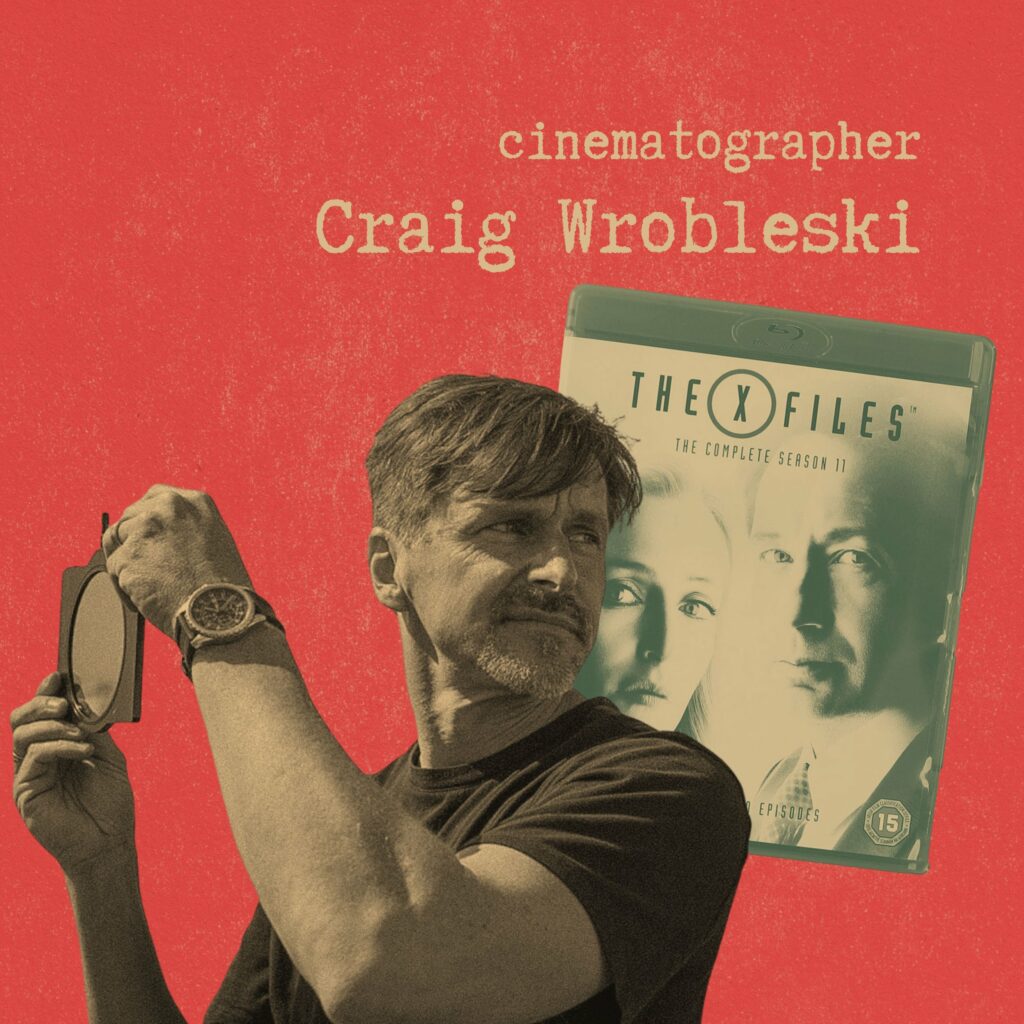
New interview: “Hey Danny It’s Mulder” sat down with Craig Wrobleski, the director of photography for The X-Files season 11, taking over from Joel Ransom in s10, a Canadian who among other things worked on “Fargo” and followed up TXF with some episodes of “The Twilight Zone”. Cinematography is of course one of the most important parts of what made TXF a success, so all eyes were on the DoPs for the revival seasons. After the frankly disappointing look of s10 (surprising from Joel Ransom, who had also worked on s4-5, but on film, not digital), s11 was a distinct step in the right direction. The interview has plenty of technical aspects, very interesting for the details-oriented fan, but there’s much more than that here, about art and the process of creation. Here are my notes from the interview.
- In preparation, he read “American Cinematographer” articles written about the show. He watched the episodes shot in Vancouver and those shot in LA: the look changed but it retained the show’s essence. [ASC article example: Joel Ransom]
- His approach was not to try to recreate how the show looked back then but retain echoes of it. Vancouver looks much more modern than it looked back then, so a recreation was out of the question. Digital means a different look too.
- He likes using shorter lenses to be close to actors, to be closer to the story, be more immersive, to have the supernatural elements but have them be more relatable.
- Every script was very descriptive, it told you what the tone should be.
- There was a lot of exteriors shooting. They used the TXF office set to shoot just for two days out of the entire season.
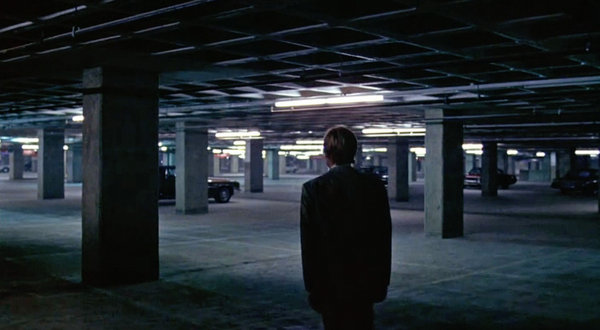
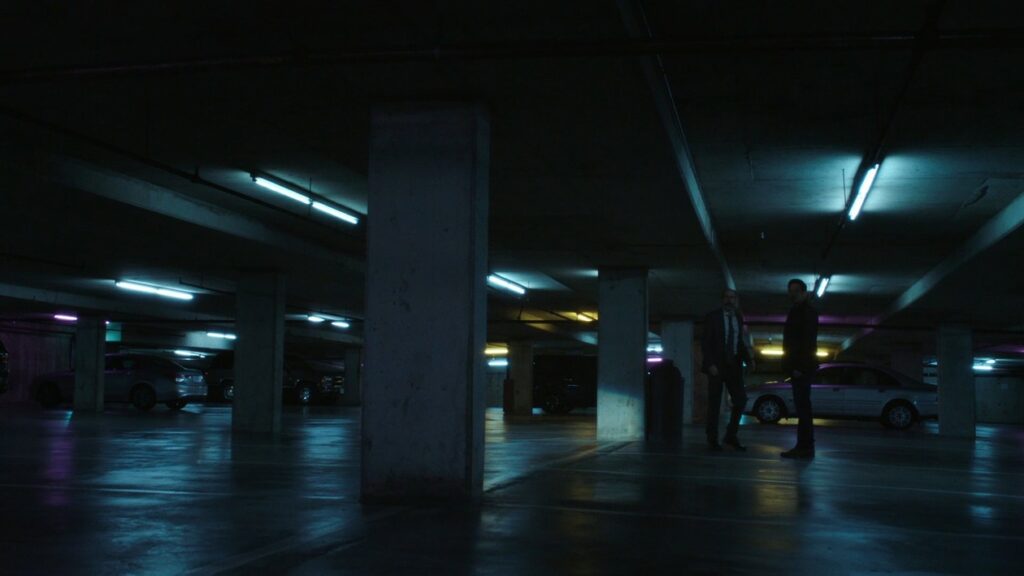
- “Lost Art”: the reference for the parking scenes were the parking sequences of “All the President’s Men”, but they didn’t want to recreate it exactly. They used very contemporary cinematography (soft light, shallow depth of field), an old vibe but with a modern aesthetic. The ground surface was coated with a reflective material, an oil of some kind. The lightbulbs were changed. They shot it at a lower temperature at the camera to make it look cooler. They put pink fluorescent lights in the background, in a specific callback to “All the President’s Men”. [That movie was of course a big inspiration on the entire look of TXF, but even more so for these scenes, to a comical degree. Here are some image comparisons, with ATPM first, TXF second.]
- “Followers” was all about technology, they wanted it to be like a different world. Scully’s house was a modern rich space, Mulder’s farm house was simple. Note: he says “David”, not “Mulder”, about the ad-libbed line of her house being better than his.
- Digital affords to use more colour, they used colour a lot in s11, unlike in s10. [Rather than colour, what I noticed was a better use of darkness and of contrast, which approximated the look of film better compared to the much more digital look of s10.]
- He works side by side with the directors. Most shows have alternating directors of photography across episodes, whereas he did all episodes. He didn’t have enough preparation time with the directors. Glen and Chris kept people up to speed. He stopped dreaming during the shoot. He realized he had no spare time for his subconscious to digest what was happening. But creativity works when you let things stew in your mind. [This is interesting — it was a challenging shoot that had its positives but also some negatives.]
- His main task is capturing performances. When performance, lighting, lens, camera move, everything happens in the shot, when that happens it’s magic captured in a bottle. Chris is especially sensitive to performance. After a good take, he would give little notes, and the next take would be much better, “The One”.
- Digital can make things too polished, sleek, unreal. He wanted things to look natural, real, have soul, patina, have imperfections. Chris is very clear that TXF is not a sci-fi show. It shouldn’t have the clean polished silver polished look of a sci-fi show, it should feel real and relatable.
- He asked Chris what brought the show to Vancouver originally: it was the forests. It was “bizarre” when the show moved to LA. In Vancouver, the air is thick, it rains a lot, there are plenty of reflections and sheens, the sky has a low ceiling, gives the feeling of an oppressive environment.
- All other crew members in s11 had a connection with the show, even if it was just for s10, except for him.
- The last scene they shot was the last scene of the last episode, and the last shot was that final wide shot with the drone pull back.
- The Alexa camera has a low contrast curve setting. They shot the season with it. That was a setting unlike the TXF look, it gives a sleek modern look with smooth contrast, but they built contrast in with the lighting and finessed it in the grading process.
- Many choices were done not based on logic but on feeling, testing things.
- “Lost Art”: the black and white opening scene in the Ovaltine cafe was not shot with a b&w camera, but with a red monochrome camera, which sees more gradations of b&w. After they started shooting, they realized they couldn’t use a blue screen for the special effects, for the mirror shots.
- Darin was laughing all the time during the shoot, they could even hear him on the audio recording.
- The whole season was like a homage to the legacy of TXF.
- For the two-wheeled scooter, Darin just had the idea during a break, “how about we shoot it?” It was so stupid that they had to do it.
- “Kitten”: you like to have first shot actually done within the first hour of the shoot day. For the Vietnam sequences with the helicopter, they didn’t start before 5 hours due to the logistics. They were committed to do real shots, not use CGI. That’s crazy for television.
- He had a lot of fun on set, it was great experience.
https://www.heydannyitsmulder.com/episodes/episode11
Tags: 1013interviews, craig wrobleski, heydannyitsmulder, thexfiles, txfseason11
Leave a Reply