X-Files mythology, TenThirteen Interviews Database, and more

Posts Tagged ‘chris carter’

Chris Carter interview on surfing and more

A long interview of Chris Carter almost went by unnoticed, and it’s because he talks quite little about : this is “L8night with Choccy”, the main focus is surfing! Still, some notes on everything else (that was not mentioned elsewhere):

His father was a construction worker, his mother a housewife, both hard workers, he got that from them. His brother Craig, 5 years younger, was always smarter than him, ended up at MIT. His first job was being a paperboy, then at ice cream parlor. He read a lot as a kid, Readers’ Digest, Life Magazine.

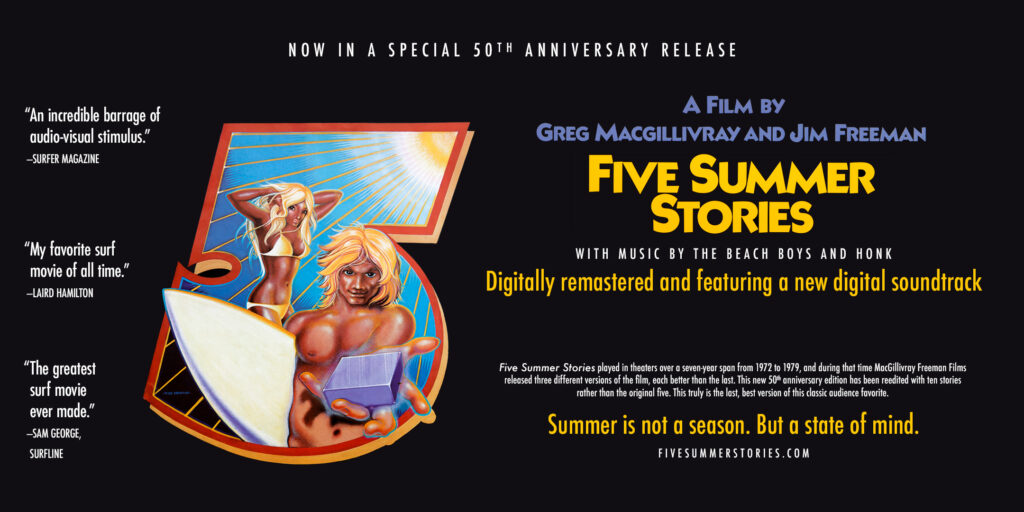
He started surfing age 12. First plane ride at 18, to Hawaii. Lots of talk about surfing spots, surfers, California surfing culture of the 1970s (including surfer movies, like “Pacific Vibrations”, “Endless Summer”, “Five Summer Stories” with its soundtrack by Honk)… Parties, girls, surfing. [Drugs? Look at that poster!]

He started working on Surfing magazine as an intern at 22, writing the captions for the photos, ended up staying for 5 years, left as a senior editor. He was very proud of his first full article, a profile of surfer Jack Lindholm, in Hawaii.

He had been registered on the draft list to go to Vietnam, he was about to get the lottery ticket to go, but the war ended.

He’s left handed.

He wrote a chapter for the book “Surfer Stories: 12 Untold Stories by 12 Writers about 12 of the World’s Greatest Surfers“, a profile of Shaun Tomson.

He met his wife Dori because her cousin and writing partner was a surfer, he also wrote for Surfing magazine.

After TXF wrapped, he learned how to fly with the series’ flight coordinator. [That must be Steve Stafford.]

He bought a house with his wife when he was 30, they have sold it since and now it has burned down. He was living paycheck to paycheck paying his mortgage until he finally got a good pay with Fox.

First thing he did at Fox was a TV pilot for ABC inspired by the movie “The Verdict” (with Paul Newman), a lawyer that wins against all odds; they liked it but it was not picked up. The second thing was TXF.

In the Vancouver years he sent the writers to follow closely their episodes’ production: “I wanted them to be there to protect the work”, “protect the script”.

They started production of the pilot in LA then they realized they needed a forest. He had gone to Vancouver with his wife to produce a Disney Sunday movie in 1986 and saw the forests there.

He singles out Bob Goodwin for the success of the show, convincing the studio to give them more budget.

Rick Carter’s advice after making “Amazing Stories” was that you will have no money and no time, hide spooky things in the dark.

For the movies, they got more than a season’s worth of budget (25 episodes). [This is probably for FTF, whose budget was about $66M. Budgets per episode grew from about $1M to $4M in the first 5 seasons, so this sounds about right.]

Due to work on TXF, he essentially hadn’t surfed for 9 years. He surfed on the very day he won a Golden Globe. [That was in 1995, 1997 and 1998.] Making TXF between LA and Vancouver, he spent his life on air with Air Canada or on the road.

“Twin Peaks is a show I could watch every night of the week. David Lynch was an original, a titan.”

“Chris Carter is back in business!” He is doing the IWTB director’s cut. “We are doing a spin off of TXF.” [Note the “we”, meaning he is involved to some capacity in the upcoming project led by Ryan Coogler.] He is also writing a movie, the script will be done by end of June. [No indication as to when the interview was recorded precisely.] “It’s going to get made because it’s timely.” “I know where I want to make it, I know who I want to make it with.” [I hope this happens, I’d love to see more by Carter. Although “Fencewalker” is probably sitting on a shelf somewhere.]

Chris Carter on Tetragrammaton

It’s Ten Thirteen! Happy 69th birthday, Chris Carter! For the opportunity, I am posting the analysis of a long-form interview with him that came out in July: Chris Carter on Rick Rubin’s Tetragrammaton. Lots of talk on , how the TV production business works from the inside, discussions of the intersection of mysticism and science, and also unexpected insights on aspects of the mythology that Carter keeps thinking about. The whole thing bathing in Paul Mauriat’s “Love Is Blue” (heard on Millennium)!

I’ll focus on The X-Files’ future first.

Throughout the interview, Carter talks of a big idea he had for the mythology, that he hinted at especially in the last episode. He comes back to that again and again throughout the interview, which is impressively and obsessively insisting on one specific thing in an otherwise wide-ranging interview: he really sounds as if he wants somebody to figure this out, and he wants to continue developing the mythology further in the future. Here are all the mentions of this big idea throughout the interview, [along with my comments]:

  • About putting a clue in the last episode for what would come next: “I just thought TXF would go on forever.” “The story goes on in my mind.” [It’s never over! I guess the ideas keep coming as long as the creative mind continues to think about them.]
  • About Coogler’s series reboot project: “He’s got something to deal with he’s not aware of yet”. [It feels quite…self-important to pretend that your ideas have to be inserted in another person’s project, but this is really what Carter is saying here: Coogler might have his ideas, but Carter is imposing his own. I don’t know how receptive Coogler would be to that: he already has to balance many things, let alone loose threads from over thirty years of legacy mythology. Cynically, perhaps this is a way for Carter to re-insert himself in TXF’s future after being sidelined, or after distancing himself from show business for a few years.]
  • The 4 My Struggle episodes “continue to be largely misunderstood”. In them, “I developed possibly what is the biggest idea that TXF ever posited”. [Big words!]
  • “Scully’s character will come to know shortly something that will not only change the course of her life, career, biology, but the course of all of our lives, and for generations to come. It’s a big idea that I built in. I laid it out sparingly, cryptically, vaguely. At the very end I laid in a clue that to this day, 4 years later, no one has figured out. I’m really looking forward to the revelation.” [More like 7 years since season 11 already, Chris! It sounds as if this is an idea that would break completely new ground, disconnected from earlier mythology, with a before and after. And it is connected to Scully’s biology and the alien DNA that she carries.]
  • His definition of the Syndicate: it was “in league with the aliens, with the colonists, and what the aliens have plans for”, related to this big idea he has. [He doesn’t talk of the aliens’ plans as something of the past or something that was a smokescreen for a human conspiracy, and he still uses “colonists” as a descriptive for the aliens: so whatever the revival seasons did, it was not a complete erasure of the colonization mythology of the first 9 years. Unless of course he compartmentalizes in his mind between what was true at one point in the series and what is not any more, but that sounds like a stretch.]
  • That big idea, “part of that…”: he goes on about an ongoing discussion with his physicist brother about existence, about whether we are creating or discovering math. “We are discoverers” and math is a way to describe the universe, or the universe itself. A higher power, God, mother nature, an intelligence created math. Same way that Rachmaninov was discovering his music. We are the filter through which we discover the universe. So back to his idea, “I want to take it a large step further: there’s this idea of the music of the spheres, the planets are in alignment and it’s a musical chord of sorts, we are seeing a shape of our solar system that may predict the shapes of everything else in our universe.” “I wonder if every potentiality, every possibility, is out there, and we are living our lives based on our finding the best potential outcomes.” “The universe has some kind of beauty to it like that. That’s what the aliens know.” “They know things that we don’t know.” [This harmony of the spheres philosophy goes all the way back to pythagoreanism and the Renaissance and beyond. Here it is mixed with platonism‘s ideas about the nature of reality. Carter mixes mysticism with science, as a creative mind is wont to do. He posits that the future is just another point in the timeline that can be read if one learns how to do that, and even influenced if one has the proper tools. As superior mysterious beings, aliens have knowledge that is inaccessible to us and operate in mysterious ways.]
  • Science advisor Anne Simon was the daughter of one of Dori’s long-time friends, she gave Carter the science in The Erlenmeyer Flask, which figures in this big idea of his. [So it has something to do with alien DNA, the extra nucleotides, experiments with an alien virus inside a bacteria.]

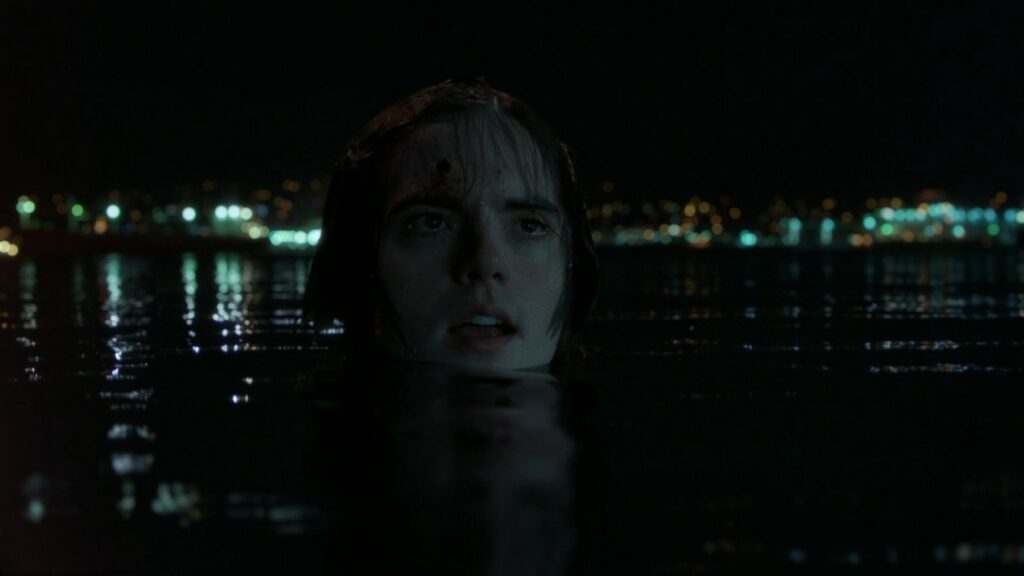
[So what is this big idea and what is this clue? I have offered ideas every time Carter has hinted at this before. It could be William having life-giving capabilities and having a role in Scully’s new miraculous pregnancy. It could be the final shot of William smiling at the fact that he and Scully and Mulder can go on living without the weight of the fate of the world on their shoulders. Here Carter is more specific (but also vague, as is typical!). The revival seasons’ mythology prominently features the idea that alien DNA has been inserted in the human genome, and that this is creating mutations that can be used for nefarious purposes (by the CSM) or for good (Scully’s vaccine against the Spartan virus, but also Sveta’s ability to read minds, or even the super-human abilities shown by the children of Founder’s Mutation and by William/Jackson. Humanity is becoming a hybrid, to the point that Scully has nightmares that her child might become alien (Founder’s Mutation dream) or even herself (My Struggle 2 teaser). Taking this further, we could have more and more humans with additional abilities thanks to alien DNA — an X-Men-like situation laid out in the novel Perihelion. Another more subtle situation would be humans gaining insights into the nature of reality. William emerges from the water (reminiscent of a baptism or a rebirth) with his bullet wound standing as a third eye that has been awakened, seeing possibilities. What were Scully’s visions (the entirety of My Struggle 2) but a vision of a possible future by William? With those visions, William gave Scully the tools to prevent a global pandemic. What was My Struggle 4 but William’s manipulation of events in order to prevent his own visions of the future where he himself was being used by the CSM and of the CSM executing Mulder? Throughout the revival’s mythology, William has been exploring the universe and adjusting it so as to obtain a desired future; perhaps we are seeing just the final iteration of several attempts. William was the end product of a long line of experiments that can be traced back to the origins of the Syndicate, an attempt for humans to gain access to mysterious forbidden knowledge. Perhaps the aliens themselves, the ultimate mystics, are even behind the entire attempt to prod humans to experiment, in a long game of evolutionary uplifting. The next step could be Scully, and others, gaining such a reality-adjusting capability, or part of William’s capability. A capability previously reserved only to the aliens, which would be several steps ahead of us, perceiving reality, refining it, planning for their desired outcome. What the aliens’ plans with us could be is the ultimate mystery.]


The whole of the interview is rich with detail and information about who Carter is as a creative person, how he built his career, what his inspirations, how he works as an artist. Definitely worth a listen. Here are my notes:

Early years:

  • How he met his wife Dori, via a surfer friend Mark, and how they got to be together 43 years ago
  • Dori encouraged him to become a screenwriter. Jeff Katzenberg read his second script, got hired. That script was “Bad O”, a Ghostbusters-like comedy. His first script got him in the door. He got a 3-movie deal. He said yes to everything, to get experience. He did TV work, Disney Sunday movies, did a movie with Dori, filmed a pilot with NBC. He realized he couldn’t only write to have control over his work, but be a producer. He could have worked on Michael Mann shows, but the family comedy Rags to Riches show was a opportunity on how to be a producer, he got to work with all departments. Then he got hired by Peter Roth to write pilots for Fox.

Inspirations and the TXF pilot:

  • He pitched TXF to Bob Greenblatt (who wrote a chapter about that in his memoir [The Rockford Files, published in 2023]). He included numbers in his pitch on how many believe in the alien abduction phenomenon, from a study that he got from a psychologist friend. He wrote a detailed 18 page outline. A lot of scenes took place in forests. Vancouver was suggested. He had been in Vancouver in 1984 with Dori for a film of hers, he had seen the forests. They were late shooting the pilot, they got the last people to hire. The only note from the studio was that there was not enough sexual tension (in the mosquito bites scene). Story of the Rupert Murdoch screening.
  • Inspirations: He played sports with Brandon Tartikoff of NBC, Tartikoff helped Carter out, Carter suggested him a Kolchak-like show, he didn’t buy it. Carter read about FBI investigating satanic rituals. He went to UFO conventions, those helped shaped the stories a lot.
  • He had a clear idea of the characters and the mood before casting or shooting. The pilot fits with his vision.
  • He developed a “look book” about what the series was going to be, with photos, episode descriptions, just as extra marketing material for the pitch.
  • Sandy Grushow, marketing at Fox, was sure that Adventures of Brisco County was to be the success; TXF was just the lead-in.
  • Did a screening to get audience reactions. Painful, but it was a revelation about how storytelling is a sequence of tension and release.

On science:

  • He had a meeting with Foster Gamble of the Thrive Movement to discuss free energy devices. Interested, but the devices never showed up.
  • He has a brother scientist at MIT. He corrected one thing in the pilot script: instead of “time is a universal constant”, “invariant”.
  • “I think of science as the search for God. We are going to find God through our search for things like quantum physics.” 
  • They tried to be meticulous with the science. Plenty of examples where they had science fiction which became fact afterwards, like cloning and Dolly the sheep, or My Struggle 2 and the pandemic.

Making the show:

  • The reason for the success was Mulder and Scully: their relationship and their characters. There was both sexual tension and respect.
  • When he was still unknown he called the FBI for information. Later when TXF was successful, he got called in to Quantico, got “the Jodie Foster treatment”, had many secret friends at the FBI.
  • He’s most proud of affecting people’s lives, of the Scully effect.
  • “My success is hiring a group of smart people”, to write and develop the show.
  • They tried not to show the aliens, the plan was to keep them unseen for 5 years; but all the rules were broken, they saw one on the first episode of season 2.
  • Advice from Rick Carter, who read the pilot script right after Amazing Stories had been cancelled: to put the scary stuff in the shadows, makes the experience more cinematic, the imagination is scarier than what you saw.
  • When Gillian got pregnant, executives wanted to fire her, it was a fork in the road, he insisted to keep her and work around it.
  • It was great to be at the Friday night time slot. His autobiography will be called “Fridays at 9”.
  • The many work hours he poured in was not micro management, it was an obsession with the success of the show. But it was not a healthy way to live your life.
  • Glen Morgan would go read reactions on the internet forums more than Carter.
  • Fans are mostly women, because of the M-S relationship.
  • During season 1 he got a letter from woman fan with encouraging criticism, which convinced him what to focus on for what came next. He named a character after her in the season 1 finale. [Mentioned in his 2023 commentary to the episode, that was Dr. Berube.]
  • The Vancouver personnel was completely invested in the show, he loved that esprit de corps.
  • The writer/director of Risky Business [Paul Brickman] gave Carter high praise for a writer called Vince Gillian, years before he expressed interest in the show.

About the mythology:

  • “The mythology was really the way to deal with Mulder and Scully’s relationship, among other things” [One doesn’t exist without the other, I say!]
  • After the movie, “the stories almost start telling themselves, because you’ve laid down so much foundation that the shape of the building is dedicated to what you’ve already laid out”.
  • Spotnitz and Carter were “the keepers of that faith”, “the keepers of the mythology”.
  • The Black Oil was his idea: oil is a fuel we use every day, it predates us, it was fitting that there would be something alien living in it. [I wish this allegorical dimension had been more developed.]
  • The Syndicate is “above top secret”, they are still part of the government but a separate entity. [This clarification is useful, as at some point it seemed like the Syndicate was a completely private independent entity; but it still is part of a governmental conspiracy in Carter’s mind.]
  • He loved Karl Ove Knausgard’s books, he decided to do 4 episodes inspired by them. [The 4 My Struggles.]
  • William is described as “Mulder and Scully’s son, they had a baby together”. [Despite many backs and forths on this, we should understand that the CSM only contributed to William’s creation but is not his father, but still that William somehow thinks of the CSM as his father?…]

The movies:

  • Duchovny pressed to do a movie, otherwise he would go do something else.
  • How he describes the first movie: it was about experiments and a “natural component” via a virus, and abductees held in an underground base.
  • The second movie had one third of the budget of the first. The studio said they wanted a PG-13 movie; it was a hard lesson to learn that PG ratings for movies are less permitting than in TV, many edits and back and forths. Hence the upcoming director’s cut.

Some more things about Carter:

  • He hasn’t quite experienced the supernatural, but he’s experienced kismet, serendipity, déjà vu…
  • He still watches All The President’s Men every year.
  • Carter admires Kurt Andersen’s book Evil Geniuses, it read like what he was writing about for decades in the show, about processes changing society over decades and carefully drawn out plans by certain people. Andersen’s book The Real Thing was a big influence on him. Story about comments Carter made about the Emmy awards in the 1990s and an article about that by Andersen on the New York Times; Carter called him to make amends, and quoted him with a haiku of his to show his admiration.
  • Tad O’Malley was based on Alex Jones. He got a call from Jones, who invited him on his show.
  • With his wife they decided to watch the entire show from start two years ago. He has forgotten many things about making the show, in many ways it was like watching it for the first time.
  • In the Vancouver years he usually watched the show at home with his wife, or during season 5 in a Vancouver bar with colleagues.
  • He remembers watching Apocalypse Now in a theater, getting a jump scare at a tiger; then going to the theater to watch it again, to watch the audience reaction at the jump scare. He realized how powerful cinema is.
  • He resisted the denomination “science fiction”, he went with Spielberg’s “speculative science”.
  • TXF is a political show.
  • 9/11 was a “very important turning point in the history of planet Earth”
  • Is it possible that TXF is actually non fiction? “Yes it’s possible.”

Interview: Chris Carter on “Triangle”

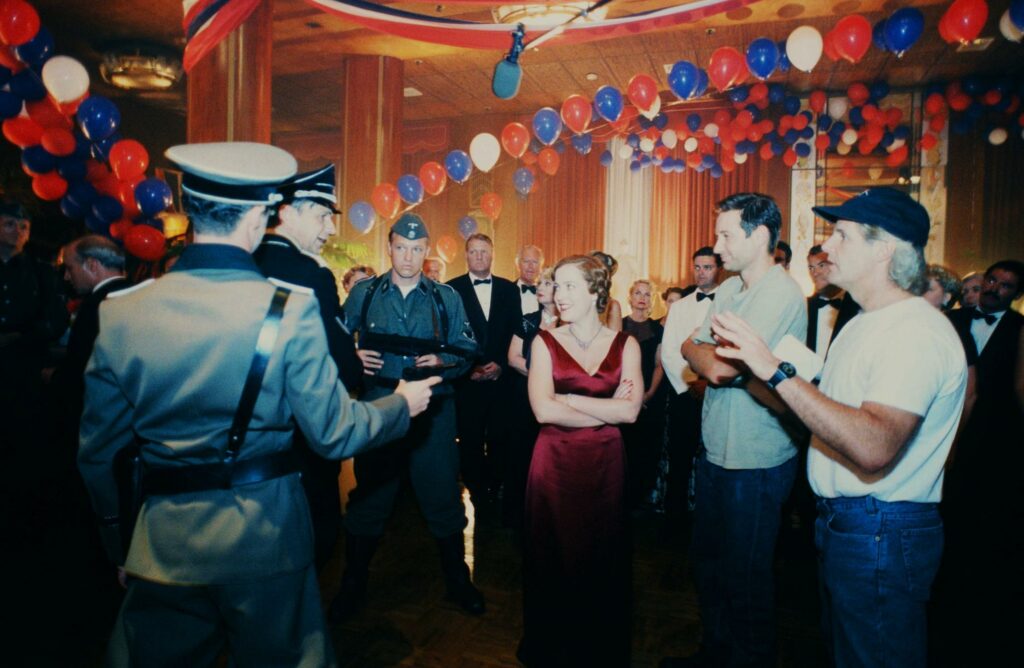
Recently, the “X-Files Diaries” podcast interviewed Chris Carter on his season 6 directorial riff on Hitchock’s “Rope”, the excellent fan-favorite “Triangle”! Carter was glad to get into the details here, on story choices, on technical details of making the episode itself, and reflecting back on the series that we cherish so many years later. Some insights on the larger structure of the series too — MSR and the mythology! Here is my summary/notes:

  • He got the technical details of one camera reel holding 12 minutes while shooting in Vancouver. 
  • He was interested in World War 2, and wanted to see TXF characters as a Nazi, a double agent, M&S saving the world. 
  • He slept aboard the Queen Mary while shooting. 
  • Bill Roe was the new director of photography. The problem was how to set up the lights when the shot shows everything. 
  • He imagined it as set during night, but night also helped with hiding some cuts.
  • Unheralded crew members for this episode in particular: steadicam operator Dave Luckenbach and focus puller Trevor… [No Trevor or focus puller is credited for the episode, unfortunately!]
  • They just shot the episode and there was no space to edit, miraculously it added up to the exact 45 minutes needed! 
  • David Nutter taught him how to block scenes, “the master”. 
  • Production designer Korey Caplan gave him a paper with the set drawings, he did the choreography of the scene on paper.
  • Moving to LA, Michael Watkins and Bernie Caulfield replaced Bob Goodwin to run the day-to-day business. 
  • Praise for Kaplan. The trashed ballroom was made and unmade in hours. 
  • The “Wizard of Oz” references were added in in order to fit in all the cameos. 
  • The original script had Fowley as the ballroom singer. He doesn’t remember if it was actor availability or budget that cut her. 
  • Mulder’s line for “what’s your name?” “John Brown. Ask me again, and I’ll knock you down. / Puddintame. Ask me again and I’ll tell you the same.” was from a 70s TV show, he doesn’t remember which! It was an inside joke with childhood friends. [Apparently it’s a quite old children’s rhyme from the US. There was even a 1960s Alley Cats song that used it!]
  • The move to LA was a lot of work. During the Vancouver days he used Air Canada like a Greyhound bus. 
  • He always wanted to shoot in the Queen Mary
  • About the fan theory that the whole of season 6 was a dream: “I don’t know that we were so organized.” Things were made up on the fly. [I find that quite telling, on how well-planned everything was — or not! — and this can apply to the mythology as well.]
  • If he wanted to have writing done, he’d have to do it before the phone rang. He’d get up early, get a Starbucks in Venice exit to Santa Monica at 4 am, becoming friends with the homeless, at 5 am he’d be at the office, and write till 9 am, then deal with the other parts of the job. 
  • The FBI elevator shot, the set was redressed while the doors were closed. There was not enough time for many takes, thankfully DD & GA didn’t flub (make mistakes).
  • The velocity of the episode allowed to include hidden cuts. 
  • Mark Snow’s music: a riff on big band, 1940s music. The “Sing, Sing, Sing” song was in the script. 
  • The M&S kiss: did we get because it was not for real? “Definitely!” It was a 1940s movie kiss.
  • He rewatched the show from beginning to roughly end 2 years ago with his wife. The specifics of making it are all a blur. 
  • About the shipper teases: “Hats off to the writers” for telling TXF stories and weaving in those threads. [He’s one of the writers, but the congratulations are for the whole team of writers.]
  • They would often work on the mythology episodes together with Frank Spotnitz; they talked so much that the stories started to tell themselves. “The architecture of the mythology would oftentimes tell us rather than us tell it.” [How I would love to have a recording of one of those brainstorming sessions!]
  • “I love you” at the end: the entire episode is silly, it calls on them to act out of character. “We all know they both love each other”, it’s just not vocalized. It satisfied expectations, and takes some “devilish liberties” with the characters. 
  • Did it really happen? “It’s the ‘Wizard of Oz’!” [Take note, fans, not everything really needs to be unambiguous!]

Carter & Spotnitz on 25 years of Millennium

Recently, the Millennium Group Sessions Redux podcast released two interviews that were conducted for the 25th anniversary of Millennium, which was in October 2021, so these are not quite recent intervews but they are newly released nevertheless. They make for some very interesting listening, Carter being his typical tight-lipped self and Spotnitz very well articulated.

If there’s one thing I’d highlight here is that Carter not only has (had?) high hopes for a Millennium revival, but that he has given thought to where the characters are and what the setting is, which…1) I want to know all about this! But also 2) How incredibly optimistic! Given how much time has passed, given how the XF revival was received, and given Frank Black’s age. I suppose it’s still possible with Jordan as the lead character, or as a complete reboot with a recast, but it’s quite a stretch.

Below, important quotes (made easy with automatically generated episode transcripts) [and my comments]:

Chris Carter

“[MM] actually maintained what I would call a solid audience through its three years. I think the show could have gone on, and for reasons that I regret, the show did not, but we had very solid ratings that could have carried us on.”

[On the 3 seasons] “I think of it as three different shows. I think of it as the first season. I think of it as the second season, when I had to step away. And I think of it as the third season, when we had to really respond to and answer to the second season, which was a departure. So I think the show benefited from that infusion of energy, and I think that, as I say, the fourth year and beyond would have been a very interesting continuation of something that I think still held a lot of promise and energy.” [Since this interview he has opened up that it was his call to cancel MM. We will be left wondering.]

[On handing over s2 to Morgan & Wong] “I don’t remember exactly what the hand-off constituted or what constituted a hand-off, but I know they had very strong feelings about the show, the characters, the relationships, and the storytelling.”

[IWTB and the rumour at the time that Frank Black would appear in it] “It’s funny, it has a Millennium theme to it, certainly a storytelling. The second movie was inspired by something that actually took place, and I met with a doctor in Cleveland at Case Western University who had actually conducted a head transplant on a chimp, and so that was kind of the inspiration. I don’t remember if Frank Black was going to appear in the movie or not, I’m not sure now looking back, he might have appeared in the movie. That said, I always look for any opportunity to feature Lance.” [He can’t recall for something as HUGE as Frank Black’s return? This is hard to believe.]

“You try to be an audience pleaser always, but you try to make sure that you are following your own instincts. Shows can be I think directed and misdirected by audience feedback. Looking at The X-Files, while we heard our audience, we were always true to the characters and the situations and the mythology, and I think the same could be said for Millennium.” [Completely agreed on both directed and misdirected by the audience.]

[Whether Peter Watts is actually dead or not?] “I actually can’t answer that question. It’s funny that in the season finale of the last reboot of The X-Files, Mitch Pileggi’s leg was the last thing you saw. So I think those are wonderful coincidences.”

[MM on streaming or Blu-Ray?] “I hope so, and I think so. I don’t know that it’ll come out on Blu Ray, which seems to be somewhat of a dying thing, but I think that it ultimately will find its way onto some platform, probably Hulu, which is owned by Disney/Fox.” [Still waiting.]

[TXF s10-11] “there’s a trick, and the trick is being respectful of the original fans, the fan base, people who have held the torch, but at the same time wanting to attract and entertain a new audience. With The X-Files that was the trick, we were responsible and receptive to fans’ desires to see the mythology and the stories within that mythology be continued, but at the same time we had to be mindful that we had a whole new audience.” [Nice insight — but whether he followed his own advice for the XF revival is up for debate.]

[A MM revival?] “If the show came back, I have some strong ideas about the direction of the show, the relationships, the characters, the situations, the circumstances, all those things are I think are have been on my mind.” [In typical Carter fashion, he doesn’t give us more — but it’s incredible that he has given it this much thought, he really thought there was a big chance for this to happen. Is this why he can’t answer whether Peter Watts is dead or not? It’s been 25 years! I think the boat has sailed, especially 4 years later after this interview. I hope he does open up eventually and will share these ideas with us.]

“Glen Morgan told me he had a meeting with some executives at a studio, I think it may have been Warner Brothers, and one of the executives says, if he had a show to bring back, it would be Millennium. Unfortunately Warner Brothers does not own the title, and so while that is always music to my ears it’s the wrong studio. That was recently.” [That’s impressive!]

[On continuing TXF without Gillian Anderson, possibly partnering Mulder and Frank Black in an episode] “I think that would be pretty cool. Actually, it’d be great crossover.” [That would have been very cool indeed.]

[On the TXF: Albuquerque animated show project] “I can tell you that, as it stands, that series is on the shelf, and for a variety of reasons I don’t think you’ll see it anytime soon, if you see it at all.”

[On what he’d do different in a MM revival] “You look at television now and people roll out 10-episode series, and we did 22 episodes a season roughly. […] I think I would look forward to doing a shorter run of the show and being able to write all the scripts before you ever went into production. […] It would be great to have the luxury of not writing while you’re producing and trying to stay one step ahead of this monster, this all-consuming monster who requires you to do way too many jobs at once. That would be a dream come true, and it would be make Millennium a better show.” [Good idea, although he still didn’t manage to do that with the 6 and 10 episode seasons of the XF revival, when he was still writing while shooting the episodes.]

[On offering Frank Spotnitz to run MM s2] “I had no idea about that. I don’t remember doing that. Frank was actively involved in The X-Files series and The X-Files movie. I think that would have been triple duty for him, so that actually is something I don’t recall. That may have been the case, but it has slipped my memory.” [see Spotnitz’s reaction below]

Frank Spotnitz

“the show didn’t reach the popularity of The X-Files, but the impact the show had on the people who saw it was really profound”

“Millennium was was really uncompromising in its way, and, honestly, I think that’s probably what limited the size of its audience, particularly in a network television landscape […] it was both what was great about it and also what probably kept it from being more popular than it was.”

“it was very much a movie type story every week”

[On his s1 episodes ‘Weeds’ & ‘Sacrament’]
Weeds: “it was really about fathers and sons and the sins of the fathers being visited upon the sons”
Sacrament: “in a very different way in Sacrament I kind of explored the same idea, which was not so much the sins of the fathers, but sort of the gifts of the fathers, if you will, the gift that Frank had and how that affected Jordan. But that’s an interesting theme to me, just generations and fathers and sons.”

“it’s one of those shows that we found as we went along, and that changed dramatically each of the three seasons. So I certainly had no idea from the first episode what the show was going to become, I don’t think anybody did.”
“I think that that first hour is as good or better than anything Chris ever wrote, which is saying a lot, because Chris is such an incredible writer. I remember seeing it in a in a theater in Los Angeles because Fox so proud of it that they rented out theaters for the for the premiere, and just being absolutely blown away by it as a piece of filmmaking and a piece of television.”
“we certainly didn’t know where the show was going to go, that it was going to ultimately embrace some supernatural elements.”
“each season, it was like a triptych, each was a different way of seeing this world”

“the studio and the network were frightened by the show […] they could see that we were limiting the size of the audience by our uncompromising approach to the storytelling.”
“the reason the show evolved is because we were eager to grow and not repeat ourselves, so I think there was this restless creative spirit that kept causing the show to reinvent itself.”
“from the beginning of the first season, Chris sort of let go the original creative team and so he and I ended up doing double time on X-Files and Millennium that first season. And then obviously Glen and Jim came to the rescue in the second season, and then Chip and Ken in the third season.” [I don’t recall this about the original creative team, I wonder what happened.]
“the third season, we all felt really proud of the show and what it did become, and we were pushing so hard for that fourth season that we ultimately didn’t get, I think because the network believed if they put something else in there, the ratings would grow, which turned out not to be true.”

[On being offered to run s2] “I was really flattered and grateful. But honestly, I don’t think I was ready at that point, and I certainly wasn’t ready to let go The X-Files either. So it was a tough call because I really did love Millennium, but I think I made the right call.” [I also think that was the right call, especially since we got Morgan & Wong’s s2, but I can’t help but wonder what would have happened to both MM s2+ and to TXF s5+ if Spotnitz had switched teams then.]

[On IWTB having some Millennium elements] “there’s a lot of truth to that. I think tonally it feels very much like Millennium, and it’s barely supernatural, so it could quite easily have fit into Millennium. But that’s where Chris’s head in particular was at at that point in time when we came back to The X-Files, he was more interested in the horror, psychological terror, and the thematic richness of it.”

[On the XF ‘Millennium’ episode] “we were so upset that Millennium didn’t get an ending that we were determined to give it an ending on The X-Files. I have to be honest, we didn’t appreciate how difficult that was going to be, because they are completely different shows, and we wrestled with that episode a lot. […] it was part of The X-Files, so it had to be an X-File first. I could totally get why some Millennium fans would be frustrated by that episode because it is more an X-Files episode than a Millennium episode. It’s an X-Files episode with Frank Black in it. […] it didn’t end up being the Millennium finale that we wanted it to be, but I couldn’t figure out how else to do it.”

[On Millennium compared to today’s television landscape] “X-Files and Millennium, to my mind, were both ahead of their time in terms of their cinematic ambition. In terms of the thematic element and the ambition of Millennium, it still gives all those [current] shows a run for their money, even twenty five years later, a lot of those shows don’t necessarily reach for the same complexity of theme and aren’t necessarily always as thought-provoking as Millennium was.” [Completely agreed, and that goes for all of Carter’s shows, it’s not ‘just’ good visuals or ‘just’ good plot, it’s a whole worldview, a philosophical stance.]

[Emma and Frank] “there was no social-cultural-racial agenda, it was like we loved Clea and what we thought she’d be bringing to the part and and that’s why we cast her, and I’m especially proud of that.”

“it was obviously influenced by Seven”

[About the three different seasons] “No, I don’t think it was a hindrance to the show at all. I think the show got as big an audience as it was always ever going to get, and it was creatively really strong and interesting all three seasons. […] What nobody realized in 1999 was that network television was already in decline, Fox [hoped to] recapture the X-Files numbers, which they never did. […] We were more a victim of changing viewership habits than of any creative mistakes or change of direction we may have made in the seasons.”

[On season 4 ideas] “I thought Chip [Johanessen] was going to do the fourth season and I think Chip really did have some ideas what he wanted to do. By the third season, it was not my show in any way at all. Chris and I would come in and make our contributions, but it was really Chip who was defining the show. I was really excited by what he was doing and was looking forward to, obviously, the actual millennium being on the show.”

“I really put my heart and soul into Millennium, like like I do all of these shows, and you do it because you’re hoping you’re going to reach other people. […] When people not only watch the show but like it enough to remember it and honor it and and keep it going for years, it’s incredible, I can’t tell you how gratifying that is.”

Duchovny/Carter podcast

After the Gillian Anderson interview a few months ago, David Duchovny received Chris Carter on his podcast, to talk The X-Files and more. This time there’s a video version, and thanks to advancing AI and autogenerated subtitles it’s easier to pull quotes. I am also doing this to help people who prefer a text version instead of audio, or people who might want to automatically translate this page into their own language.

Overall a very enjoyable exchange with plenty of info. However, there are also some very weird parts. Once more, David tries to focus on how one becomes better after dealing with difficulties in life or in a career. Once more, Chris acts as if the world failure never applies to him and that the critics or the fans just don’t ‘get it’. There’s a lot of pop psychology that we could go into thanks to the many things said here, on why Chris has this attitude in life.

Here are the two highlights [with my comments]:

On the revival:

CC: “I thought, why why do I want to come back? What story do I have to tell? I don’t want to just come back and do a victory lap.” “I did a four part arc through two seasons to say all the things that I wanted to say. And the first story is a prelude to my point that I wanted to make.”
CC goes on scorning New York Times critics calling ‘My Struggle I’ and ‘The After’ as “a dud” and “terrible”.
CC: “[My Struggle I] was the episode that led us to the ending of the following season. And the big point which I was delivering, it was all a plan, was all veiled and complicated, and we get to the end and no one got the ending. I’ve already talked to you about this, that I laid it out there but no one got the ending. It’s a big, it’s a huge ending. Scully reveals that she’s pregnant, and I had a lot of haters, that Scully didn’t have agency, women are only good as mothers… I had a big idea and I put it right there, front and center, for people to make the connection that no one, literally no one, made. And you know what it is because I told you, you were the only one I told.” CC then stops talking and takes out the alien embryo prop from ‘The Erlenmeyer Flask‘!

[This is not the first time he hints at some bigger truth that ‘haters’ missed. But despite what he thinks, there’s been so much analysis by the fans that I don’t think absolutely nobody got it. Take your pick: Scully’s pregnant and this is again a miracle, possibly related to some new alien experiment, or man-made experiment, or triggered or enabled by William, who smiles at the end (and is shown hatching an egg in the teaser of the episode, having thus a life-giving force). Scully’s alien DNA generates alien-human hybrid babies (end of My Struggle IV echoing Sveta’s hybrid babies who were taken from her in My Struggle I) and the human race is slowly being manipulated into becoming a hybrid race, either by action of the CSM, or some secret human conspiracy, or by some covert action of aliens that have remained hidden for the entire revival. In terms of more general themes, the Struggles show we all have our biases and subjective truths (each Struggle episode has a point of view character) and we can get gaslighted by manipulators (CSM, William) but there is an objective truth we can reach to if we pierce through the lies. What more can the overall arc be possibly about? He should also reflect on why nobody ‘got it’, maybe these episodes are not his best work and not the masterpieces he thinks they are.]

On a new cut for IWTB:

CC: “I got just got the go-ahead yesterday to do a director’s cut of ‘I Want To Believe‘, the second movie, and I can’t tell you how excited I’m about this.” “I made it too scary basically and I was told so by the brass at Fox and they wanted a PG-13 movie, so we cut it back to be a PG-13 movie and we thought ‘OK we’ve satisfied their demands’. The critics, the people who rate the movies said, ‘no it’s not PG-13 yet, you’ve got to cut it back even further’. I can tell you that you can do more on network television, they’re more permissive than the sensors are for the movies. And so now I have a chance to go back and make the scary movie that I always intended. So it’s not just doing a director’s cut to do a director’s cut, it’s really kind of bringing to life something that for me was on the page and never got to the screen.”

[This is very surprising! Is Disney/Fox investing in this because of some new edition or 4K/UHD transfer of the movie? I’m certainly eager to see an edgier version of IWTB, but I don’t think the lack of scares or violence was its weak part. Making certain already-existing scenes longer will enhance it, but I don’t know that this will turn it into a better movie overall.]

Much more stuff follows:

All big 3 (DD/CC/GA) had lunch last week in Los Angeles. The podcast closes with the hope that they can do one all three together. [Nice that they still meet! could this be related to the recent series reboot project?]

Inside joke on set of TXF: “John Bartley, poet and a prophet / John Bartley, taught me how to off it”, to the tune of Red Hot Chili Peppers’ “Give It Away” [“Bob Marley” in the original lyrics; Bartley was the director of photography]

CC loves Terrence Malick and Quentin Tarantino movies. [Yay for the Malick reference!]

CC: “Story was very important”: “I did the pilot for The X-Files, I wrote a 17-page single-space outline.”

On the 3×5 cards for plotting out episodes in the writers’ room: “[Glen Morgan] actually had beautiful penmanship, and he would make these cards and so that became also competitive: who could make the most beautiful cards?” [everything became competitive in there, but in a good way!]

CC: “The great thing about The X-Files was that you were surrounded by people who wanted it to be good from the beginning. And that’s not, in my experience, always the case. Some people just show up for work. But certainly when we shot in Vancouver, it was that esprit de corps, it was the reason I got up every day to do the show, do the job.” [This team spirit comes up again and again in interviews by many crew members.]

CC: “By season 7, we were all tired.”
During s7 when DD had a lawsuit against Fox, DD had his trailer checked for bugs, there was tension and distance with CC. Despite that, CC remembers seeing DD and his wife in Malibu, and hugging him.
DD: “I was number one on the call sheet and you retired the number one which was really nice.”

On that “annus horribilis” when CC produced TXF S4 + Millennium S1 + preparing to shoot the first TXF movie:
DD: “these are the fruits of success, that you’re going to work yourself to death.”
DD on CC at that time: “I was pissed off because I thought Chris is not with us.”

CC on Millennium: “I didn’t want to do another thing, but Fox came to me and said, “You’ve got to, this is your brand, and run with it.” [Interesting that this was really a push from the studio and less of CC’s desire to expand to other things.]
CC: “I pulled the plug on Millennium too soon.” “I thought [Harsh Realm] was going to be a hit and I didn’t imagine myself doing three shows.” [I can’t blame him! He pours his soul into his shows.]
If not for CC’s decision, Fox would have gone ahead with Millennium season 4: “It was going to keep on going, they would have gone with it.”
“I got excited about Harsh Realm because I got a chance to work with Dan Sackheim again, who had produced The X-Files pilot with me. There were a bunch of us that I was excited to work with. I thought it was a really good concept and that’s a story in itself. I thought it was and I still think it was a little bit ahead of its time.” [I can’t imagine HR going on for 100 episodes, but the 9 episodes that were produced were amazing and it was cut short way too soon. I don’t know what I would have preferred, a full season of HR or MM s4.]

CC on pottery and the creative process:
“I went to film school when I was making pottery. I would have the TV on for 10 hours a day while I was making pottery.” “And then I would listen on Sunday nights… I just loved the Dr. Demento show.”
“This is a story about my serialized brain.” “I could be called a production potter, which means I would sit for hours at a time and make the same thing over and over and over or the same six things over and over.” “It’s about the process. There’s something actually meditative and engaging about doing the same thing over, serialized. And what is television? It’s serialization of a concept.” [I love this parallel!]

CC remembers important experiences that made him into a writer: writing blue book essays for a writing teacher (Mr. Lackman) on Herman Melville’s “Billy Budd“; in journalism school with a teacher (Dr. Stein), writing a piece on Gaylord Carter (silent movies organist). “I’m a hard worker and I hate to hear the word ‘no’. And I wanted to be good at what I was doing.” [He has this work ethic still.]

On how CC got into Hollywood:
He was next door neighbours with James Mangold [director, ‘Indiana Jones and the Dial of Destiny’ among others].
He met his wife-to-be Dori, whose cousin was Dianne Crittenden, an agent and the casting director on ‘Star Wars’. They got him to write scripts and shop them around. [Sounds like it was quite easy for him!]
CC: “The first script I wrote was… I’m from Belfflower. I wrote a script about three kids in Bellflower in the early 1970s who are baseball players, who have no idea that they can get out of the Vietnam draft, and they’re going to war because they don’t know how to not go, they don’t know about bone spurs. [Donald Trump avoided the draft claiming he suffered this ailment.] “The script is called ‘National Pastime’. It’s near and dear to me. It’ll never get made.” [Sounds like his own ‘American Graffiti’.]

In season 1, CC wanted DD & GA to go to couples therapy. CC: “You guys were at odds” “sometimes on set, that kind of thing rocks a crew” “if there is tension and you guys are the center of attention, if there is tension in that relationship, everyone knows it and it affects…”

Shooting “Squeeze” (season 1): DD had already done his ADR (re-recording voice in post-production) and was unavailable, so CC recorded his own voice for Mulder instead, for that shot when Mulder finds Scully’s cross: “damn it”. CC: “I don’t remember how you figured it out, but I remember your reaction, which was not good.” DD: “I was really pissed off and I remember you being bemused.”

The “widows and orphans” in CC’s scripts:
DD: “in your chunks of dialogue, you wanted it to look symmetrical, and so you would make sure that each of your lines added up”.
DD: “I’m reading your dialogue for 20 years on and off. And there’s always ellipses, ‘—‘. And in my mind, when I read a script like that, especially when it trails off at whatever in the middle, I’m thinking there’s a thought that’s not being expressed, and I’m thinking, well, what is what is the thought? And I’m always trying to fill it in.”
DD: “So it it goes with my kind of philosophy that that self-imposed limitations which you’re giving yourself that it has to look a certain way are actually ways to get at deeper meaning and and freedom.”
CC: “People don’t speak in complete sentences.”
CC: “For me it was an exercise because I always think, if you can say it in four lines instead of four and a half it’s going to be better.”
[I understand the will to have more natural dialogue. But compare a typical page of his early scripts with one of his revival episodes and maybe he’s overdoing it.]

Casting TXF:
DD: “I had to convince the suits that I was the guy. And there was a line in the pilot in the description where you you described Mulder as like more MTV DJ than like FBI. So I was like, ‘Oh, he’s a bit irreverent, whatever’. So I came to the test wearing a pig tie.”
CC: “We left the casting session. I actually talked to you outside and I said, ‘You’re good. I want to take you to the network’ and I said the stupidest thing, ‘I want you to start thinking like an FBI agent’.”

DD’s revelation about Mulder’s psychology:
DD: “I gave thanks to you for kind of giving me a structural education in storytelling, I was coming to storytelling in a completely psychological sense.”
DD: “Mulder is traumatized by his sister’s disappearance. Trauma is a word we use now, but we might not have said that back then, we could say something like PTSD now. He failed to protect her. That’s his trauma. He failed. But now he’s returning to the scene week after week and putting another young woman in jeopardy and sometimes failing, almost failing, to protect her. As if he’s trying to heal himself by protecting Scully in the way he couldn’t protect his sister. Yet he’s also reinjuring himself by putting her in danger and sometimes even having to be saved by Scully, saved by this sister proxy.”
CC: “I never thought of it that way either.” “I guess you you could make a case for that. I don’t know.”
[This is very insightful and I love this angle, it really makes the Mulder character work for me, to the point that it’s surprising Carter never thought of this. It’s also the type of analysis that I think fans were producing already back in season 1.]

On when DD was feeling low after receiving bad reviews for ‘House of D’, DD was mumbling/crying, CC told him “I want to hear your big boy voice”. CC: “That’s a Bill Carter instruction. He wouldn’t have said that exactly, but it was like, ‘buck up’.” [Sounds like Carter received some tough education from his father.]

CC: “Doing the X-Files was a perfect opportunity for me to talk about the world and my point of view in the world, or I should say my competing points of view, which are science and faith.”

CC: “I once told David long long ago, 30 years ago, that my first novel was going to be called Men in Their Hair.”

DD: “the reason that The X-Files was so scary in the beginning was because we couldn’t afford to show the scary things. It had to be dark” [He makes fond fun of director of photography John Bartley’s accent, who was from New Zealand] “If you have a small budget, you have to figure your way around the scare. And that explained or that drove The X-Files when it first aired, it was so dark compared to any other show on television — and I’m talking about literally — and that became its trademark, and that became the art of it.”

31st anniversary + short Carter interview

31st anniversary of #TheXFiles today, wow!

Here’s a quick interview with Chris Carter about the new book “Perihelion” in this episode of XF Diaries: in short, he is very glad that there are still new things TXF coming out. He was consulted and offered notes, but this was really Claudia Gray’s work. As usual, he avoids answering anything directly, but he stresses that the book is “keeping with the canon” (a nuance of “canon” per se), I think he just makes the distinction because this is a novel and not a live continuation and it’s not his own work; but it also means that whatever happens in the novel does not comes into contradiction with what he would have done were there to have been a season 12. It’s not clear if he directly shared his own ideas for the future with Gray or just tried to steer Gray away from something. But if the book series continues, more answers will have to be given and we might end up knowing what he’s hiding. For what that’s worth.

He also teases that there’s an easter egg in “My Struggle IV” about where the show and the characters were going and leaves us wondering My bet? William/Jackson was shown holding an egg hatching, and the episode ends with Scully pregnant: he is a life-giver, and he could have had a role in Scully’s new pregnancy, hence the final smile. What do people think?