The X-Files revival is already a decade old! As incredible as that sounds. “My Struggle I” premiered on January 24, 2016; followed by “Founder’s Mutation” just a day later. A decade later, Chris Carter is still preparing new things for the world of The X-Files. Here we break down his latest interview, the last interview of The X-Cast podcast, recorded on November 23, 2025. After hosting academic-level analysis of TXF and bringing us dozens of interviews with cast and crew, the X-Cast ran its course and finished its notable run (I even sent them an audio message for their last episode!). But Carter is not done with the show, and he even looks forward to more interview with them despite the fact he was told that this was for the X-Cast’s closing salvo. It feels very weird listening to this interview: on the one hand it feels like the ending of an era, with the revival being as old as it is now, and with these dedicated fans calling it a day; and on the other hand Carter opens up so many fronts that it’s impossible even for the most jaded fan not to be excited for the future.
“I Want To Believe” Director’s Cut
- As first announced on David Duchovny’s podcast, an all-new cut of the second movie is in preparation.
- Carter is exchanging notes with Garfield Whitman; he was post-production supervisor in Carter’s “The After” and an associate producer / co-producer for both TXF revival seasons. They have a finalized cut and sending it to studio imminently.
- Carter and Spotnitz loved their script. The studio asked them to make a change; to get the PG-13 rating they had to take out several scary things and part of the story. Then the Motion Picture Association asked for more cuts. Carter found out that the PG-13 rating on theatrical movies is less permissive than network TV.
- The story is an “homage to Frankenstein”. He had heard that a doctor in Cleveland had done a transplant of a monkey’s head. He visited him for research. The equipment in the lab in the movie would have been what would really have been used from that operation.
- The Mulder-Scully relationship went through an “interesting wrinkle” in IWTB. Mulder and Scully never got married. [A thousand fanfic writers cry in agony!]
- He remembers lots of shooting in the snow. With the director of photography, the did tests using digital cameras, but the snow was blurred out, so they decided to shoot on film.
- The distance from it since 2008 makes him look at it with fresh eyes. He lifted some things, rearranged a couple of things.
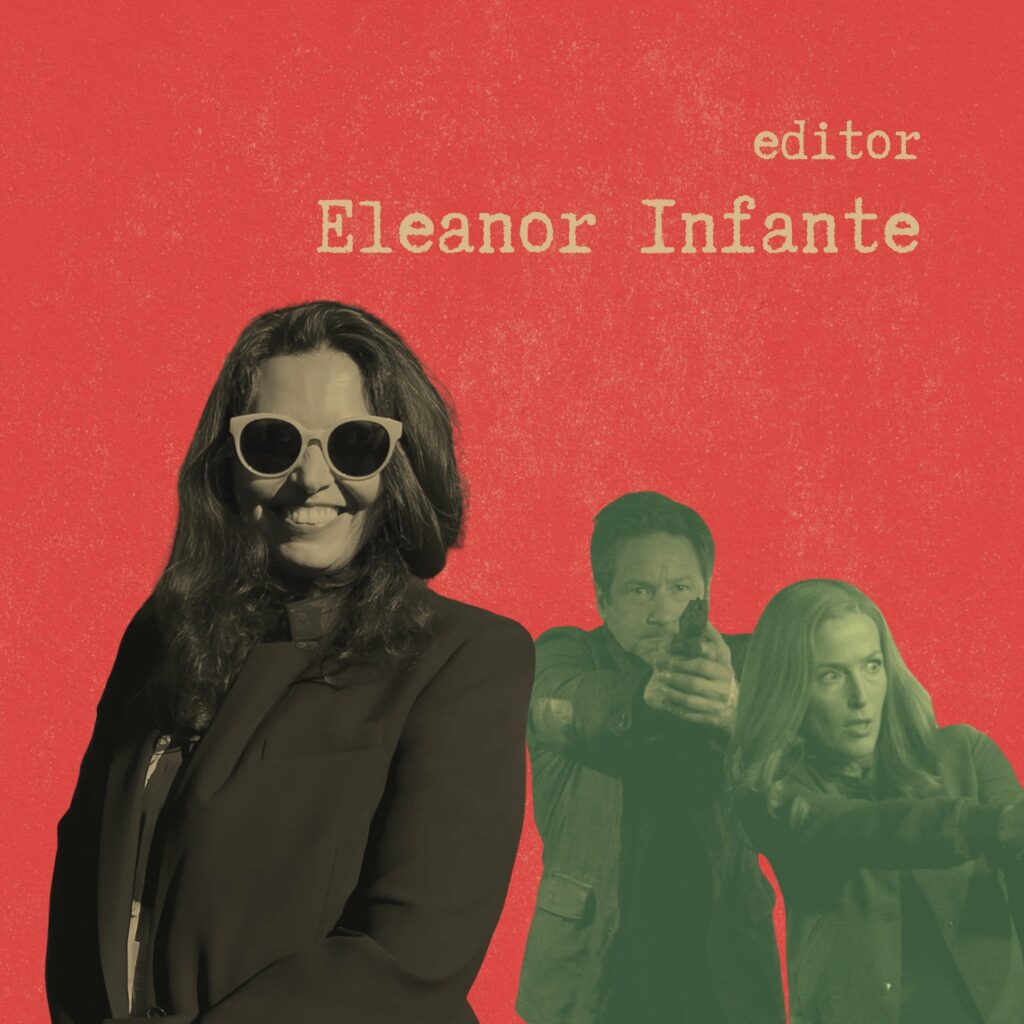
- He is working with the “best editor I’ve ever known”, Eleanor Infante, it’s “her version of the movie”; she worked on season 11, and with Carter on My Struggle IV (here’s a recent interview with her). They have added effects and music. Changes are sprinkled throughout. The new cut has “made it lean on the story rather than completely on the relationship.”
- “It was not the movie we set out to make”, “it was always a disappointment”. [!]
- His wife has seen the new cut, she is his toughest critic.
- There is not more Skinner in it.
- They have access to Mark Snow’s music library from the show, they are drawing from it for the new edit. “Mark Snow MS is TXF”. Carter talked with him shortly before he died, his diagnosis was terminal. [Nice to hear him talk about Snow, finally.]
- They are on a tight budget. He wants to add two contemporary songs in the edit, and they are expensive.
- It’s impossible to say when it will be released. [Or how? Could Disney/Fox be planning this as a tease before the premiere of Coogler’s TXF series?]
[This cut is more than the already-existing IWTB extended cut (in the DVD/BluRay), it is much more than either reverting to an earlier cut before the changes demanded by the studio (see “Blade Runner” Final Cut, more or less), or taking extra scenes that were shot and adding them in (see “The Lord of the Rings” Extended Editions): it is an all-new edit with new sound mix based on the same raw material, with a different editor and a director who is 17 years wiser. This is closer to “Caligula” Ultimate Cut, you could say, and rather quite unique in movie history. Now, I don’t know to what extent the additions will make me have a complete change of opinion on the entire movie. But we are not talking about just adding in more violence, and indeed some additional story is very much welcome. Surely it bodes well for making the movie at least marginally better! I will look forward to this. What is most surprising out of all this is Carter’s admission that the 2008 movie was a “disappointment”: a very rare admission and an example of self-criticism that is not Carter’s forte, as we will see in what follows.]
The 2016-2018 reboot
- The reboot came about not with Carter going to the studio, but with the studio approaching him and the actors first.
- “Darin’s episodes were fantastic” (if they could have done more, “my answer is always more Darin Morgan”!), “Glen [Morgan] and Jim [Wong] were great to have”. Frank Spotnitz was busy in Europe. Great to have newcomers like Ben van Allen, who did a horror movie type episode [Familiar].
- Series today have the luxury of having all scripts ready before shooting, they didn’t. [S10-11 were produced in the ‘old style’ of network TV, like the original series in the 90s.]
- A writer wrote an episode but it wasn’t TXF, Glen jumped in and wrote a fantastic ep. [He won’t say which writer it was and which episode Glen replaced. “Rm9”?]
- The studio thought of reordering the s10 episodes. He didn’t disagree, but it was not a popular decision.
- About “Babylon”: “Miller” is Mulder in Dutch, and David’s son is called Miller; “Einstein” fits with Scully’s science background. He anticipated the question on whether this was a backdoor pilot; but there was no time nor the opportunity to discuss anything more than what they did. He has friends who have done MDMA or ayahuasca, they have come back changed; it was fun to see Mulder do something like that with his mushroom trip. He is a fan of Fatboy Slim’s video clip with Christopher Walken [Weapon Of Choice], wanted to see something similar.
- “My Struggle I” was written 2015 before Trump and it “predicts the conspiracy-laden crazed world world as we live in today”. He had been going to conspiracy theory conventions, he saw what was coming. “My Struggle II” predicted the pandemic.
- The revival is “good”, “the work is great”.
[While there are certainly good things to say about the revival, and 10 years passing has already started doing its work in terms of re-evaluation, I still wouldn’t call it “great”, especially where the mythology is concerned, which is entirely Carter’s doing. MS1 might have thrown the viewer into a whole new world of crazy conspiracies, especially with that scene where Mulder and O’Malley are trying to one-up each other at the most out-there conspiracy theory, but the show didn’t do anything that was narratively interesting out of this mess. At the time in my review, I expected the confusion in MS1 to correspond to Mulder’s state of mind, hoping that subsequent episodes would develop this, clarifying the lies from the truth, becoming specific rather than vague, producing a plot that says something and brings change into the characters; what we got instead was a mere statement, a mood, and stopping there, on to different things in every single Struggle. Clearly, Carter is not one that relishes the current state of things under Trump, the MS1 conspiracy overload was a warning that paranoia would be our undoing, not that all conspiracies were premonitions. As a result, bona fide right-wing conspiracy theorists took MS1 at face value and felt vindicated that their world view was becoming mainstream; MS2 did little to correct that.]
[Of course an author doesn’t have to share his characters’ opinions, as in any work of fiction. There is this whole reading of the Struggle episodes about subjectivity: paranoia in My Struggle I (Mulder), lots of science in 2 (Scully), lies / cover-ups / self-aggrandizement in 3 (CSM), and whatever 4 was (William). And indeed these episodes become more interesting once you perceive that, they are complex episodes. However, at some point you have to tell a story, some story: you can’t have absolutely nothing happening in an objective shared reality and impacting character motivations, decisions, actions following one another, plot. So the Struggles-as-subjectivity was a nice experiment, but that reading can only hold to a certain point.]
The “My Struggle IV” clue and season 12?
- About the 4 “My Struggles”: “they were all aiming at season 12. Whether that happens or not I can’t predict. I can’t think of any bigger things that I’ve set up through the course of those 4 episodes than I’ve done in the show previously. I’ve got big ideas. I certainly would love to see those come together as a series or as another movie. We’ll see.”
- Theories about what the clue about the continuation could be (the host Kurt throws several theories at him: that there is no real savior, everyone is their own savior; that Scully’s pregnancy was the first stable inherited hybrid; and Eat The Corn’s own elaborated theory was quoted to Carter, that William can perceive the “music of the spheres” and have access to timelines and can change the future): “all of that plays into the culmination, I put a big clue in there and no one has really — not even responded to the clue, haven’t seen the clue. That clue is staring you in the face, it plays into what TXF will or will not become in the future.”
- There was a “not pleasant exchange” with Gillian, she felt Scully didn’t have agency. “The pregnancy came out of the blue for her, which it did, because it came out of the blue for me too.”
- There were some angry fan reactions after the finale: “It showed me I hadn’t done enough to convince people what I’m doing. I’m doing this organically, its not like I — all has to do with the show and what came before it, but I’ve got a big idea, a lot of people didn’t see it that way.”
[I was excited at building up that theory collecting quotes from various of his theories, and I must say I was disappointed not at the fact that it’s wrong, that’s fine, but more at his whole attitude. It’s amazing to me how he persistently teases us with this big clue for well over a year now. Despite being directly presented with the most meticulous fan-made theories, his reaction is just the spiel as if he hadn’t heard anything, that there’s a clue that somehow absolutely nobody has thought about or even come close to. Is he taking us all for a ride just to stir interest in making more episodes? It just never ends and there is no catharsis, if season 12 is made there will always be season 13 to tease afterwards. And when the journey is so frustrating I’m not sure I’m interested in the destination.]
A third movie?
- Carter was discussing with 20th Century Studios President Steve Asbell about a possible third TXF movie. That’s when the idea to do a director’s cut of IWTB first came about, it came out of the blue.
- David Duchovny and Carter have been “talking about something new for quite a while”, something involving both Duchovny and Anderson. All three were going to have lunch together on December 1 to discuss this project.
- All this is separate from Coogler’s project. Carter gave his blessing to Coogler, it will be his own thing. “I’m curious what he’s going to do.”
- There’s a lot of new science he wants to write about in new episodes.
- About continuing the story in other media: Others come to him with project and ask him if he wants to collaborate. “Perihelion” book: “I think she did a terrific job.” The cancelled TXF animated series “didn’t happen, I think I made the right choice” [to cancel it]. “I don’t think we’ve seen the end of these characters in the medium we’ve come to know them.” [i.e. live-action] “These characters and the show are so personal to me, I want to protect them every way and every time I can. I don’t want to have them become irrelevant because there’s so much of them, so I’m reluctant to — although there are opportunities like the Coogler series.”
- In IWTB there are “all those little things I laid in there, on the wall, the back of Mulder’s door at home, little things that meant something to me, now I have the chance to — there’s more to see.” [Is this about the elements in the new cut, or that IWTB includes hints about what comes next that will become clear later?]
[So not only the story of TXF is not over, he actively has plans for a season 12 and a story idea for a third film, all in parallel to Ryan Coogler’s potential series. This is huge! Is it 2008 all over again? Time to resurrect the #XF3 tag. Mulder and Scully are off-limits to Coogler, at most there could be a cameo for them, and we can call this project a “spin-off” of the main series. Mulder and Scully are ‘reserved’ for whatever Carter (and Duchovny) have in mind. I understand that will to “protect” the characters: Carter has poured so much of himself in this world, his worldview so unique and so closely associated to the TXF identity, that it’s difficult to imagine TXF without him. Despite everything I’ve just said about his revival episodes (and my head-canon still stops after season 7), I will always be interested in what he does. I genuinely hope he proves my negativity wrong!]
[But is he reading the room well? How likely is any of this to bear fruit? Is one re-edited movie that carries a lot of lukewarm baggage enough to trigger financing for a new revival? Coogler’s project has an uphill battle to convince a new audience that it will have an identity of its own and that it can stand on its feet, and the studio and Disney will focus their marketing on that new thing instead of a return to the old. So will we ever know what Carter intends? His approach to hold everything hidden is very different to, say, Daniel Knauf revealing planned plot points for “Carnivàle” or James Cameron saying he would be ready to publish everything in a press conference or in a book if no more of his “Avatar” films are made!]
Misc and non-TXF projects
- He is about to embark on a new directing project. His wife wrote something about 35 years ago, it was optioned but never made. He found the script in their closet. She has updated it. They have found the perfect actress for it, it will excite TXF fans. They are now searching for investors for it. [I hope he manages to do it, just so that we can see more of his work being made and break his ‘single-success man’ image.]
- “I have an idea right now that is kind of my answer to the criticism of ‘The After’, it may see the light of day someday.” [Another story idea, another thing I want to learn more about!]
- The logo: the “typewriter X” was created by himself. The “X” used in “Fight the Future” was made by others; but he “has ideas about” that logo for the future.
- His advice to young Carter writing the TXF pilot in 1992: “You’re lucky you didn’t listen to your mother, who said you don’t know what a hard days work is!” They worked a lot for the series! “My forebears were dairy farmers who got up at the crack of dawn to milk the cows. I was the same person, working on a science fiction TV show.”